
The Future of Money in Europe: How Digital Money Is Reshaping Finance
Published on May 15, 2026.
 NEW
NEW
The Rise of Europe’s Digital Money Stack
Europe’s financial system is entering a new phase. Stablecoins, tokenized deposits, central bank digital currencies (CBDCs), and tokenized settlement infrastructure are no longer experimental concepts discussed only in innovation labs, they are rapidly becoming part of the continent’s emerging monetary architecture.
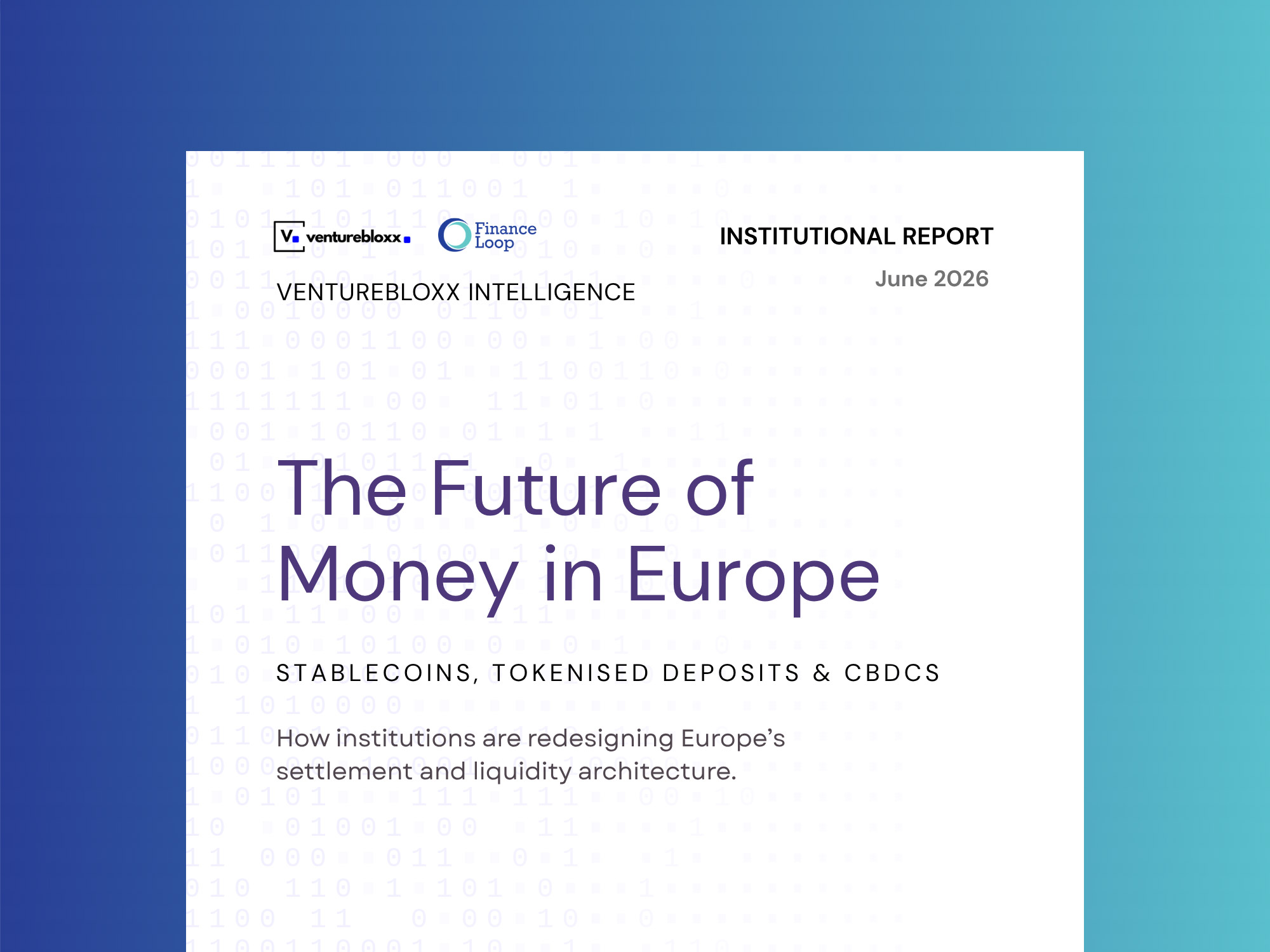
As part of the Institutional Report Series, Finance Loop and Venturebloxx are preparing a new report that explores how this transformation is unfolding across Europe’s financial ecosystem. Bringing together perspectives from leading institutions including J.P. Morgan Kinexys, Euroclear, Banque de France, Fnality, Commerzbank, Monerium and Worldline, the report examines how digital money is moving from theory into institutional deployment.
The financial industry is witnessing the emergence of a new infrastructure layer: one where money, settlement and financial assets increasingly operate on-chain. This shift is changing how banks, payment service providers (PSPs), custodians and market infrastructures think about liquidity, treasury operations, settlement and cross-border transactions.
Tokenised deposits and stablecoins are beginning to redefine how value moves between institutions, while wholesale CBDC initiatives and tokenized settlement networks are introducing new models for synchronised, programmable finance. At the same time, market participants are building the operational frameworks required to support custody, compliance, distribution and interoperability across digital asset ecosystems.
What makes this moment particularly significant is that institutional adoption is no longer confined to pilots. Across Europe, parts of the financial sector are already moving into production environments, testing how tokenized money can improve settlement efficiency, reduce counterparty risk and enable real-time financial coordination.
Strategic Control Layers Are Emerging
As digital money infrastructure evolves, a new competitive landscape is beginning to form. Institutions are positioning themselves around key strategic layers of the on-chain financial system, from issuance and settlement rails to treasury orchestration, liquidity management and compliance infrastructure.
This raises important questions for the future of European finance:
- Who will control the primary settlement infrastructure for tokenized assets?
- How will banks compete with stablecoin issuers and fintech-native payment networks?
- What role will central banks play in wholesale digital settlement?
Which institutions will own the distribution and liquidity layers of programmable money?
The report explores how incumbent financial institutions and emerging infrastructure providers are responding to these shifts, and where new opportunities, and risks, are beginning to surface.
From Experimentation to Financial Infrastructure
Europe’s transition toward tokenized financial infrastructure is increasingly becoming a structural transformation rather than a technological experiment. As regulatory frameworks mature and institutional participation deepens, digital money systems are gradually integrating into the core mechanics of modern finance.
The next phase will likely determine not only how money moves across Europe, but also which institutions shape the future architecture of payments, liquidity and capital markets in an increasingly tokenized economy.
Institutional Report Coming Up
The institutional report "The Future of Money in Europe" will be released in the weeks to come and also includes contributions from companies and infrastructure providers active across digital assets, payments, settlement, custody, compliance and tokenized capital markets.
Participation is possible through expert interviews, research contributions and selected sponsorship support, allowing organizations to share practical perspectives on how Europe’s digital money infrastructure is evolving and where institutional adoption is already taking shape.
To join the upcoming report, please contact: marta@venturebloxx.com
From Our Blog
all blog posts-
TUM Blockchain Conference 26 and Finance Loop partner up
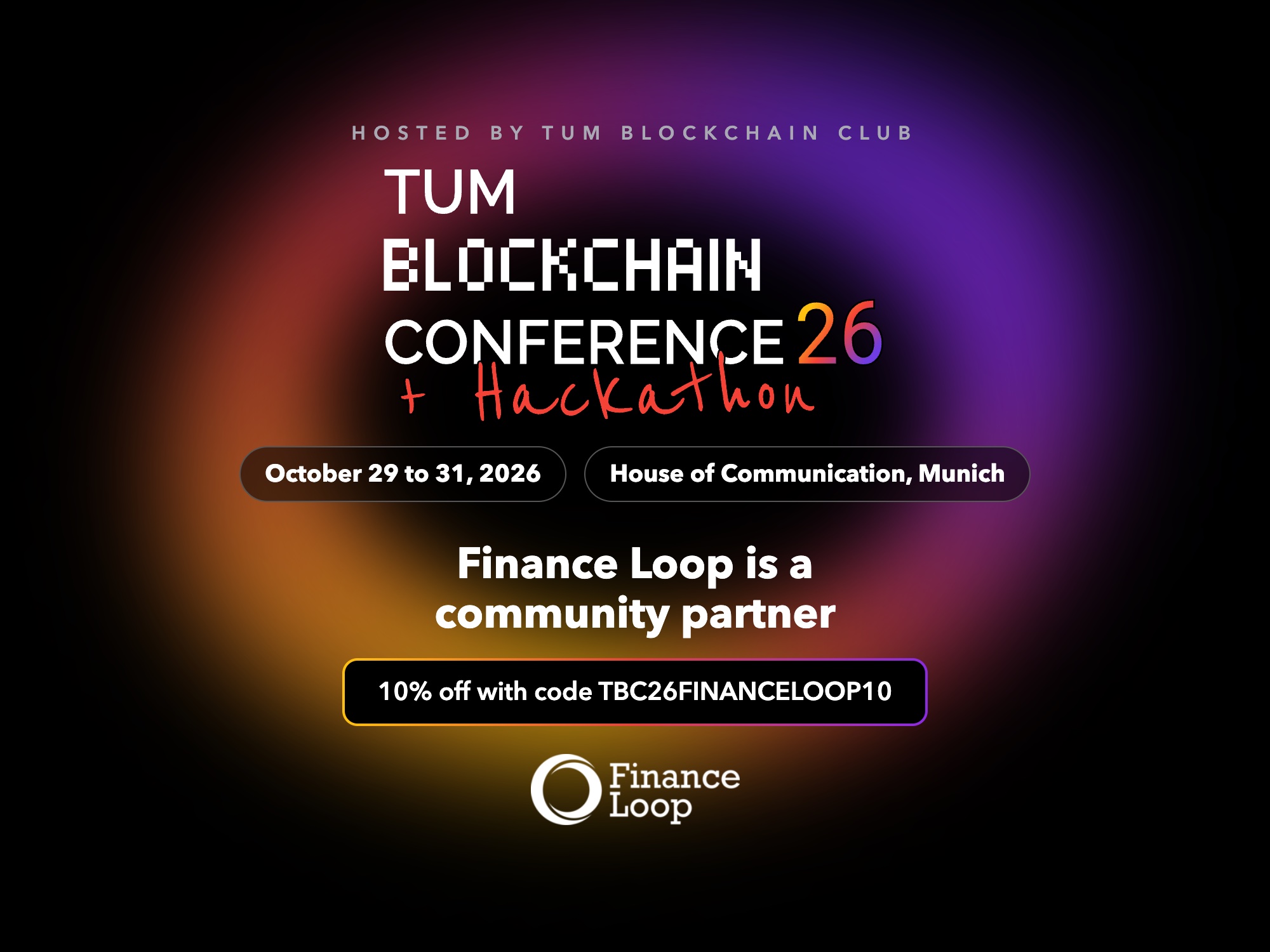
TUM Blockchain Conference 26 in Munich, October 29 to 31, 2026. Finance Loop is a community partner: 10% off tickets with code TBC26FINANCELOOP10 -
FinTech Founder & Investor Evening and Finance Loop partner up
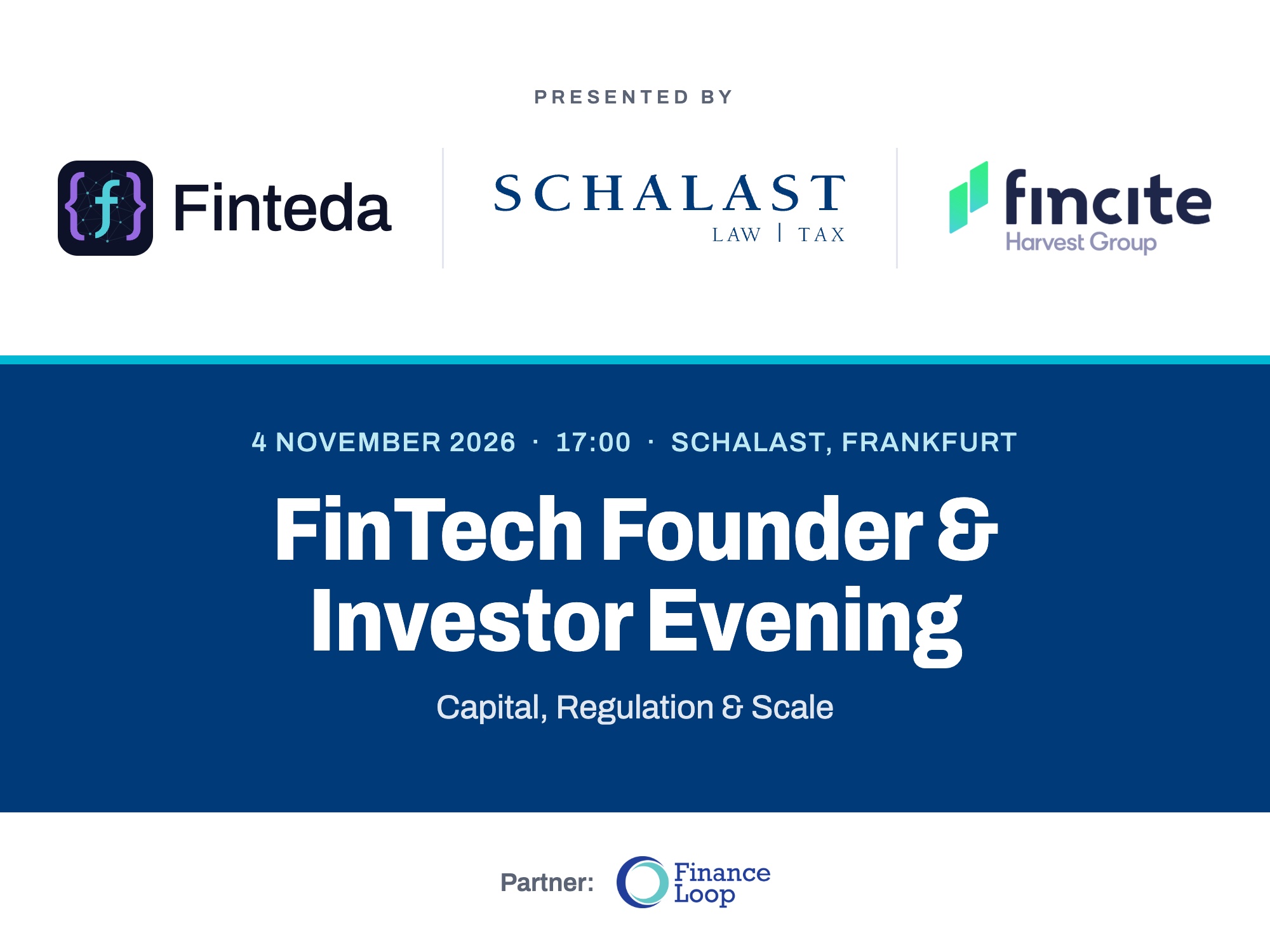
Founders and investors meet on November 4, 2026 at Schalast in Frankfurt: fireside chat with Teylor CEO Patrick Stäuble and an investor panel. Free, invite-only. -

MiCAR Certificate Program: Compliance and Strategic Market Positioning
German-language MiCAR certificate program by EBS Executive School and HEUKING: three modules, next start October 21, 2026 in Frankfurt. Dates, price, exam. -

Building AI Agents for Finance: a new book from the Finance Loop network
Building AI Agents for Finance by Hanane Dupouy and Fayssal El Mofatiche (Packt, 2026) on agentic systems in finance.