
Accessible Banking in the EU
Accessible banking means that people with disabilities can use ATMs, payment terminals, banking apps and bank websites without help. Since June 28, 2025, the European Accessibility Act and the national laws that implement it set requirements for these products and services.
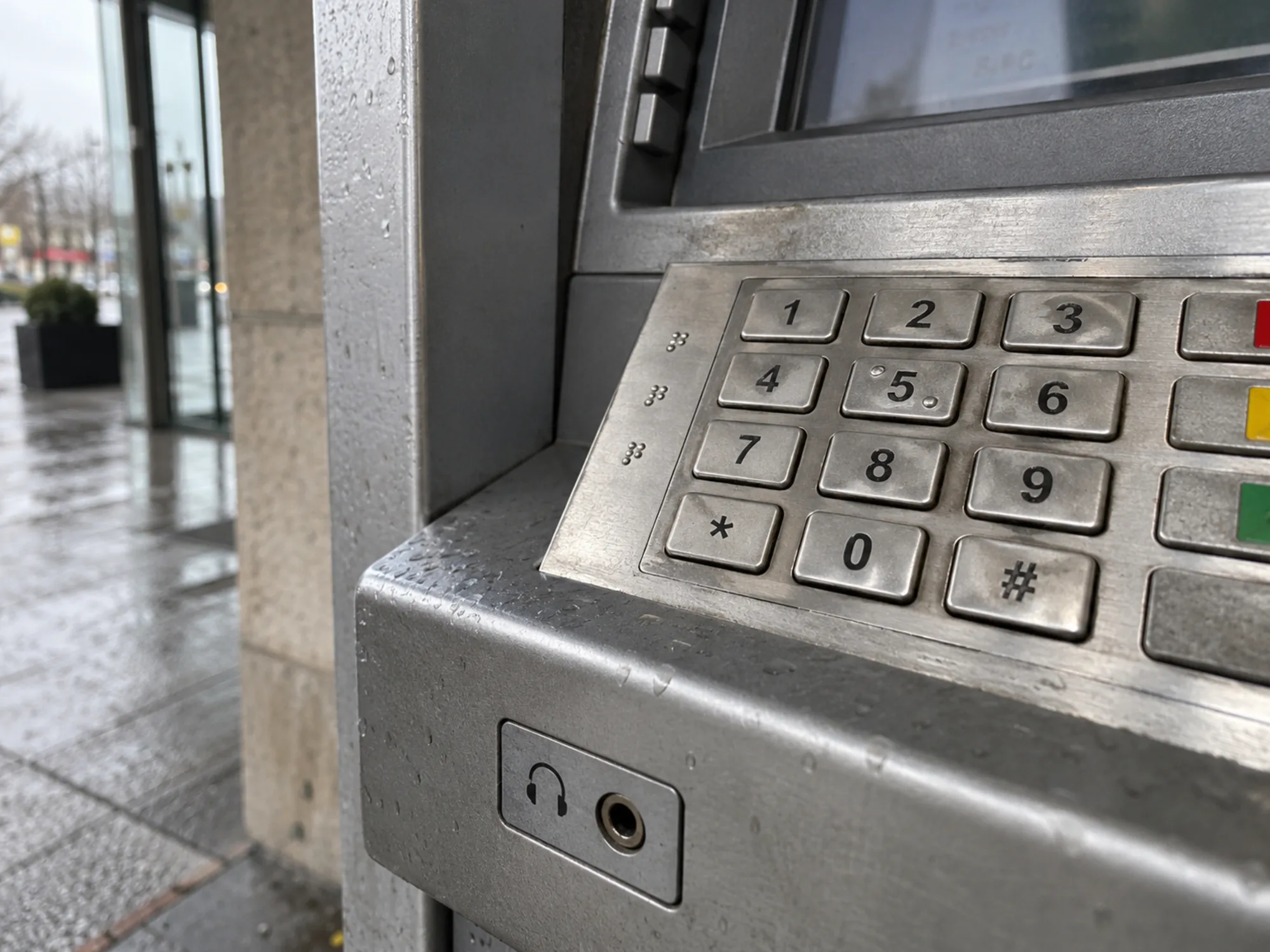
What the European Accessibility Act covers in banking
The law firm Travers Smith lists the consumer banking services in scope: credit agreements including consumer loans and mortgages, payment services, services linked to a payment account, electronic money and certain investment services. Websites and apps for these services must be perceivable, operable and understandable, and must work with assistive technology. Information about the service must not go beyond the upper intermediate level of the Council of Europe's language framework (CEFR).
Microenterprises with fewer than ten employees and turnover under 2 million euros are exempt from some requirements. Member states set the penalties, and in serious cases products and services that do not comply can be withdrawn from the market.
ATMs and payment terminals
The German implementing act names the hardware. Its first section lists payment terminals with their hardware and software, and ATMs, among the self-service terminals that must be accessible when they are placed on the market after June 28, 2025. Banking services for consumers are in scope as services.
Old equipment gets transition periods. Under section 38 of the German act, a bank may keep providing its services with products it lawfully used before June 28, 2025 until June 27, 2030. Self-service terminals already in use may stay until the end of their economic life, but no longer than 15 years after they were first put into operation. The directive itself allows up to 20 years, as Travers Smith notes.
Banking apps, digital identity and payment approval
According to Travers Smith, identification methods, electronic signatures, security features and payment services must meet the same requirements. In practice that covers opening an account remotely by video identification or eID, approving a payment in the banking app, and signing a credit agreement electronically.
Upcoming payments events in Germany
Finance Loop and accessible banking
Payment terminals, banking apps and the rules for them belong to the Payments & Digital Money track at Finance Loop. The payments regulation page covers the other rules that payment providers in Germany follow, and the access to cash page covers the ATM network.
Payments & Digital Money
Risk & Compliance
What does accessible banking mean?
Banking that people with disabilities can use without help: ATMs and payment terminals they can operate, and websites and apps that work with assistive technology and use plain language.
Does the European Accessibility Act apply to banks?
Yes. It covers consumer banking services such as credit agreements, payment services, payment accounts, electronic money and certain investment services, plus ATMs and payment terminals placed on the market after June 28, 2025.
How long can old ATMs stay in use?
In Germany until the end of their economic life, at most 15 years after first use. The directive allows up to 20 years. Services built on older products may continue until June 27, 2030.
Are small payment providers exempt?
Microenterprises with fewer than ten employees and turnover under 2 million euros are exempt from some of the requirements, according to Travers Smith.
Accessible banking and Finance Loop
Finance Loop covers accessible banking in its Payments & Digital Money track, next to payment terminals, access to cash and digital identity. Finance Loop brings people from banks, payment institutions and terminal providers together at events in Frankfurt, Munich, Berlin and Hamburg.
Finance Loop is a professional network and has the goal of driving the adoption of emerging technologies in finance, such as AI, digital payments, cloud and blockchain solutions. Finance Loop helps its members build skills and personal networks in these fields: Investment & Digital Assets, Payments & Digital Money, Digital Infrastructure & Sovereignty, and Risk & Compliance.