
Bitcoin Seminar in Munich
Customers of Bavaria's cooperative banks and Sparkassen can trade bitcoin in their bank's app, through DZ BANK's meinKrypto service or through products supplied by DekaBank. Professional investors in Munich treat bitcoin as an asset class of its own because its code caps the supply at 21 million coins. Finance Loop's Bitcoin for Investors masterclass runs in Munich; dates and booking are on the masterclass page.
Why bitcoin is its own asset class
Bitcoin's issuance follows a fixed schedule written into its protocol, not a policy decision by a bank or a government. The Bitcoin whitepaper describes new coins entering circulation only through the first transaction of each block, with the incentive shifting entirely to transaction fees once a set number of coins exist. Bitcoin Core's source code hard-codes a cap of 21,000,000 BTC and halves the block reward roughly every four years, a rule enforced by the software every node runs, not by a Bavarian bank's balance sheet policy or a Frankfurt regulator's decision.
That protocol-level scarcity is what separates bitcoin from a stock or a fund. An asset manager in Munich cannot look to a central bank for more supply the way it can for euros, and no single company can dilute bitcoin's issuance the way a share issue dilutes equity. An IMF study found that bitcoin's correlation with major stock indices was low before 2020, then rose more than four-fold against S&P 500 volatility after the pandemic began, a pattern that matters directly to how a Bavarian fund sizes bitcoin next to its equity book.
How Bavaria's banks reach bitcoin
Bavaria's largest financial institutions are moving into crypto custody through the cooperative and savings bank networks that serve much of the region. DZ BANK received a MiCA license from BaFin for its "meinKrypto" service, letting customers of cooperative banks, a large share of them in Bavaria, trade bitcoin, ether, litecoin and cardano inside the VR Banking App, with Boerse Stuttgart Digital holding the assets. Savings bank customers get a parallel route: Sparkasse customers can trade crypto through the Sparkasse app, with the underlying products supplied by DekaBank, and the Sparkassen state plainly that they give no advice on it and that the risk extends to total loss.
The Basel Committee's prudential standard for bank cryptoasset exposures took effect January 1, 2025, and assigns bitcoin to the risk category for unbacked crypto-assets, carrying a risk weight of up to 1250% and a total exposure limit near 1% to 2% of a bank's Tier 1 capital. That rule applies to any bank headquartered in or operating out of Munich exactly as it applies to one in Frankfurt, and it is one reason a bank's own balance sheet exposure to bitcoin stays small even as it opens trading access to customers.
What a Munich investor should weigh first
A BaFin survey from April 2026 found that about 13% of adults in Germany, more than nine million people, held crypto-assets, and that 54% of them wrongly believed bitcoin protects against inflation. ESMA's own warning states that an investor can lose the full amount invested in a crypto-asset, with no investor compensation scheme under MiCA to fall back on if a provider cannot return the assets. A professional course separates that retail confusion from the disciplined, sourced case a portfolio manager needs before recommending a position.
Upcoming bitcoin events in Munich
Finance Loop's bitcoin seminar in Munich
Finance Loop's Bitcoin for Investors masterclass runs in Munich among other German cities, taught by Dr. Mathias Linkerhand, a lecturer at Frankfurt School of Finance & Management and board member of the German Bitcoin Association. The one-day, German-language format covers bitcoin's risk and return profile, correlation with traditional assets, custody models and portfolio allocation, aimed at investors and decision-makers who want a professional grounding.
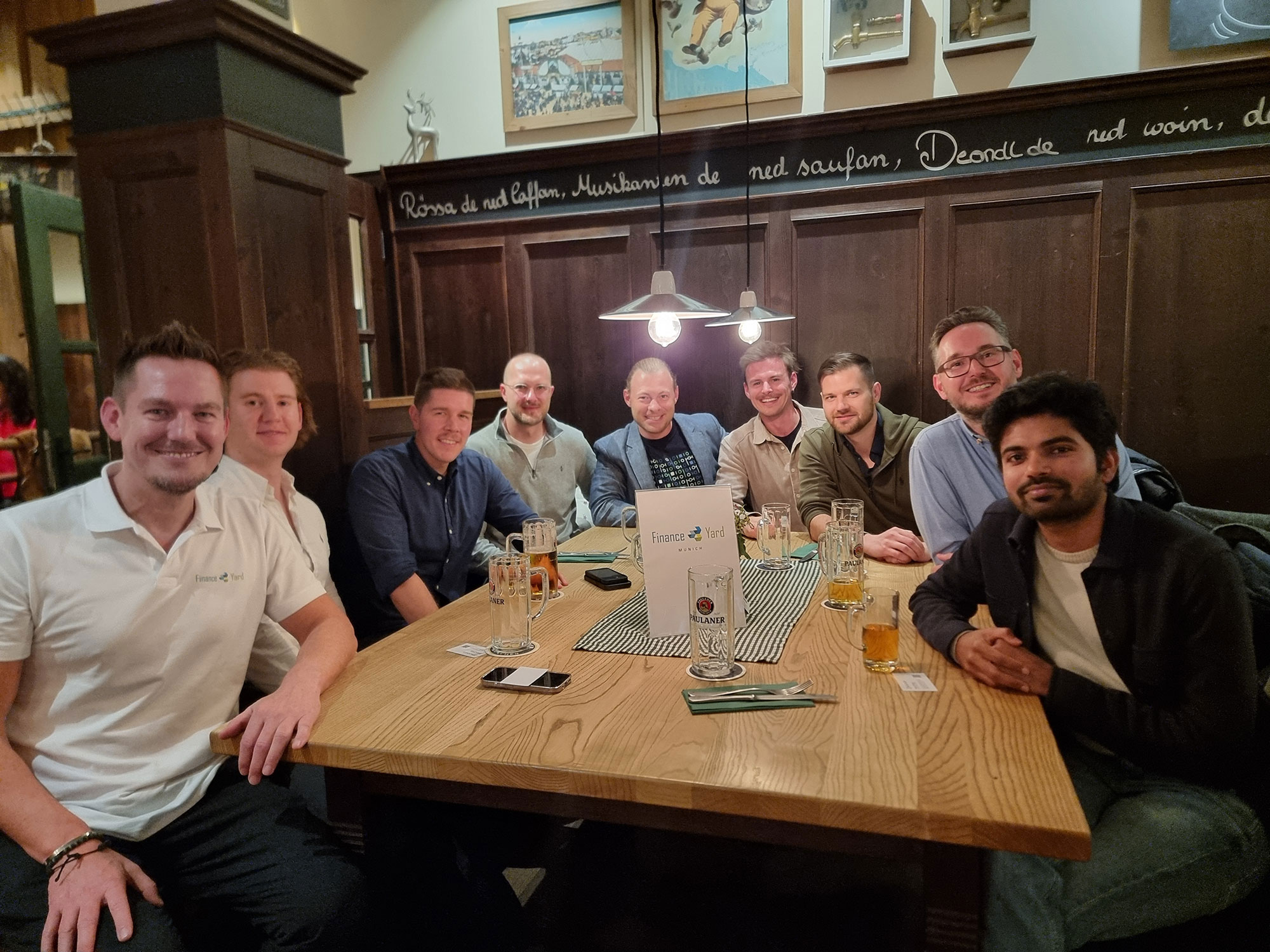
Finance Loop is a network partner of W3MUC, Munich's web3 hub, for events on blockchain and digital assets in the city, and launched its own Munich chapter with a dedicated event. Related pages: fintech in Munich and bitcoin in Germany.
Investment & Digital Assets
Risk & Compliance
Is there a bitcoin seminar for investors in Munich?
Yes. Finance Loop's Bitcoin for Investors masterclass runs as a one-day, in-person seminar in Munich for investors, asset managers, family offices and advisors. It covers portfolio fit, custody options and risk, not the mechanics of buying bitcoin for personal use. Dates and booking are on the masterclass page.
Can a Munich investor buy bitcoin through a German bank?
Yes, through the same national infrastructure available anywhere in Germany. DZ BANK's MiCA-licensed meinKrypto service reaches customers of cooperative banks across Bavaria through the VR Banking App, and Sparkasse customers can trade crypto through their own bank's app with products from DekaBank.
How much bitcoin risk can a Bavarian bank carry on its own books?
Very little. The Basel Committee's prudential standard limits a bank's own exposure to unbacked crypto-assets such as bitcoin to roughly 1% to 2% of Tier 1 capital, with a risk weight of up to 1250% on any position above that. That is separate from the custody and trading access a bank offers its customers, which carries no such balance sheet limit.
Bitcoin Seminar in Munich and Finance Loop
Finance Loop is a professional network and has the goal of driving the adoption of emerging technologies in finance, such as AI, tokenization, stablecoins, and DeFi. Finance Loop helps its members build skills and personal networks in these fields: Investment & Digital Assets, Payments & Digital Money, and Risk & Compliance.
It connects the finance, IT and AI communities in Germany, Austria and Switzerland, with events in Frankfurt, Munich, Berlin and Hamburg. Find a bitcoin seminar built for professionals at Finance Loop events.