
Private Equity in Germany
Private equity funds invest in companies outside the public stock market, often for years. The German market involves fund managers, institutional investors, companies and advisers, each with different questions about capital, governance and exits.
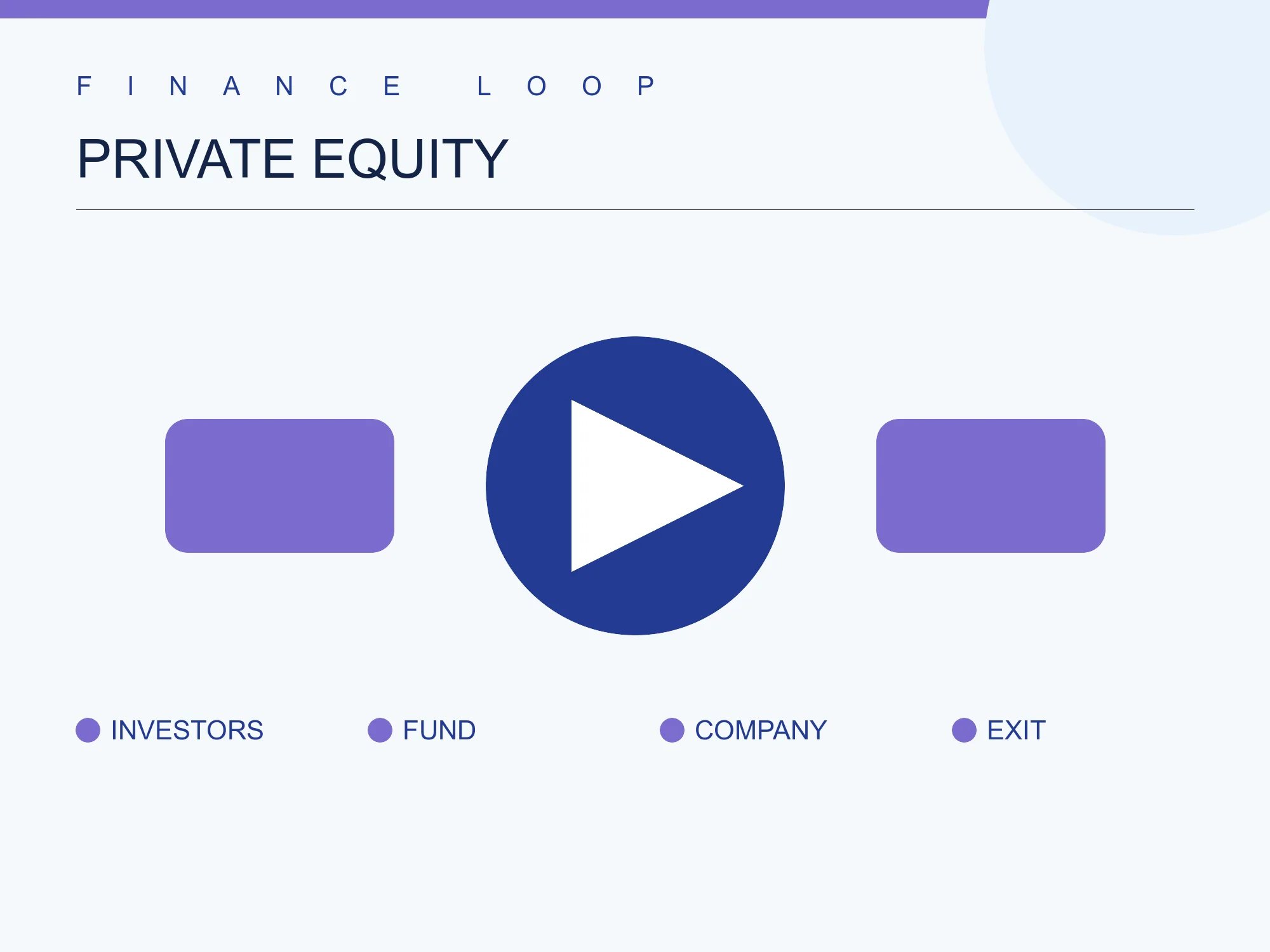
How the capital reaches a company
Investors commit capital to a fund. The manager calls it over time to buy or finance companies and later returns proceeds from sales or other exits. Invest Europe distinguishes private equity from public-share trading by active ownership and a long investment horizon. Liquidity and valuation therefore need their own analysis.
Questions for fund managers
Managers need to explain fees, valuation, portfolio concentration, reporting and how investors can exit. A secondary transfer of a fund interest is a different transaction from the sale of a portfolio company. The tokenized-funds page looks at register and transfer technology, not a shortcut around fund rules.
Private markets at Finance Loop
Finance Loop connects traditional asset management with digital market infrastructure. Its asset-management and family-office pages show adjacent audiences for private-market discussions.
Events on this topic
Private Equity in Germany and Finance Loop
Finance Loop connects fund managers, family offices and market-infrastructure firms. Their discussions cover how private-market capital is raised, reported and transferred; upcoming meetings are in the event calendar.
Finance Loop is an expert network for new technologies in finance.