
Reusable KYC
Reusable KYC is the use of previously verified identity information in another customer verification process. Banks, payment providers and other regulated businesses can receive existing evidence and evaluate whether it meets their own requirements. The receiving business decides which additional checks are necessary before accepting the customer.
Reusable identity can involve a person presenting credentials or companies exchanging verified data under an agreed arrangement. The identity evidence, the permission to share it and the receiving institution's acceptance decision are separate parts of that process. The method chosen determines which organizations receive personal information and which checks run again.
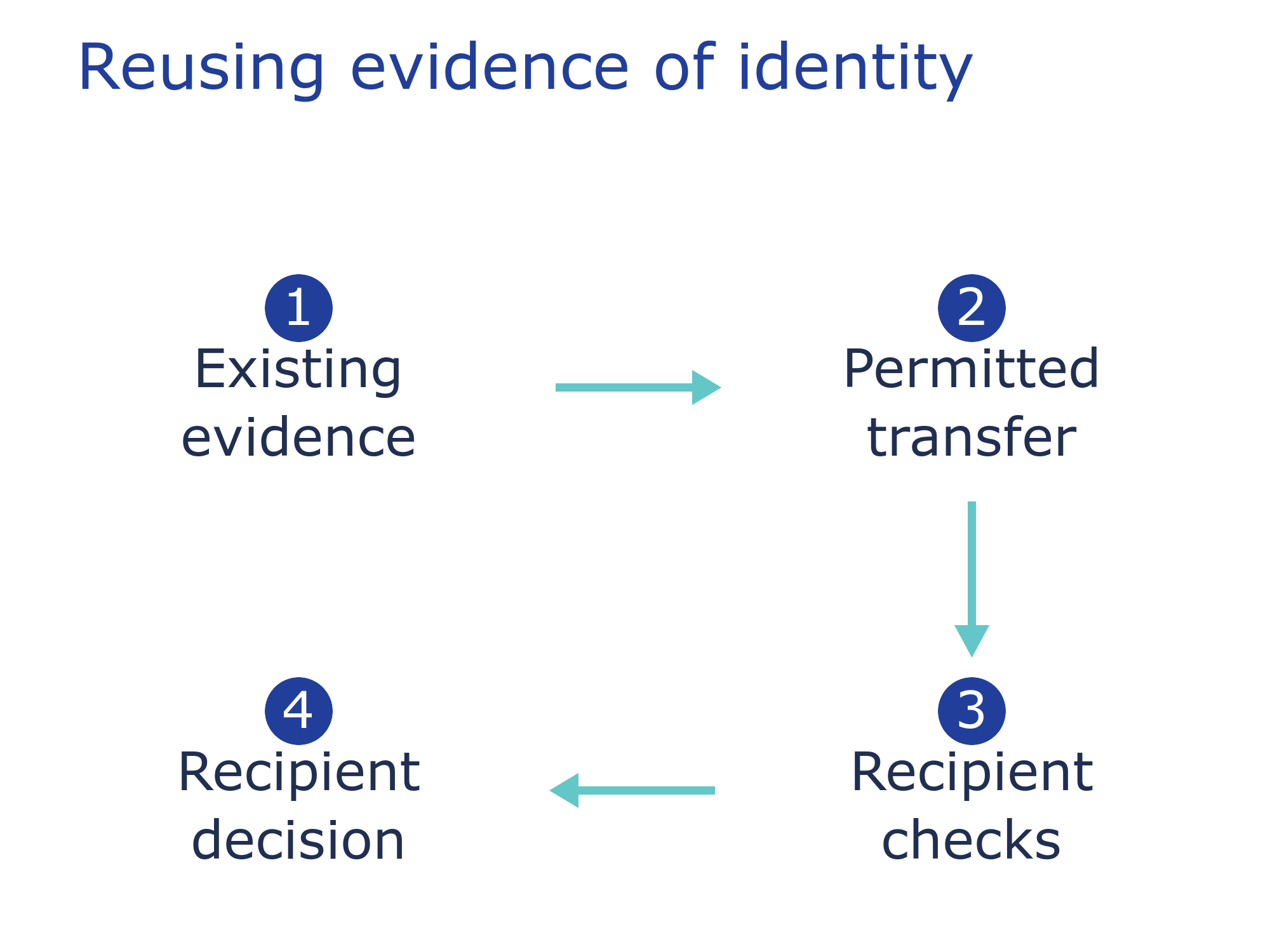
Two ways to reuse identity
A person can control a reusable identity account and authorize its use with another participating financial service. Sumsub ID stores verified documents for reuse, while each receiving service sets its own verification requirements. A second model transfers selected verification data between an approved donor company and a recipient company through an API.
These arrangements create different customer journeys and different responsibilities for the participating organizations. A product team should establish who supplies the evidence, who requests sharing and who can stop future access. The answer determines the consent screen, the contract and the support process that customers encounter.
Recipient checks and acceptance
Reusable KYC Share maps overlapping verification steps between the donor and recipient configurations. Recipient checks can examine accepted document types, issuing countries, expiry and other configured requirements. Missing evidence or incompatible verification steps can require additional documents or prevent a reusable profile from being created.
A previous approval therefore needs a clear meaning inside the receiving institution's own controls. Compliance teams should specify which original results may be retained and which checks must run again. The design should preserve the reason for that decision alongside the evidence received.
Customer-controlled access through a gateway
Reusable KYC Gateway connects a user-controlled identity account to regulated recipients through an integrating business. The integrator obtains authorized sharing tokens without receiving the underlying identity documents or biometric results. The regulated recipient then applies the checks configured for its own verification process.
This separation matters when a payment journey starts inside another company's service. Product teams should identify exactly which party receives documents and which party only handles a reference. A reusable identity flow should explain that relationship before the customer authorizes sharing.
Evidence freshness and changing risk
Document expiry, changed personal details and a new financial product can alter the evidence required for acceptance. A reusable record needs a verifiable source and a clear point at which its information was checked. Sanctions screening and the purpose of a business relationship belong to the receiving institution's wider customer due diligence. A revoked sharing permission also needs a defined response before another recipient requests access.
Perpetual KYC addresses changes during an existing customer relationship, whereas reuse concerns evidence presented for another process. Institutions should define when a new document or additional identity check becomes necessary. That policy should also explain how a customer corrects information that has become inaccurate.
Reusable identity and wallet credentials
itsme supports repeated use of one digital identity across services that accept its system. Wallet-based credentials provide another way for a person to present verified attributes to an organization. The receiving organization still needs to assess the issuer, the credential and the requirements of its intended financial service.
The EUDI Wallet in finance introduces a European framework for those interactions. A private reusable identity product and a certified EUDI Wallet have different roles and qualification requirements. Buyers should check the actual trust framework and supported evidence before comparing their operational coverage.
Privacy and retention
The GDPR principles include purpose limitation, data minimization and accuracy across identity processing. Reusing an existing verification does not by itself establish permission to exchange every stored document. Organizations should identify the lawful basis and necessary information for each transfer and subsequent use.
Retention policies must account for applicable record-keeping duties alongside limits on unnecessary storage. Access controls should distinguish the staff reviewing a customer from systems carrying a sharing token. A correction or deletion request needs an identified recipient and a process appropriate to the records concerned.
Integration and fallback decisions
A buyer should test reused evidence that is complete, expired, missing required fields and associated with a different customer record. The result must determine whether the application proceeds, requests additional information or reaches a reviewer. A service interruption also needs a recovery path that preserves the existing application.
Stripe Identity tracks verification attempts through a persistent session, including results that require more input. That session pattern is useful for designing a recoverable process, without establishing cross-provider identity portability. Identity orchestration connects these outcomes to the next appropriate step in a financial workflow.
Upcoming payments and digital identity events in Europe
The calendar needs JavaScript to display upcoming events on this page.
Does reusable KYC remove the receiving institution's checks?
The receiving institution evaluates reused evidence against the requirements of its own financial service. Additional screening or identity information may still be required before accepting the customer.
Is reusable KYC the same as an EUDI Wallet?
Reusable KYC describes an approach to evidence reuse across verification processes and participating organizations. An EUDI Wallet belongs to a specific European identity framework with its own requirements.
Can an expired document be reused?
A receiving institution must apply its validity requirements to the evidence it receives. Expired or insufficient evidence can require a replacement document or another permitted identification method.
Digital identity and customer verification
Reusable KYC and Finance Loop
Finance Loop connects professionals working on digital identity and customer journeys across European financial services. Payment providers and identity companies can discuss introductions to relevant experts and opportunities for professional exchange. These conversations can address how an identification product fits the requirements of a particular financial market.
Finance Loop is a professional network supporting the institutional use of emerging technologies in finance. Companies can request support connecting with relevant financial technology professionals across the network.