
Bitcoin basis trade: harvesting the futures premium
The basis trade buys spot bitcoin and sells a bitcoin future against it, in the same size, at the same time. The position has no view on the price: if bitcoin doubles or halves, the two legs move against each other and cancel. What the trade earns is the basis, the gap between the futures price and the spot price, and that gap is a funding cost somebody else is willing to pay.
If you run a book that needs a return uncorrelated with the direction of bitcoin, this is the oldest way to get one. It is also the trade that explains a large share of institutional bitcoin activity, because the buyer of the spot leg has no conviction about the asset at all.
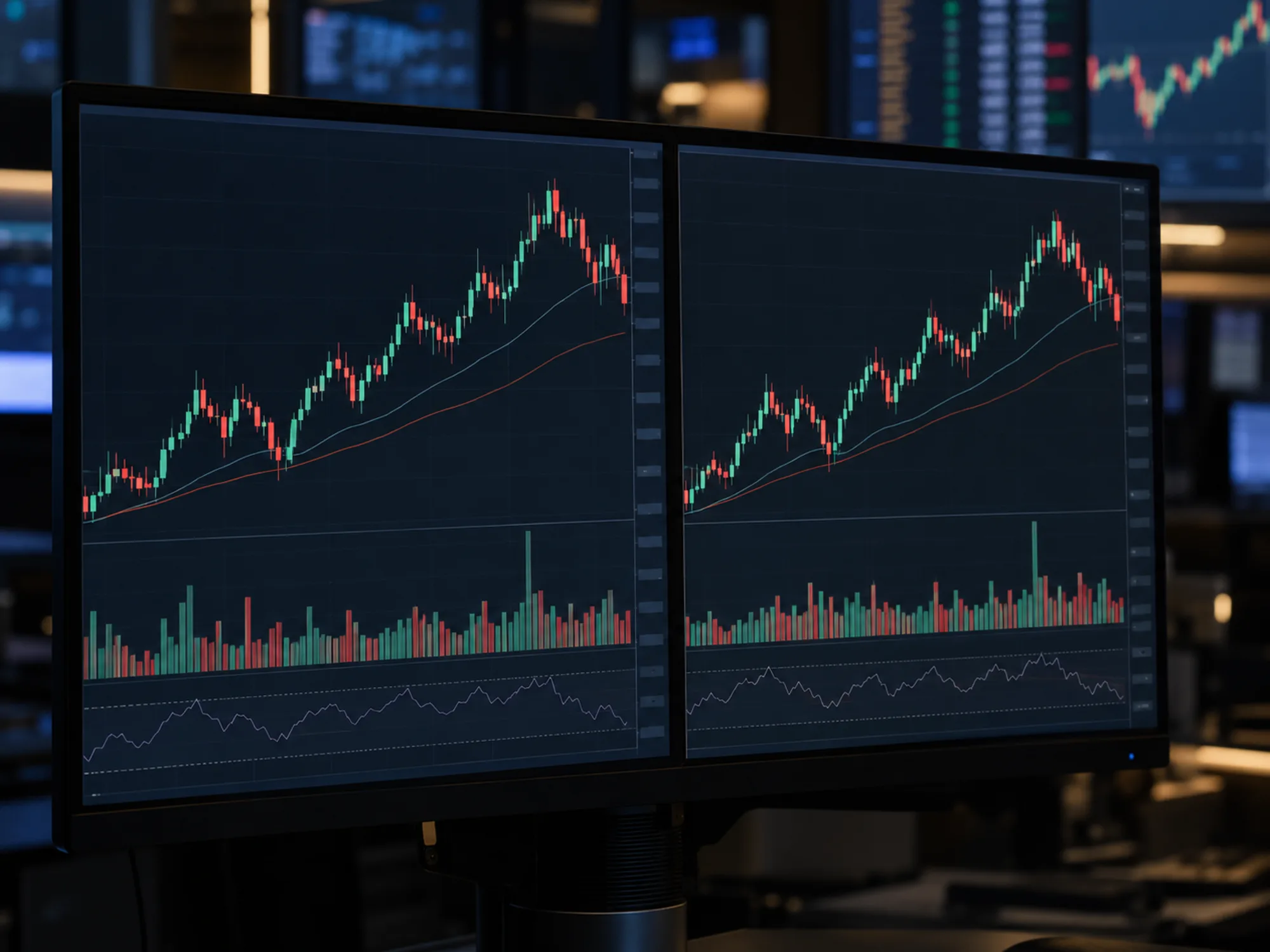
The mechanics: long spot, short future, hold to expiry
A dated future must converge to the spot price at expiry, because on that day the two are the same thing by contract. That convergence is what makes the trade work.
Suppose spot bitcoin trades at 100 and the three-month future at 103. You buy a bitcoin and sell one future. Three months later the price can be anything. If bitcoin sits at 80, your coin lost 20 and your short future gained 23. If bitcoin sits at 130, the coin gained 30 and the short lost 27. Either way you end with 103, and the 3 you earned is the basis you locked in on day one. Traders also call this cash-and-carry arbitrage, since you carry the spot asset while you wait for the convergence, a framing Blockworks uses in its account of the bitcoin version.
On a perpetual swap the same idea runs without an expiry. There is no convergence date, so the return arrives as the funding payment the long side pays every few hours, which crypto derivatives explains. The position then has to be rolled or held indefinitely, and the income resets with every funding period.
How do you calculate the annualized basis?
Divide the gap by the spot price, then scale it to a year: the futures price minus the spot price, over the spot price, times 365 divided by the days to expiry. A future at 103 against spot at 100 with 90 days left gives three percent over 90 days, which annualizes to roughly 12 percent, and that is the number a treasurer compares with a money market rate. Spark's glossary entry on the basis trade states the same calculation.
Two adjustments matter before the number means anything. Subtract the financing cost of the cash tied up in both legs, and subtract the trading cost of opening and closing four sides. On a long view the bitcoin basis has averaged in the mid single digits in percent per year, with the high-teens and low-twenties readings arriving in the 2024 upswing, so a position sized on the peak number is sized wrong.
Why bitcoin futures usually trade above spot
Bitcoin has no natural short sellers, and that one fact sets the shape of its futures curve. In oil or wheat a producer sells forward because it owns the commodity and wants the price fixed, which supplies a standing bid for shorts and keeps the curve honest. Bitcoin has no producer with that need at scale, so the demand for leverage runs almost entirely long.
The result is a curve in contango most of the time, with each later contract priced above the one before, and your side of the trade is the missing short seller being paid to appear. When the curve inverts into backwardation, with the future below spot, the signal is that leveraged longs have left and somebody is paying to be short, which has coincided with the heaviest unwinds of this position.
Where the spread comes from, and who pays it
The basis is positive when traders want leveraged long exposure and are short of cash to buy the coin outright. They buy the future instead, which pays the exposure without the capital, and they bid the future above spot. Your side of the trade supplies that leverage and charges for it.
That tells you when the trade pays well. The spread widens in a market where leveraged demand runs ahead of the available balance sheet, and it compresses when cash arrives to compete with you. Annualized returns on bitcoin futures reached the mid-teens in percent during the 2024 upswing, and the figure falls back toward money market rates when the enthusiasm fades. A negative basis, with the future below spot, flips the trade: the cash leg then sells spot and buys the future, and the position earns the gap in the other direction.
Margin calls on the short leg when spot rises
Here is the part that ends badly for an underfunded position. The trade is flat in total, but the two legs settle in different places, and only one of them demands cash daily.
When bitcoin rallies, the short future loses money and the venue calls for variation margin that day, in cash. The gain on the spot leg is real but it sits in a coin at a custodian, and it does not pay the margin call. A trade that is perfectly hedged on paper therefore runs out of money in a rally, and the manager either posts more cash or gets closed out at the worst moment. The size of that cash buffer, not the size of the spread, is what decides how large the position can be.
Custody and counterparty exposure across two venues
The position lives in two places at once, and each one is a separate credit decision. The coin sits with a custodian or on a spot exchange; the short sits at a futures venue with its margin. Neither side can be netted against the other, so the trade uses twice the capital a single position would.
A prime broker arrangement is how an institution shortens that. One agreement holds the coin in segregated custody and pledges it as collateral against the futures margin, so the spot leg finances the short leg instead of sitting idle. Where the futures venue is a clearing house, the margin is held under a rulebook; where it is an offshore exchange, the margin is an unsecured claim on that exchange, which is the exposure the 2022 failures turned into losses.
Why the trade compresses when ETP demand arrives
An exchange-traded product buys the spot coin with cash and holds it. That makes the ETP a competitor on the long leg, using cheaper funding than a hedge fund has, and the competition narrows the premium the futures side can command.
The effect runs both ways over a cycle. When a crypto ETP sees heavy inflows, the spot bid tightens the basis. When the same product sees redemptions and leveraged longs return to the futures market, the basis widens again. A manager running the trade is therefore reading flows into the wrappers as closely as the futures curve.
How institutions run the trade today
Since the arrival of US spot bitcoin ETFs the long leg is often an ETF share instead of a coin. The manager buys the fund and sells CME futures against it, which removes the wallet, the key management and the custody question from the position, and leaves two instruments that settle in a normal brokerage account.
That change pulled a wave of open interest onto CME, and it created a second-order effect worth knowing: because the trade now holds an ETF share, a forced unwind shows up as redemptions from the fund, not as spot selling. Flow data from a crypto ETP therefore reads partly as a basis-trade signal and not purely as investor conviction.
The right-but-early problem
Convergence is certain at expiry and nothing is certain before it. The basis can widen after you open the position, and a wider basis is a mark-to-market loss on a trade that will still pay in full if you hold it to the end.
That is where the position actually dies. A fund marked daily reports the loss, the risk limit reacts to the loss, and the trade is closed at the worst point of the spread instead of at convergence. Running the trade therefore takes a funding agreement and a risk limit that both last longer than the contract, which is the real reason a basis book needs a prime broker and not the cheaper execution route.
What breaks a bitcoin basis trade?
Two things break it, and neither one is the price of bitcoin. The first is a venue failure: if the exchange holding your margin or your coin stops paying out, one leg of the hedge is gone and the other is suddenly a naked position. The second is a funding squeeze, where the cash to meet margin on the short leg costs more than the basis earns, which turns a positive carry into a loss that grows with every day held.
A forced unwind makes both worse. Everyone running the trade holds the same two legs, so a scramble to close means selling spot and buying futures at the same moment across the market, which moves both prices against the people closing. The trade looks market-neutral and is not liquidity-neutral.
Is the basis trade risk-free?
No. The price risk is hedged, and every other risk is still there: the cash call on the short leg, the credit of two venues, the cost of funding and the possibility that you cannot close both legs at the same price. The strategy is best read as a financing business with a known yield and a tail, as Spark's glossary entry on basis trading sets out, where the leverage used to make the yield interesting is what creates the tail.
The basis trade and Finance Loop
Finance Loop is the meeting place for the desks that run this position in Europe and the risk and treasury people who have to fund it. Finance Loop members sit on both legs of the trade: in firms that lend the balance sheet and in the custodians and venues that hold the collateral.
Finance Loop is a professional network and has the goal of driving the adoption of emerging technologies in finance, such as AI, tokenization, stablecoins, and DeFi. Finance Loop helps its members build skills and personal networks in these fields: Investment & Digital Assets, Payments & Digital Money, Digital Infrastructure & Sovereignty, and Risk & Compliance.