
Custom business applications Frankfurt
Custom business applications are software tools designed around a defined operational task and the people responsible for completing that task. A booking tool, an approval process or a case register combines the required records with clear rules for viewing information and changing a status.
A development project starts by examining the current process and the limitations of available software. For teams in Frankfurt and Rhine-Main, the useful result is a manageable application with tested responsibilities, connections to existing systems and an agreed plan for operation after delivery.

When does custom software make sense?
Compare the required workflow with a standard product before choosing custom development. Record the steps that an existing product already supports and the exceptions that still require manual work. A useful comparison includes licensing, configuration and ongoing maintenance over the intended operating period.
Describe one complete user task, including the information needed and the decision that finishes the task. Check that task with the future users before adding reports or optional features. An application can then cover a specific gap while established systems continue to hold their existing records.
From a request to a recorded decision
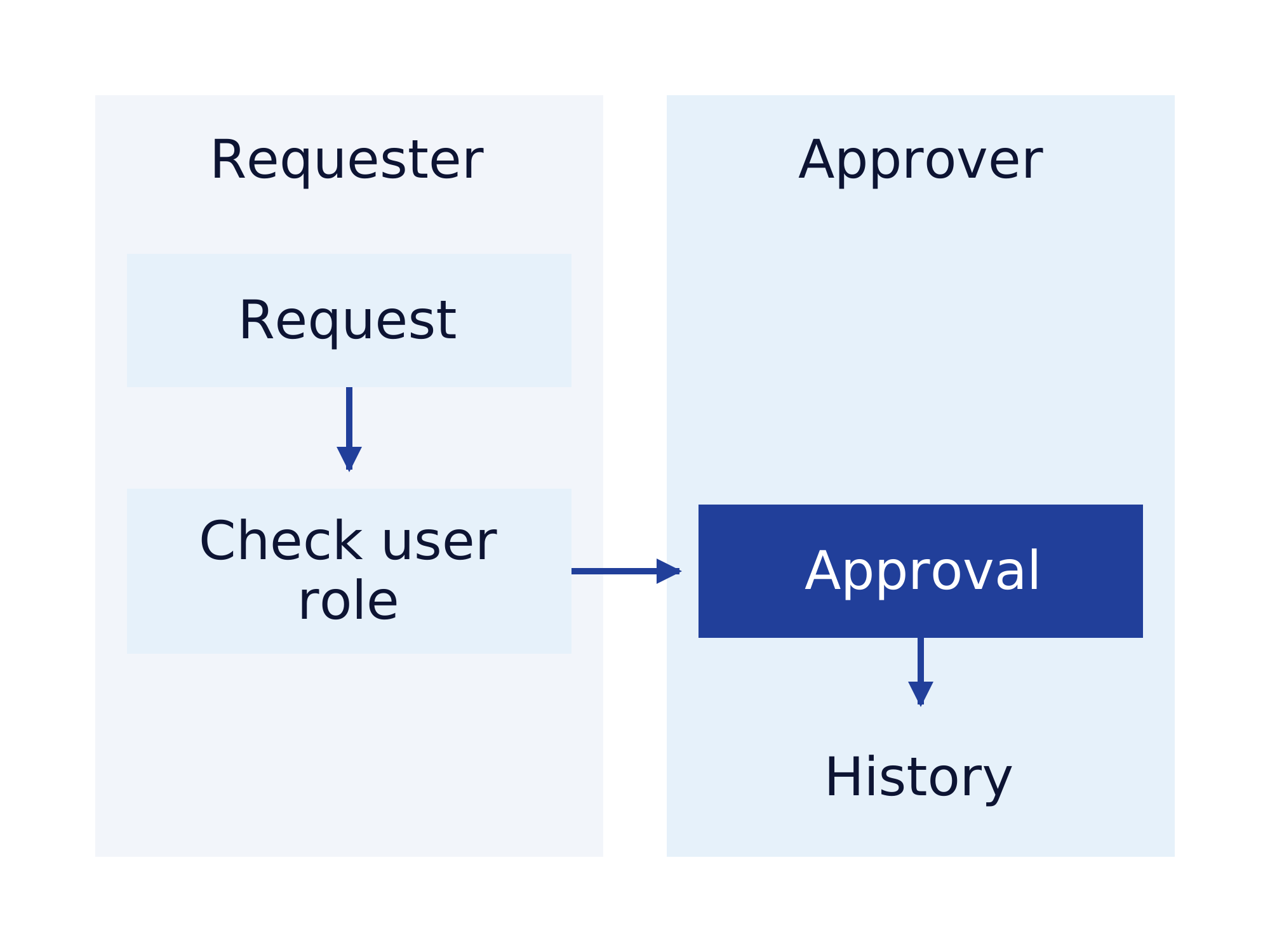
An approval application separates the person submitting a request from the role allowed to approve that request. The application checks the permitted action before changing the record and retains a history of the decision. A rejected or incomplete request needs a defined next step and a visible status for the requester.
The diagram illustrates the relationship between a request, a role check, approval and recorded history. During acceptance, test a permitted approval and an attempted approval by an unauthorized account. The business owner should also check what happens when the responsible approver is absent or the request changes.
Interfaces and data responsibility
For every integration, identify which system owns the authoritative value and which system receives a copy. Define how the application handles an unavailable connection, a duplicate submission or a changed record. These cases belong in the acceptance examples supplied to the development team.
Existing records may require a separate data migration before the application can use those records reliably. Agree the required fields and reconciliation checks before importing a complete dataset. A documented export also helps an operating team recover or move the application later.
Security checks and operational handover
The OWASP Application Security Verification Standard provides requirements for testing application security controls. Buyers can reference selected requirements in an acceptance plan and ask for evidence against those requirements. The agreed checks should cover the actual access rules and the information handled by the application.
Before launch, name the person responsible for updates and the team responsible for incidents. Ask for administrator instructions, deployment steps and a demonstrated recovery procedure. The maintenance agreement should explain how defects are reported and how later changes are approved.
What determines the project budget?
A useful estimate separates the initial build from operation and future changes. Ask the supplier to identify assumptions about user roles, external interfaces and data preparation. Compare proposals against the same user tasks and acceptance cases so that omissions remain visible.
For a Frankfurt or Rhine-Main project, agree which workshops require attendance and which decisions can be made remotely. Specify the working language for user testing and operating instructions before scheduling the handover. Delivery arrangements should follow the actual availability of the business and technical owners.
Compare custom software development in Munich and Berlin
Companies comparing custom software development in Munich or Berlin can use the same project brief when considering providers elsewhere in Germany. The brief should explain which decisions require access to employees or equipment at the customer location. Compare the cost of those visits separately from remote development, and ask who demonstrates the completed user task before acceptance. Ownership of the source code, access to deployment files and responsibility for future changes also belong in the comparison.
For a team in Frankfurt, Wiesbaden or Darmstadt, the same procurement process starts with a practical demonstration of the current workflow. Show where users repeat an entry, request approval or move information between systems. A provider can then estimate a defined application and agree which workshops require attendance in the Rhine-Main region.
Gateflow as one provider in Frankfurt
Gateflow is one provider based in Frankfurt, with delivery across Germany scoped individually. Gateflow develops custom business applications and supplies acceptance tests, deployment documentation and a maintenance handover. Gateflow can supply a workflow for bookings, approvals or cases.
Business applications and Finance Loop
Finance Loop connects professionals working with AI and business processes through practical formats in Frankfurt. The Claude Hacker House series provides a setting for discussing implementation questions and working with AI tools. Finance Loop is a professional network that advances the institutional use of emerging technologies in finance.