
Financial literacy
Financial literacy education develops the knowledge and practical understanding people use when making financial decisions. Digital financial education develops these abilities through learning content and exercises within online services, helping customers understand the products they encounter and the choices those products involve.
Financial institutions can integrate education into existing customer journeys, with learning objectives matched to the decisions customers face. Product teams choose how lessons appear, what information the learning service receives and how to assess understanding after a customer completes an activity.

Define the competence before the lesson
The EU/OECD financial competence framework for adults gives education teams a common reference for selecting learning objectives. Its subject areas cover money and transactions, financial planning, risk and reward, and the financial landscape. Digital finance runs across these areas, alongside financial resilience and sustainable finance. For a payment application, a useful objective might involve recognizing authorization requests or understanding transaction charges. A product owner can then specify the explanation and exercise needed to demonstrate that competence. This proposed mapping makes the educational purpose reviewable before anyone commissions a content library.
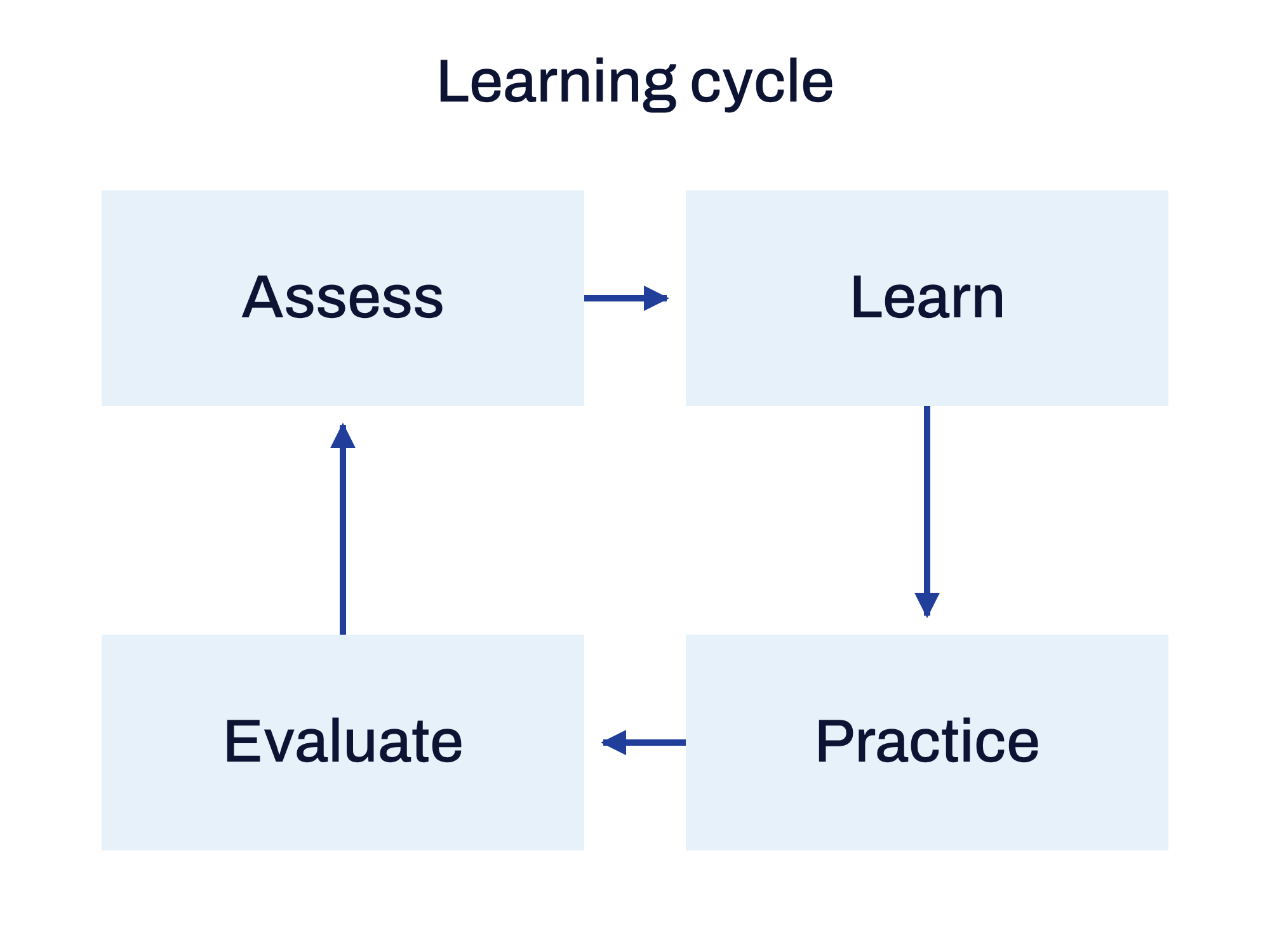
Financial literacy tests and learning evidence
The OECD/INFE measurement toolkit includes digital financial literacy questions covering knowledge, behavior and attitudes. A short quiz inside an application captures only the aspects its questions actually test. Teams should record the initial assessment, the learning activity and a later assessment with comparable questions. Repeating identical answers immediately after a lesson can measure recall without establishing durable understanding. Completion rates describe participation, while correct responses provide evidence about particular questions. Changes in financial wellbeing require their own measures, observation periods and interpretation of other influences on customers.
Integrating education with Finanz Engine
Finanz Engine is an example of financial education embedded within institutional digital services. Its Education module supplies learning experiences, while Customer Intelligence organizes information from educational interactions in partner dashboards. The standard integration uses Embedded WebView and Single Sign-On, with content and learning paths adapted to the partner. Implementation timing depends on customization and the complexity of existing systems. For procurement, this creates specific questions about identity handover and returning customers to their original task. Request a demonstration using the intended customer journey, including interrupted sessions and unfinished lessons.
Separate customer insight from educational success
Customer answers can help a provider understand interests and identify gaps in understanding. The institution should decide which answers support learning and which information enters customer relationship systems. Document the purpose of every field, its recipients and the period it remains available. A dashboard showing more completed lessons does not establish that customers understand a product better. Likewise, more applications after a course cannot establish that every resulting purchase meets customer needs. Review educational outcomes separately from sales indicators, then investigate any conflict between those objectives with the responsible product team.
Design a practical learning sequence
A useful pilot begins with one customer decision and a clearly defined starting assessment. The learning activity should explain the concept using the language customers encounter in the actual service. A practice exercise can then ask customers to apply that explanation to a different example. The final assessment checks the same competence without depending entirely on the wording of the original lesson. Keep a route back to the financial task available throughout the sequence. Record where customers abandon the activity, and test whether unfamiliar terminology or navigation explains the interruption before changing the curriculum.
Review localization and content ownership
A multilingual education service needs consistent learning objectives alongside wording that customers can understand locally. Product teams should review examples involving currency, charges and product terminology before distributing a translated lesson. Assign an owner to each content module and record the product assumptions on which it depends. When the underlying financial service changes, that owner can identify the affected explanations and exercises. Include accessible navigation and readable feedback in the acceptance review for every language. These checks concern the complete learning journey, including assessment messages and the return to the original financial service.
Keep education and advice distinct
Finanz describes its service as educational and excludes personalized investment recommendations and investment execution. Product teams integrating a learning module should preserve a clear explanation of what that module does. A general explanation of diversification has a different purpose from recommending a particular investment to an individual. If a journey continues into another service, review the handover and the responsibility for that next interaction. An educational completion badge should describe the activity completed and avoid implying that the customer has received an individual product recommendation.
Financial education and Finance Loop
Finance Loop is a European professional network for emerging technologies in finance, with Central Europe as its current regional focus. Finance Loop connects professionals across cities and countries through curated expert networks and formats for learning and professional exchange.
Finance Loop welcomes discussions about digital education within financial products and the expertise needed to evaluate these services. Finance Loop covers these related fields through its professional network: Investment & Digital Assets, Payments & Digital Money, Digital Infrastructure & Sovereignty, and Risk & Compliance.
Emerging Technologies in Finance
-
Investment & Digital Assets
Tokenized funds and securities, digital custody, crypto as an asset class for banks and asset managers, and decentralized finance (DeFi) as the alternative to banks.
-
Payments & Digital Money
Instant payments, stablecoins, tokenized deposits and the digital euro, plus the wallets that hold them and the payment rails that move them.
-
Digital Infrastructure & Sovereignty
Cloud, data and AI platforms, digital identity, open banking and open finance interfaces, plus the blockchain nodes and validators that link to financial systems.
-
Risk & Compliance
The rules for finance and IT: MiFID II for investment, PSD3 for payments, MiCAR for crypto, DORA for IT risk, the EU AI Act, and anti-money laundering (AML).