
Global Financial Centres Index
The Global Financial Centres Index is a twice-yearly comparison of the competitiveness of financial centers around the world. It combines external measures of economic and institutional conditions with assessments from financial-services professionals. The result is a rating and rank for each center that meets the index's response threshold.
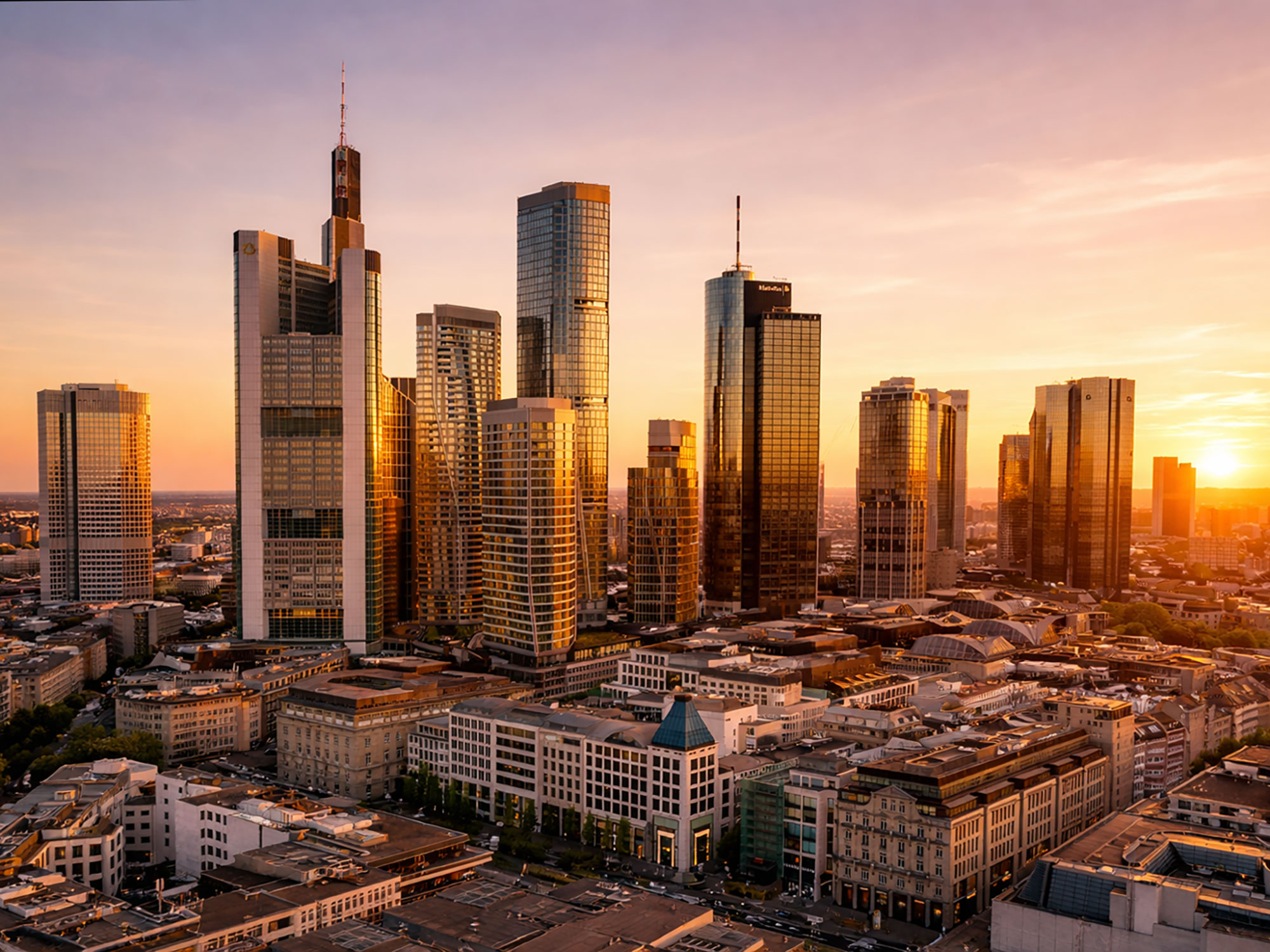
Frankfurt brings central banking, bank supervision, commercial banking and market infrastructure into one metropolitan area. Its position in European finance also rests on the technology beneath those institutions, from payment systems and data centers to cloud services, cybersecurity and AI. The index provides one way to track how this mix is perceived internationally.
How the index works
The Global Financial Centres Index is published by Z/Yen in partnership with the China Development Institute. It has appeared twice a year since 2007 and covers centers that receive enough assessments to qualify. Each edition offers a dated snapshot of international competitiveness.
The GFCI methodology combines instrumental factors with assessments from professionals in banking, investment management, insurance, professional services and related fields. The factors cover the business environment, human capital, infrastructure, financial-sector development and reputation. A model uses both sets of information to calculate the ratings.
Why Frankfurt is a European financial hub
Frankfurt combines monetary policy, supervision and commercial finance in a compact market. The European Central Bank sets monetary policy for the euro area and directly supervises its significant banks. The Deutsche Bundesbank adds national central-banking expertise, while AMLA gives the city a further European supervisory institution.
The city also has a dense commercial and market-infrastructure base. German and international banks operate alongside asset managers, insurers, advisers and technology providers. Deutsche Börse Group connects trading, clearing, settlement, custody and market data. These functions make Frankfurt important to the operation of European finance beyond any single ranking result.
International access and financial infrastructure
Frankfurt's international airport and rail links place decision-makers, clients and European institutions within practical reach. The concentration of institutions supports short professional distances, while international banks connect the city to financing markets and corporate clients across regions. Frankfurt's role in export, project and capital-markets finance follows from this combination of access and financial expertise.
Financial infrastructure is also physical and operational. The city is a major European location for data centers and internet exchange traffic. Data centers for finance in Frankfurt provide connectivity and resilient computing for banks, market operators and service providers. Payments in Frankfurt depend on the same close relationship between institutions and the systems that move money.
International talent across financial centers
International specialists need professional connections alongside a new role and a new city. Contact with peers helps them understand the market, find relevant expertise and build relationships in Frankfurt and across other financial and technology centers. Frankfurt's international institutions and companies give those relationships a broad professional base.
Finance Loop connects international specialists, hubs, companies, universities and financial institutions across cities and national borders. As a professional network, it brings together people with shared interests in finance and technology. This makes professional entry easier and carries international experience between established institutions and emerging technology ecosystems.
Fintech, founders and venture capital
Frankfurt has a strong fintech and founder environment around its banks, market operators, universities, investors and specialist hubs. Its advantage is proximity: new providers can meet the institutions that buy, regulate, finance or integrate their products. Venture capital and corporate finance add routes from an early idea to a company serving regulated markets.
Connections between those groups make the ecosystem work. As an example, the FinTech Founder & Investor Evening Frankfurt 2026 brings founders and investors into the same setting as the wider financial sector. Finance Loop, hubs and other ecosystem actors help ensure that Frankfurt's institutional strength and entrepreneurial talent are visible to one another.
Connections across German financial centers
Germany's financial expertise is distributed across several cities. Frankfurt has its institutional and capital-markets concentration, while other locations contribute strengths in technology, insurance, investment, entrepreneurship and specialized research. The national market benefits when these capabilities are treated as complementary parts of one financial ecosystem.
Finance Loop and other actors help bridge those locations by connecting people and organizations across institutional, geographic and professional boundaries. Beyond Germany, Finance Loop connects hubs, companies and universities with the financial sector and with one another. This extends Frankfurt's reach while giving other financial centers access to its institutions and international networks.
Why emerging technology matters
Financial-center competitiveness now depends on more than the number of banks in a city. The publisher's GFCI 40 release identifies digital infrastructure, the ability to attract fintech and digital-asset firms, effective financial-crime controls and deeper capital markets as leading policy priorities named by respondents. Those priorities put technology inside the financial-center debate.
For Frankfurt, the relevant base includes cloud and data-center capacity, cybersecurity, AI, modern payment systems and digital capital markets. TechQuartier connects the startup and corporate environment, while the Frankfurt financial-center strategy places technology and data alongside the city's established institutions. Emerging technology is not a separate sector here; it is part of how banks, supervisors and market infrastructure evolve.
Finance and technology events in Frankfurt
What is the Global Financial Centres Index?
It is a twice-yearly benchmark of financial-center competitiveness. The GFCI combines quantitative indicators with assessments from financial-services professionals and publishes ratings and ranks for qualifying centers.
How is the GFCI calculated?
The model connects instrumental factors on business conditions, people, infrastructure, financial-sector development and reputation with survey assessments from financial professionals. A center must receive enough assessments to enter the published index.
Why is Frankfurt a European financial hub?
Frankfurt brings the ECB, the Bundesbank, AMLA, major banks and market infrastructure into one metropolitan area. International connections, data-center capacity and a strong finance-technology ecosystem extend that institutional base.
What role does technology play for financial centers?
Banks and markets depend on secure computing, connectivity, payments, data and cyber resilience. A center's ability to develop and apply AI, cloud services, fintech and digital market infrastructure therefore affects its competitiveness.
How often is the GFCI published?
The index is published twice a year. Each edition updates the underlying factors and incorporates a new set of professional assessments.
Frankfurt, technology and Finance Loop
Finance Loop is a professional network for emerging technology in finance. Finance Loop connects hubs, companies, universities, international specialists and established financial institutions across Frankfurt, other German financial centers and markets beyond Germany. This wider perspective helps technical expertise reach the institutions that can apply it and gives financial practitioners access to ideas beyond their own location.
Finance Loop is a member of Frankfurt Main Finance and contributes a technology-focused network to the wider financial center.