
Pay by bank
Pay by bank is a checkout option that takes the money for an online purchase straight from the shopper's bank account, without a card. The shopper chooses the option, picks a bank and confirms a prefilled transfer in the banking app or in online banking. The shop receives a confirmation within seconds, and the money reaches the merchant as an ordinary bank transfer.
A licensed payment initiation provider handles the step between shop and bank and may start the transfer only after the account holder has approved it at the bank. Since banks in the euro area have to send instant transfers that arrive within ten seconds, a bank payment can confirm an online order almost as fast as a card. German shoppers see it as a Pay by Bank button from Tink or Trustly, or as Wero from their own bank.
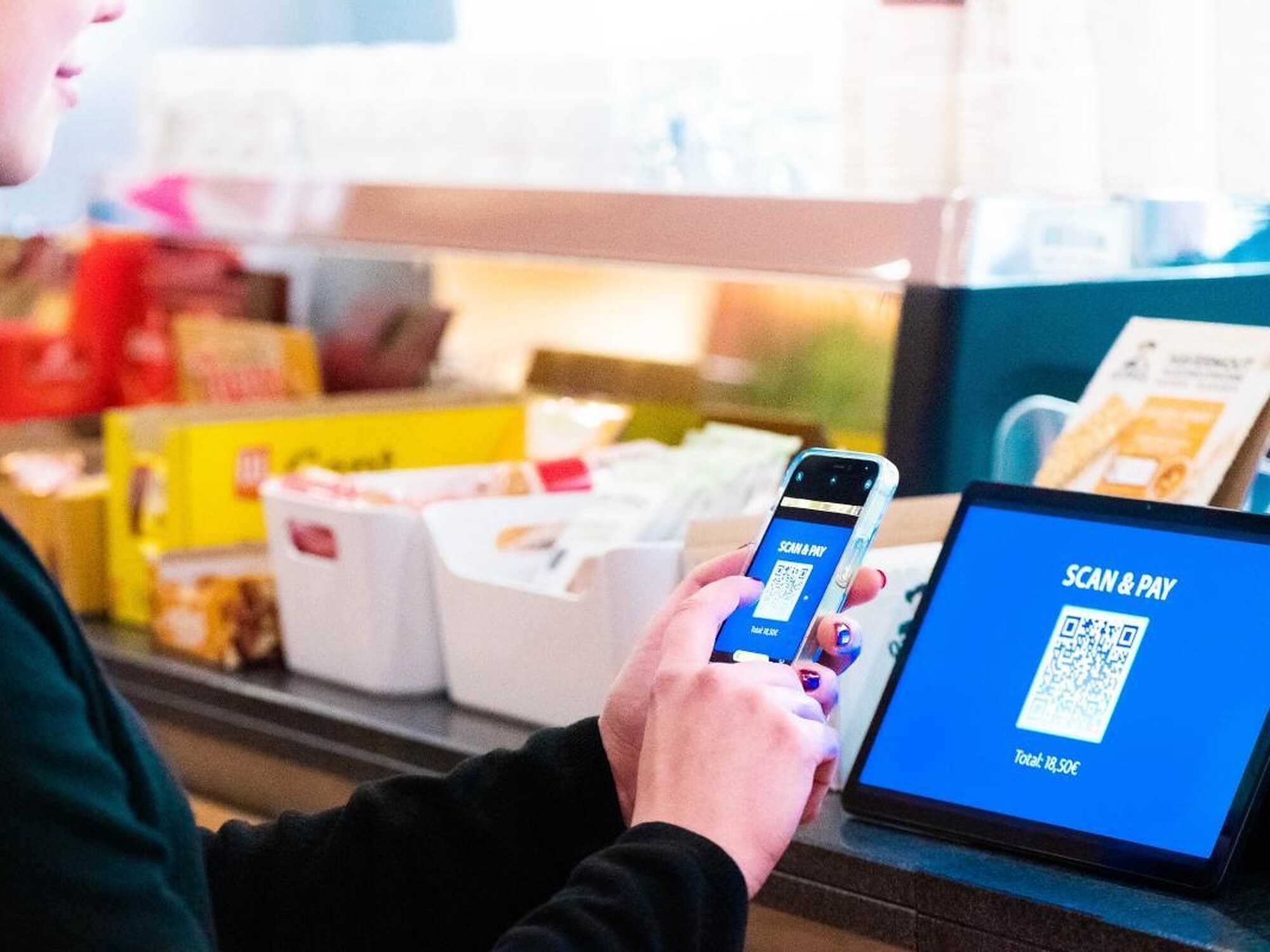
What the shopper sees at the checkout
The shopper picks pay by bank on the payment page and then chooses a bank. Germany has so many banks that Adyen sends German shoppers straight to Tink, its open banking partner, where the shopper selects the bank from a full list. Depending on bank and device, the shopper then logs in to the bank portal, switches to the banking app or scans a QR code, and approves the transfer with the strong customer authentication that the bank already uses for its own online banking.
The provider between shop and bank offers a payment initiation service under PSD2. The directive forbids that provider to hold the payer's funds or to store sensitive payment data, and the shopper's login credentials must stay out of reach of everyone except the shopper and the bank. Any other information about the shopper reaches the shop only with the shopper's explicit consent.
Pay by bank or card: what changes for the shopper
For the shopper, the visible difference is the login: pay by bank needs access to online banking or the banking app, while a card payment needs the card number or a card stored in a wallet. The money leaves the current account at once, as it does with a debit card, and is not collected later with a monthly credit card statement. A shopper without online banking, or with a bank the provider cannot reach, needs a card or another method at the same checkout.
For the merchant, the card fees and the card chargeback both fall away, and every payment arrives with the bank authentication already done. Account-to-account payments differ from cards in their cost per transaction and in their dispute rules, so a merchant should calculate both before moving customers away from the card.
When the merchant actually has the money
A successful confirmation at the checkout means that the bank accepted the transfer order, and that is not always the moment the money arrives. Adyen warns its merchants that some banks let shoppers cancel a transfer until midnight of the same day, and that a payment made on a Saturday may only be processed on Monday. If the funds have not arrived after eight weekdays, Adyen books the payment as a chargeback that the merchant cannot defend.
Instant transfers close most of this gap between the confirmation and the money. Under Regulation (EU) 2024/886, every payment service provider in the euro area that offers euro transfers has had to send instant ones since 9 October 2025, and the payee's bank must make the money available within ten seconds. When the bank executes an initiated payment as an instant transfer, the shop knows within seconds that the money has arrived and can ship the goods or unlock a digital product at once. The same rules for instant payments in Europe also brought a check of the payee name before a transfer leaves the bank.
Pay by bank in Germany
The German banks had giropay as their own payment method for online shops until its owner Paydirekt decided to end it, and giropay stopped accepting payments by 30 June 2024. Sofortüberweisung, the older German payment initiation service, also ended as a standalone method after Klarna had integrated it into its own payment options.
Two routes have taken their place at German online checkouts since then. Wero, the wallet of the European Payments Initiative, has worked in German online shops since November 2025, when the savings banks and the cooperative banks went live first, and acquirers such as Nexi connect further merchants to it. Open banking providers sell a Pay by Bank button through payment service providers: Tink and Adyen launched it in Germany for the voucher shop Guthaben.de and later for Vodafone customers paying prepaid tariffs and open postpaid bills.
Providers behind the pay by bank button
A shop can add pay by bank through the payment service provider that already handles its card payments, so it needs no connection of its own to each bank. Tink counted more than 10,000 merchants that had chosen its Pay by Bank through such partnerships by January 2025. Adyen offers the method in Germany, France and the United Kingdom with Tink as its open banking partner. Trustly, a Swedish payment institution, connects to 12,000 banks in 33 markets, Germany among them.
Before choosing a provider, a merchant should check which German banks it reaches and how it reports a payment that was confirmed but never arrived. Refunds belong in the comparison as well, and Adyen pays them back by SEPA transfer, with full and partial refunds supported for the method.
Upcoming payments events in Europe
What does pay by bank mean?
Pay by bank means paying a shop directly from a bank account, with a transfer that the shopper approves in online banking or in the banking app. The term covers payments started by a licensed payment initiation provider as well as bank wallets such as Wero, and both work without a card.
Is pay by bank safe?
The shopper approves every payment inside the login of the shopper's own bank, and the provider may neither hold the money nor store the login data. If a payment was not authorized, PSD2 obliges the bank to refund it by the end of the following business day, also when a payment initiation provider started it. That protection does not cover a payment the shopper approved for a fake shop or a scammer, which is the risk known as authorized push payment fraud.
Can you get a refund after paying by bank?
Yes, the merchant sends the money back as a new bank transfer, and providers such as Adyen support full and partial refunds this way. The shopper has no card chargeback to fall back on, so a dispute about goods that never arrived goes to the merchant first, as with any other bank transfer.
Does the shopper pay a fee for pay by bank?
The merchant pays the provider for each payment, at the price it agreed with its payment service provider. On the bank side, Regulation (EU) 2024/886 forbids banks to charge more for an instant transfer than for a standard one, so the transfer costs the shopper no more than any other online transfer from that account.
Pay by bank and Finance Loop
Finance Loop covers pay by bank and open banking in its Payments & Digital Money track. The Finance Loop Knowledge Hub explains the rail underneath in its answer on instant payments, with the ten-second rule and the obligations of Regulation (EU) 2024/886.
Finance Loop is a professional network and has the goal of driving the institutional use of emerging technologies in finance, such as AI, digital payments, cloud and blockchain solutions. Finance Loop helps its members build skills and personal networks in these fields: Investment & Digital Assets, Payments & Digital Money, Digital Infrastructure & Sovereignty, and Risk & Compliance.