
Securities processing
Securities processing is the work a bank does after a customer buys or sells a share, bond or fund unit. It covers order routing, the confirmation and matching of the trade, settlement, custody of the holding and corporate actions such as dividend payments. Most of it happens out of sight of the investor, who sees the order and later the position in the custody account.
In Europe the chain runs through central securities depositories and, for trades in euro and Danish krone, through the T2S platform of the Eurosystem. Many banks in Europe do not run this processing on their own systems. In Germany, about 1,000 institutions use dwpbank as their outsourcing partner for securities services.
Securities processing: from trade to settlement
After execution, both sides confirm the trade details and send settlement instructions to the depository. Matching compares the two instructions, and on the intended settlement date the securities and the cash move together, as delivery versus payment. An instruction that does not match, or that lacks securities or cash, misses that date.
Since 1 February 2022, a trade that settles late costs the failing party a cash penalty for every business day of delay under CSDR, the EU regulation for securities settlement. Operations teams pass these penalties on to the client whose instruction caused the fail.
Custody and corporate actions
Custody is the safekeeping of securities for clients, recorded in the custody account at the bank and, further along the chain, in accounts at a custodian and a depository. Corporate actions are events that the issuer starts, for example a dividend, an interest payment, a stock split, a rights issue or a shareholder meeting. The bank books the cash or the new securities to each client and passes voting information on.
Since 3 September 2020, intermediaries in the EU pass shareholder identification requests and meeting information along the chain in a standard format, set out in Implementing Regulation (EU) 2018/1212 under the Shareholder Rights Directive.
Securities processing and T+1
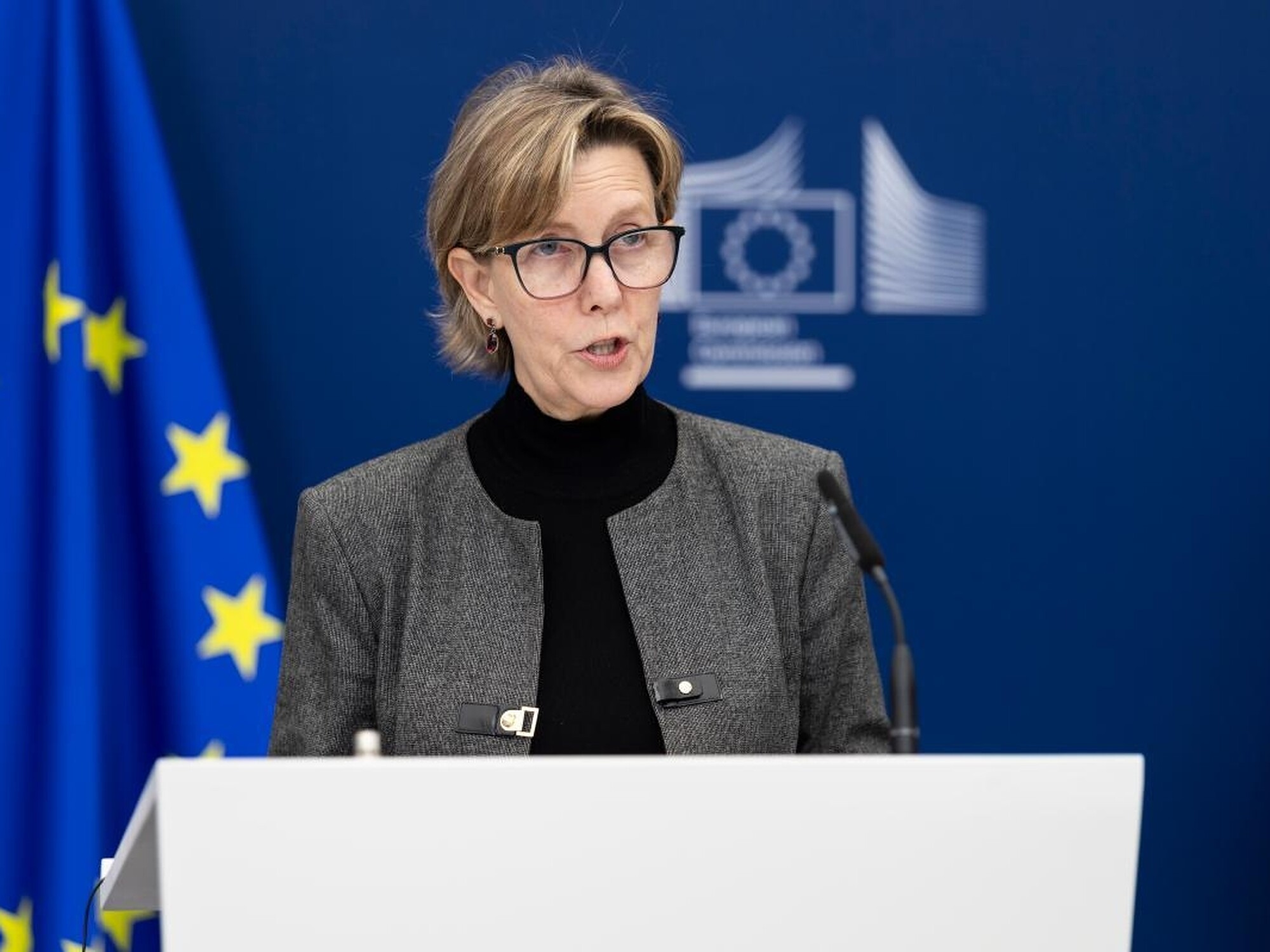
From 11 October 2027, trades on EU trading venues settle one business day after the trade date, under Regulation (EU) 2025/2075. Maria Luís Albuquerque, the European Commissioner for Financial Services and the Savings and Investment Union, presented the proposal in Brussels on 12 February 2025.
With one day less, a mismatched instruction can rarely be fixed by hand in time. Banks therefore automate allocation, confirmation and matching ahead of T+1 settlement in Europe.
Securities processing platforms in Germany
Most savings banks and cooperative banks in Germany leave their securities processing to dwpbank, which recorded about 63.3 million securities transactions in 2025, according to its annual figures. The successor of its WP2 platform is WP3, which dwpbank describes as modular and cloud native, built from about 400 microservices.
At the depository level, Clearstream Banking AG keeps the central record for securities issued in Germany and settles euro trades through T2S.
Securities processing on distributed ledgers
A tokenized security still needs settlement, custody and corporate actions like any other security. Under the DLT Pilot Regime, market operators can run trading and settlement on a distributed ledger with exemptions from parts of CSDR.
Since 21 September 2026, the Eurosystem service Pontes has let such platforms settle the cash leg of a trade in central bank money.
Upcoming events on securities processing and settlement
What is securities processing?
Securities processing is everything a bank does after a trade in shares, bonds or funds: confirmation, settlement, custody and corporate actions. Banks either run it on their own systems or outsource it to a securities services provider.
What is the difference between clearing and settlement?
Clearing establishes who owes what after a trade, often through a central counterparty that nets positions. Settlement is the final transfer of the securities and the cash between the accounts of the parties.
When does T+1 apply in the EU?
T+1 applies from 11 October 2027 to trades on EU trading venues, under Regulation (EU) 2025/2075.
Securities processing and Finance Loop
Finance Loop covers securities processing, settlement and custody in its Investment & Digital Assets track, and the systems behind them in its Digital Infrastructure & Sovereignty track. Finance Loop brings operations, IT and product people from banks, depositories and fintech companies together at events in Frankfurt, Munich, Berlin and Hamburg.
Finance Loop is a professional network and has the goal of driving the institutional use of emerging technologies in finance, such as AI, digital payments, cloud and blockchain solutions. Finance Loop helps its members build skills and personal networks in these fields: Investment & Digital Assets, Payments & Digital Money, Digital Infrastructure & Sovereignty, and Risk & Compliance.