
vLEI
The verifiable Legal Entity Identifier, or vLEI, connects an organization with digital credentials for people acting in defined roles. It builds on the global LEI system and adds cryptographic verification of those relationships. Financial institutions and companies can use that evidence when assessing who represents a counterparty in a digital interaction.
A company name identifies an organization but does not establish who may act for it. Role credentials can make that relationship easier to check across organizational boundaries. For treasury and payment teams, the practical question is how verified representation fits alongside bank mandates, approval limits and the controls governing each transaction.
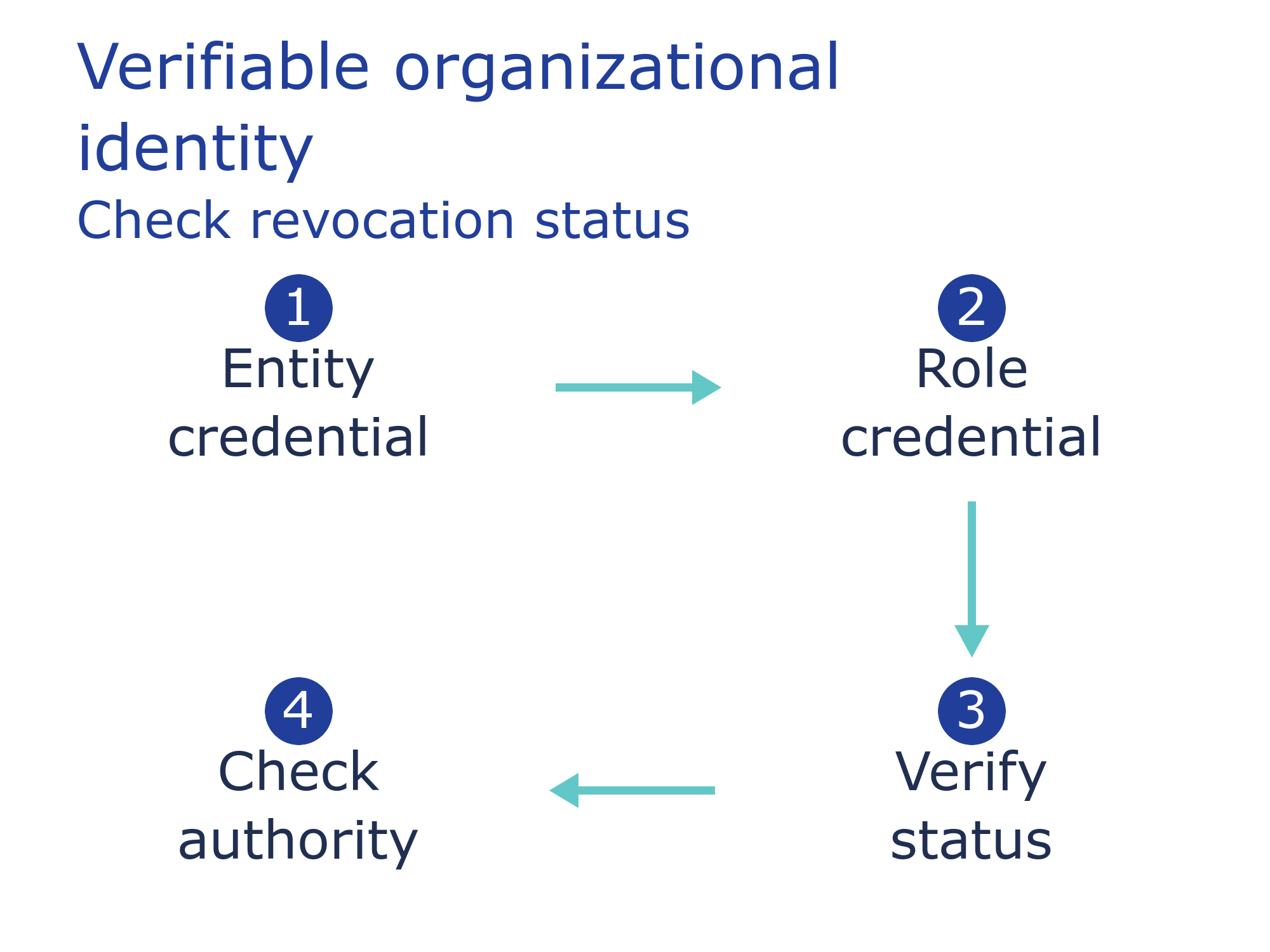
What a vLEI adds to an LEI
A conventional Legal Entity Identifier connects a code with an entity reference record. The vLEI ecosystem adds credentials for the entity and for people holding organizational roles. GLEIF describes the entity, person and role as the three identity components of this approach. This makes vLEI relevant to digital interactions where a recipient needs evidence connecting a representative with a particular legal entity.
Official roles and functional roles
An Official Organizational Role credential, or OOR credential, connects a person with a formally recognized organizational role. An Engagement Context Role credential, or ECR credential, describes a role within a defined engagement context. These credential types serve different purposes within the vLEI governance framework. A verifier should inspect the actual role and issuer before accepting a credential as evidence of authority.
Qualified issuers and the trust chain
An organization first obtains an LEI and then approaches a Qualified vLEI Issuer, or QVI. GLEIF qualifies these issuers and provides the root of trust for the credential chain. QVIs issue legal entity and official organizational role credentials under the framework. Organizations can manage engagement context role credentials themselves within its rules, while issuers can also provide that service. The current GLEIF issuer list provides the starting point for selecting a provider.
Applying role evidence to a treasury workflow
Consider a treasury team preparing a corporate payment that requires two separate approvals. A vLEI role credential could provide evidence that a person represents the paying entity in a relevant capacity. The payment system would still need to apply the account mandate, approval limits and required separation of duties. This is an integration example, and its feasibility depends on the participating systems and their acceptance of the credentials.
Verification must include current credential status
A verification process needs to examine the credential chain, the claimed role and whether the credential remains valid. Revocation matters when a person leaves an organization or loses an assigned responsibility. The team relying on a credential should define when verification occurs and how failures reach an accountable reviewer. Checking a credential once during onboarding is insufficient evidence that a role still applies to a later payment.
A verified role and payment authorization are separate decisions
Role evidence helps establish representation, while payment authorization depends on the transaction and the account relationship. A finance director role does not automatically demonstrate unlimited signing authority for every account. Likewise, a credential alone does not prove that beneficiary details or an invoice are genuine. Treasury teams should document which checks rely on identity evidence and which controls still require bank, accounting or fraud review.
vLEI and European identity wallets
A European Business Wallet and vLEI both raise questions about how organizations present identity and representation evidence. They should not be assumed to share identical governance, acceptance rules or implementation requirements. A vLEI credential alone does not establish the status of an eIDAS qualified electronic signature. Procurement teams should ask which credential profiles, signature services and verification methods a proposed integration actually supports.
Define a pilot before expanding integration
Choose one workflow, identify the receiving organization and agree which role evidence both parties will accept. Ask prospective issuers about issuance, maintenance, revocation, integration interfaces and the handling of organizational changes. Test a role change and a revoked credential alongside the normal successful verification path. Measure manual checks and exception handling before assuming that verifiable credentials will reduce costs across every corporate payment process.
Does every company need a vLEI?
A vLEI is useful when counterparties or systems accept its credentials for a defined interaction. Teams should establish that acceptance and a concrete business need before purchasing issuance services.
Can an organization obtain a vLEI without an LEI?
An organization first needs an LEI before approaching a Qualified vLEI Issuer for credentials. The entity identifier anchors the organizational identity used within the credential ecosystem.
Can a role credential replace a bank mandate?
A role credential provides evidence that must be interpreted within the receiving process. It does not independently replace account mandates, transaction limits or approval controls agreed with a bank.
Upcoming payments events in Europe
The calendar needs JavaScript to display upcoming events on this page.
Connect with corporate identity and payments specialists
Finance Loop connects professionals working on payments, digital identity and emerging technologies across Europe. Discuss how verifiable organizational roles could support treasury workflows and cross-border business relationships. Contact Finance Loop to explore the subject with relevant specialists in the professional network.