
AI in financial trading
AI in financial trading uses software models to analyze market information and support trading decisions. The systems can rank signals, detect patterns in prices or help a trader review news and research. These uses support the assessment of a market position; the decision to send an order and the rules governing its execution are separate parts of the trading process.
A firm that allows a model to influence order execution needs testing, trading limits and a way to stop unexpected behavior. Model performance must be reviewed against the data and market conditions under which the strategy is used. These controls help trading and risk teams understand what the system can do, which actions are permitted and when a person must intervene.
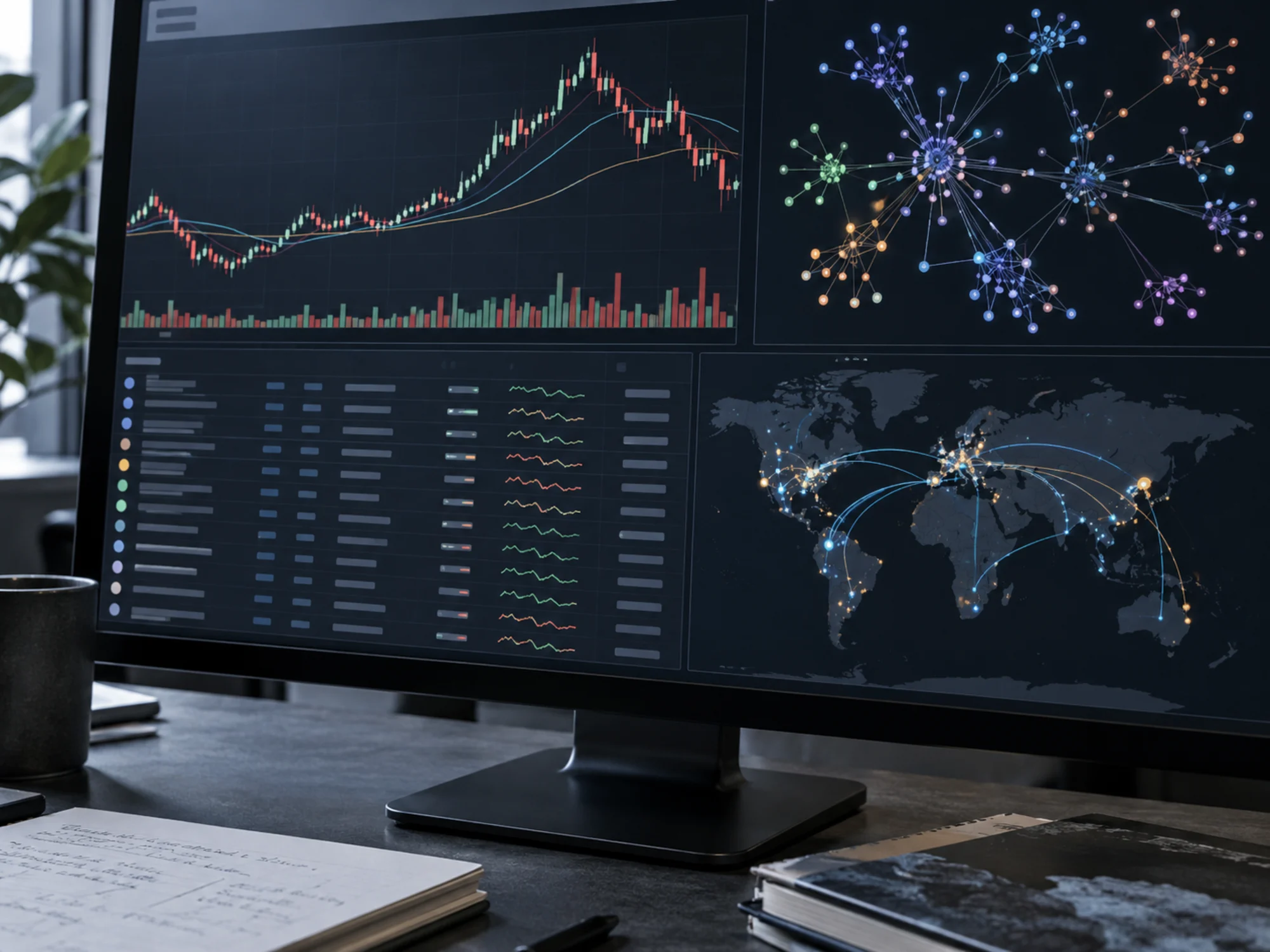
Signal, decision and order
A forecast can be useful without being an automatic trading instruction. Teams should record which data created a signal, who may override it and how the result is compared with a simple baseline. AI for financial market data covers the input side; algorithmic trading in Germany covers execution.
Backtests do not reproduce live markets
Historical tests can leak future information into training data or overfit one market period. Before deployment, a team needs separate test periods, transaction costs and monitoring for model drift. A model that predicts direction but trades at an impossible price has no usable trading result.
Controls around automated execution
Under MiFID II Article 17, investment firms engaged in algorithmic trading must have resilient systems, trading limits and controls against erroneous orders, and ESMA also explains the need for kill functionality. Whether a specific AI use is algorithmic trading depends on its role in determining orders.
Can a language model place trades?
A language model can summarize a filing or generate a suggestion. Letting it trigger orders introduces a different control problem: evidence for the input, deterministic limits, approval and a stop mechanism. Large language models in finance covers those text systems separately.
Upcoming events in Germany
AI and Finance Loop
Finance Loop puts trading practitioners in the same room as data and risk teams. The discussion is about measurable model behavior and the controls around real orders.
Finance Loop is a professional network for emerging technologies in finance. The events and partnerships of Finance Loop bring practitioners together across Investment & Digital Assets, Payments & Digital Money, Digital Infrastructure & Sovereignty, and Risk & Compliance.