
Crypto in Germany
BaFin has issued more authorizations under MiCA than any other national regulator in the EU, 69 by August 2026 against 35 in France. DZ Bank and DekaBank have brought crypto trading and custody to the cooperative and savings bank networks, and an exchange or custodian also needs a license under the German Banking Act. Dated events are in the calendar below.
Germany, the EU's biggest crypto license issuer
BaFin, the Federal Financial Supervisory Authority, has issued more authorizations under the EU's Markets in Crypto-Assets Regulation (MiCA) than any other national regulator, 69 by August 2026 against 35 in France and 29 in the Netherlands. A MiCA license is valid across the EU once granted, so a firm can choose where to apply, and Germany's supervisor became the preferred choice for a number of large platforms.
Bitpanda, a retail crypto platform founded in Austria, was the first major company to receive a MiCA license, and it took that license from BaFin. Kraken holds MiCA authorizations from three regulators at once, including BaFin in Germany, alongside Austria's FMA and a Maltese license.
Crypto custody at German banks
Custody and exchange services for crypto-assets need a BaFin license under the German Banking Act (Kreditwesengesetz, KWG), on top of any MiCA authorization for the crypto-asset business itself. Several established German banks have built this license into their existing business. DZ Bank, the country's second-largest financial institution, received BaFin approval to launch a crypto trading platform for the cooperative banking sector under MiCA.
DekaBank, the asset manager and securities services bank owned by the savings bank sector, received approval from BaFin and the European Central Bank to offer crypto custody. Until then, custody had mostly been the business of specialist firms, not a bank of DekaBank's size. For institutional investors, Deutsche Börse in Frankfurt runs the Deutsche Börse Digital Exchange, a regulated spot venue for crypto-asset trading.
Tax rules private investors run into
For a private individual, gains from selling bitcoin or other crypto-assets held for more than one year are tax free under section 23 of the Einkommensteuergesetz, with no upper limit on the tax-free amount. Gains realized within a year of purchase are taxed as other income, though a small yearly allowance for private sales still applies.
Germany's Federal Ministry of Finance has drafted a bill that would replace the one-year exemption with a flat withholding tax from 2027, closer to how gains on shares are already taxed. Investors and tax advisers are watching the draft, since it would end a rule that has set German tax treatment of crypto apart from most other EU countries.
What people who work in crypto in Germany deal with now
Compliance teams at exchanges and custodians spend much of their working time on MiCA's daily requirements: travel rule data attached to every transfer, and the market abuse rules the regulation writes specifically for crypto-assets. Because BaFin issues so many of the EU's licenses, German-licensed firms also watch how the European Securities and Markets Authority coordinates supervision across member states, since a license from one country now carries obligations that other regulators can question.
On the bank side, the arrival of DZ Bank and DekaBank changes who a retail or institutional customer can buy crypto-assets from, moving part of the market away from crypto-only platforms and into accounts customers already hold. Someone new to the field should start with the distinction between a MiCA authorization, which covers the crypto-asset business, and a KWG custody license, which covers safekeeping, since a firm can need one, the other or both.
Upcoming crypto and digital asset events in Germany
Finance Loop, the meeting place for crypto in Germany
Finance Loop is the meeting place for people who build, run and regulate crypto businesses in Germany, Austria and Switzerland. It connects the finance, IT and AI communities and holds events in Frankfurt, Munich, Berlin and Hamburg.
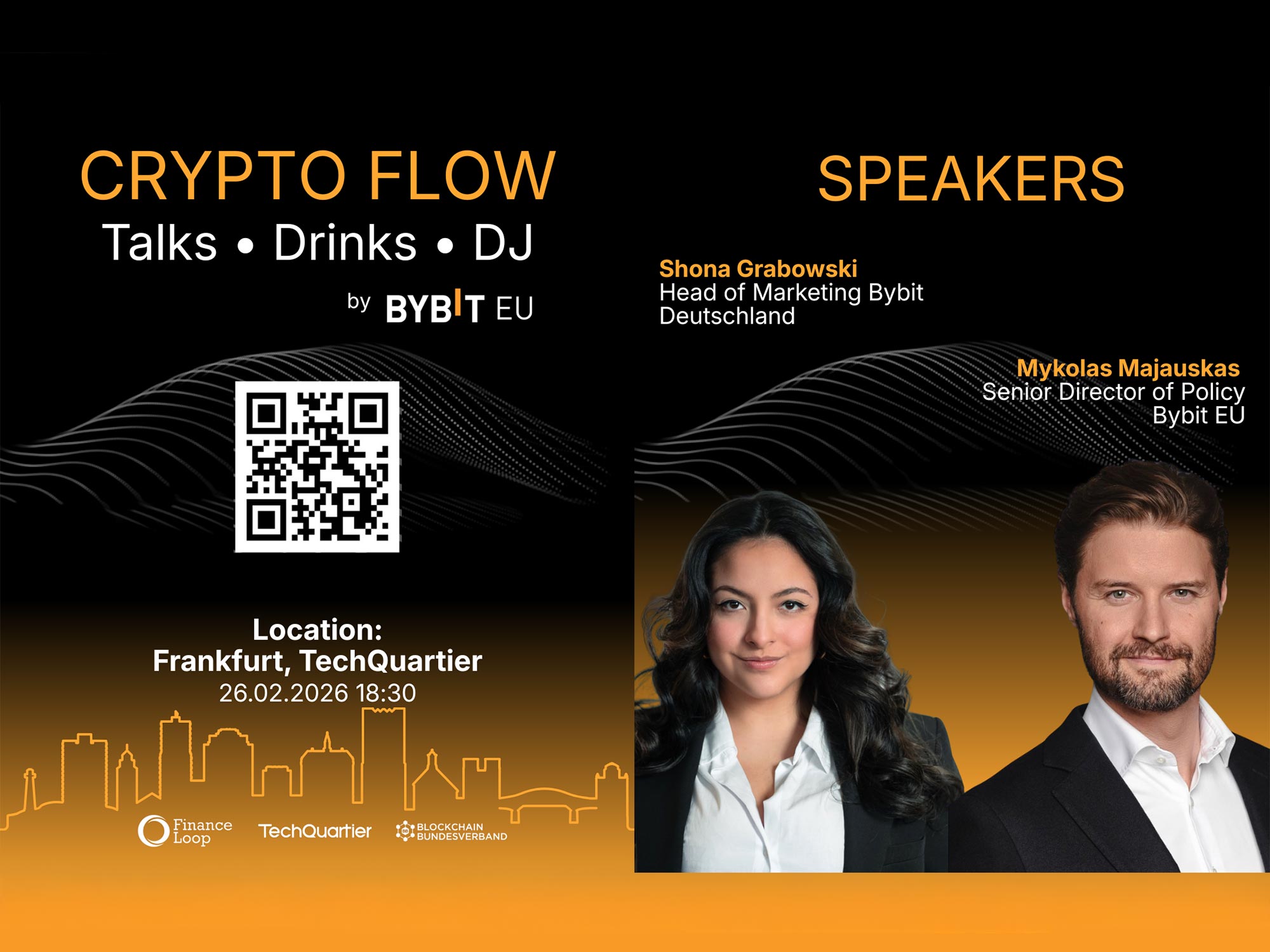
Finance Loop partners with OKX, a crypto exchange operating under a MiCA license in Europe, and supported the Bybit EU Crypto Evening at TechQuartier, where a senior Bybit policy director spoke on compliance under MiCAR. Finance Loop is also a founding member of the German Bitcoin Association and a member of Bundesblock, the German blockchain federal association. Finance Loop sponsored the CAC 2025 in Frankfurt and partnered with the Crypto Assets Conference 2026. It has a long-term partnership with BTC-ECHO, the German-language media platform for Bitcoin and blockchain, supported the German Blockchain & AI Week 2025 in Berlin, and holds finance and web3 events in Munich with W3MUC and DLT Germany. Related pages: crypto in Frankfurt, MiCA in Germany, tokenization in Germany and bitcoin in Germany.
Investment & Digital Assets
Payments & Digital Money
Risk & Compliance
Do I need a license to run a crypto business in Germany?
Yes. A crypto exchange, broker or custodian operating in Germany needs an authorization from BaFin under MiCA for the crypto-asset business, and a separate license under the KWG if it holds customer crypto-assets in custody. BaFin's fintech contact point helps a new company work out which of the two, or both, its model needs.
Is crypto tax free in Germany?
For a private investor, gains on crypto-assets held for more than a year are currently tax free with no cap, under section 23 of the Einkommensteuergesetz. Gains on assets sold within a year are taxable. A draft bill would end the one-year exemption from 2027, so this treatment may not stay in place.
Which German banks offer crypto trading?
DZ Bank, the central institution for Germany's cooperative banks, launched a MiCA-licensed crypto trading platform, and DekaBank, owned by the savings bank sector, received approval for crypto custody from BaFin and the ECB. Both give a retail or institutional customer a way to buy crypto-assets through accounts already held there, alongside specialist platforms such as Bitpanda and Kraken.
Crypto in Germany and Finance Loop
Finance Loop is a professional network and has the goal of driving the adoption of emerging technologies in finance, such as AI, tokenization, stablecoins, and DeFi. Finance Loop helps its members build skills and personal networks in these fields: Investment & Digital Assets, Payments & Digital Money, and Risk & Compliance.
It connects the finance, IT and AI communities in Germany, Austria and Switzerland, with events in Frankfurt, Munich, Berlin and Hamburg. If you work on crypto anywhere in Germany, you meet people from the same field at Finance Loop events.