
Crypto OTC desk
A crypto OTC desk is a trading service that arranges digital asset transactions directly with a counterparty outside a public exchange order book. OTC means over the counter, and clients typically request a quote for the full trade they want to execute.
The desk provides a price and coordinates execution and settlement under agreed terms. Institutions and other clients use the service when they need to trade larger amounts or arrange a particular settlement method. The quote and counterparty arrangements matter because pricing, fees and delivery conditions depend on the desk and the transaction.
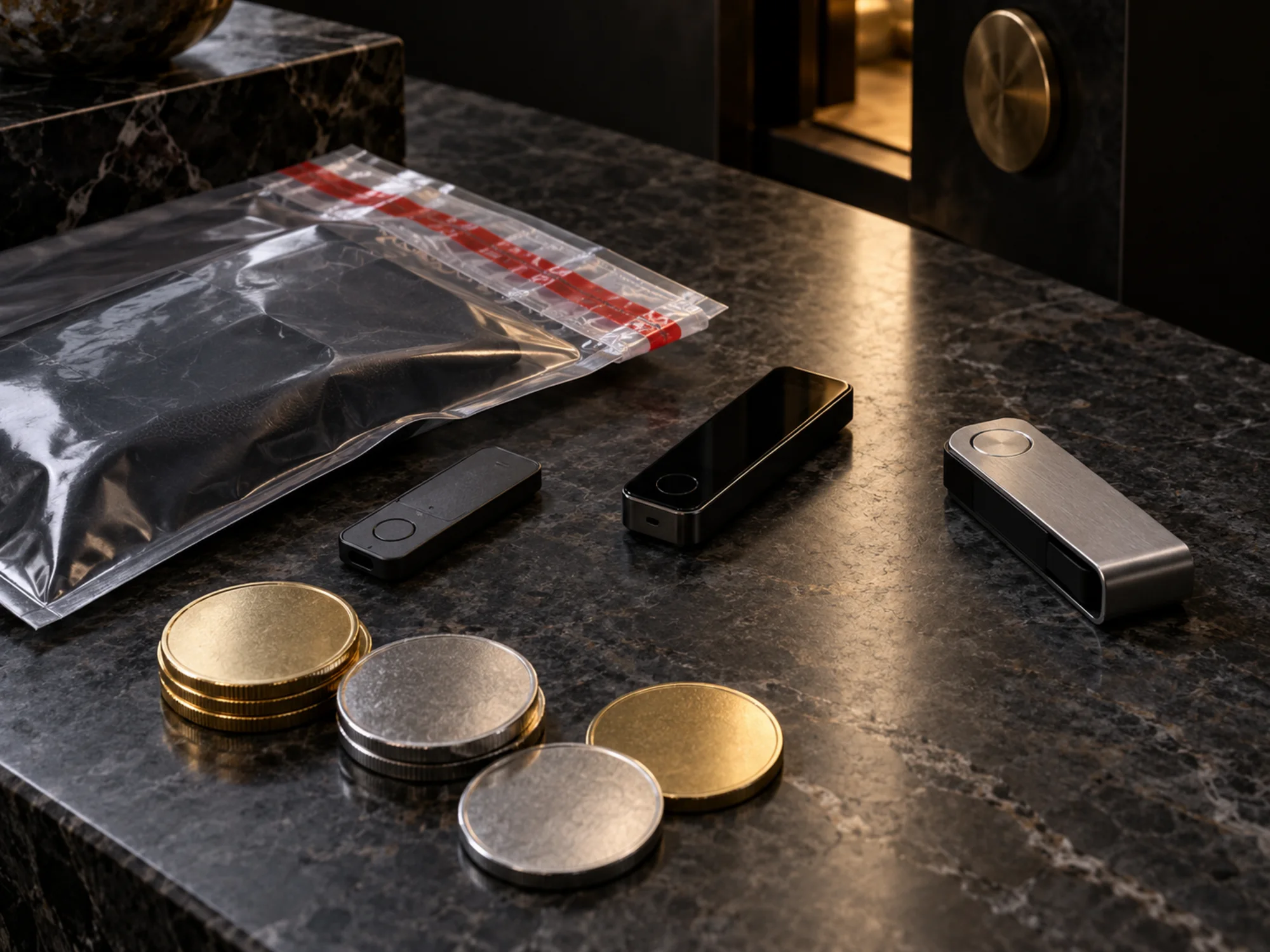
Why a large order moves a book, and what slippage costs
An order book holds limited size at each price. A market order eats the best offer, then the next, then the one above that, and the average price the buyer pays rises as it goes. The difference between the price on the screen when the order was sent and the average price actually paid is slippage, and on a thin book it is the largest cost of the trade.
Nobody is selling 500 bitcoin at one price on one venue, so an order that size would walk the book and finish far above where it started, as Unchained's account of OTC desks describes. A desk quotes the whole size at once, so the buyer knows the cost before committing.
Principal desk against agency desk
A principal desk trades with its own capital. The principal desk takes the other side of the client's order, carries the resulting position, and earns the spread it quoted. The client gets price certainty immediately and takes on the desk as a counterparty.
An agency desk takes no position. The agency desk finds the other side, matches the two parties and charges a commission, so the client's counterparty is whoever the desk found. Fills can take longer and the price is not fixed at the moment of the request. A client asking for a quote should know which model it is dealing with, because the answer decides who carries the market risk between the quote and the settlement.
Request for quote, settlement window and credit
The trade runs through a fixed sequence. The client sends a request for quote naming the asset, the direction and the size. The desk streams a two-way price, and the spread in that price reflects what the desk expects sourcing the other side to cost. Both sides agree, usually in a chat window with a written confirmation to follow. Then the client sends cash or coins to the agreed account and the desk delivers the other leg.
Whoever delivers first is exposed until the other side arrives, and settlement may run through a bank wire, a stablecoin transfer or an on-chain payment, each with its own timing. Desks close the gap with escrow, with delivery against payment at a shared custodian, or with a credit line that lets a known client receive before it pays. Full KYC and anti-money-laundering checks run before any of this, and for a new client that onboarding takes longer than the trade.
Which MiCA service class bilateral dealing falls under
A principal desk that exchanges crypto-assets for funds or other crypto-assets provides a Class 2 service under MiCA, with a permanent minimum capital requirement of 125,000 euros. Annex IV reserves Class 3 and its 150,000-euro minimum for operating a crypto-asset trading platform. An agency desk receiving and transmitting orders or executing orders for clients provides Class 1 services, with a 50,000-euro minimum. The highest applicable service class determines the minimum when services are combined. A desk that quotes to German clients needs authorization from a national supervisor, BaFin in Germany, or a passport from another member state. The classes and the application are set out on CASP license.
A crypto derivative is a different matter. Futures and options on crypto are financial instruments under MiFID II, so a desk quoting those needs an investment firm license instead, which is the subject of crypto derivatives.
Reporting and market abuse duties on an OTC trade
MiCA's market abuse rules apply to crypto-assets admitted to trading, whether the trade itself happens on a venue or off it. Insider dealing and market manipulation are prohibited, a person professionally arranging transactions has to have systems to detect and report suspected abuse, and inside information has to be disclosed by the issuer. A desk that learns a client intends to buy a large block and trades ahead of it for its own account is front-running, which is prohibited conduct.
Privacy at execution is therefore not privacy from supervision. The trade stays off the public book, and the desk still keeps records and files suspicious transaction reports.
Hedging, and where the desk's price comes from
A principal desk that sells 500 bitcoin to a client is short 500 bitcoin until it buys them back. The principal desk does that across exchanges, from other desks, and from clients selling in the other direction, and it may hedge the interim exposure with a futures position. The spread it quoted has to cover the expected cost of that unwind plus the risk that the price moves against it while it works.
This is why a quote widens with size, with volatility and with illiquid assets, and why the same desk quotes bitcoin tighter than a small-cap token. The quoting mechanics on the exchange side are covered on crypto market making.
When does an institution use the desk instead of the exchange?
An institution uses an OTC desk when the order is large against the available depth, when the price has to be known in advance, or when the asset has no deep book anywhere. A treasury buying a one-time position, a fund rebalancing a large allocation and an issuer selling a token holding all fit. Small and routine orders go to the exchange, because the desk's spread on a small ticket costs more than the slippage would.
What is the minimum size for a crypto OTC trade?
Desks set their own floors, and the common range starts in the low six figures of euros or dollars. Below that an exchange order with a routing algorithm is cheaper, which is why brokers steer smaller clients there. The floor exists because each OTC ticket carries onboarding, credit assessment and settlement work that does not shrink with the trade size.
Is OTC cheaper than trading on an exchange?
An exchange charges a visible fee in basis points and leaves the slippage to the trader. An OTC desk shows no fee and earns a spread, which is wider than an exchange fee but applies to a price the client agreed in advance. For a large order the slippage avoided usually exceeds the spread paid; for a small one it does not. The comparison a desk cannot make for the client is what the same order would have cost on the book, which is why institutions measure their own execution.
Crypto OTC desks and Finance Loop
Finance Loop is the meeting place for the trading, treasury and compliance people on both sides of these tickets. Finance Loop events on digital assets put execution, settlement and the MiCA service classes on one agenda, and the subject belongs to the track Investment & Digital Assets.
Finance Loop members who execute at size meet the desks, the custodians and the supervisors at Finance Loop events in Frankfurt and the other European finance hubs.
Finance Loop is a professional network supporting the institutional use of emerging technologies in finance, such as AI, tokenization, stablecoins, and DeFi. Finance Loop helps its members build skills and personal networks in these fields: Investment & Digital Assets, Payments & Digital Money, Digital Infrastructure & Sovereignty, and Risk & Compliance.