
Customer inquiry automation in Frankfurt
Customer inquiry automation connects incoming messages with customer records, a responsible person and a visible next step. A request arriving through a form or shared mailbox becomes a case that the team can track through response and follow-up. Clear assignment rules help prevent messages from remaining unnoticed between different systems or departments.
Businesses in Frankfurt and Rhine-Main can begin with one intake channel and a defined response process. The project should establish how existing contacts are recognized, which replies need approval and what happens when information is missing. Those decisions matter before adding automatic classification or AI-generated drafts to the workflow.

Map the response process before selecting software
List the messages that arrive, the information needed to answer them and the people who handle each request type. Separate a new sales inquiry from an existing customer asking about an unresolved case. Define what counts as acknowledgment, a substantive answer and completion, because each status represents a different point in the process.
A rule-based workflow can route messages using a form selection, recipient address or subject. The Microsoft documentation on email triggers illustrates filtering by these kinds of email properties. AI classification is an additional option when the message needs interpretation beyond those existing rules.
Match contacts, assign responsibility and follow up
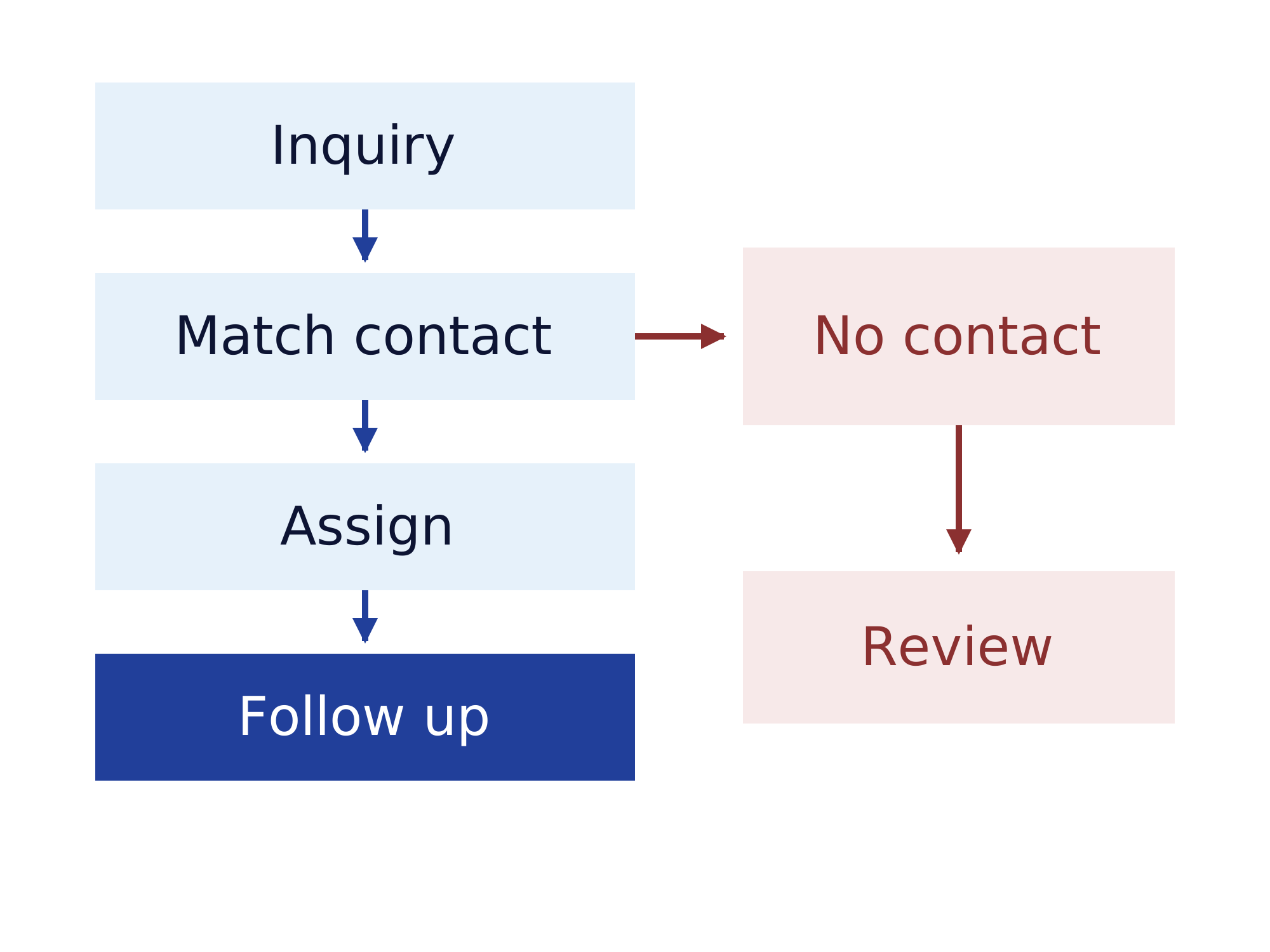
An incoming request should retain a link to the original message when the customer record is created or matched. Matching rules need to distinguish a repeated inquiry from a new request by the same contact. When required contact details are missing, send the case for review instead of silently attaching the inquiry to an uncertain match.
After matching, assign a responsible person and a follow-up state that the team can see. Test the handoff when the chosen person is unavailable or the destination system rejects the update. The exception should remain visible, with a defined route for somebody to take over the inquiry.
Approval rules for drafts and customer replies
Decide which messages can use an approved template and which require individual review before sending. A receipt confirmation and a binding answer about a customer case can need different approval rules. If AI prepares a response, the reviewer should be able to compare the draft with the inquiry and relevant customer information.
Keep a visible distinction between a prepared draft, an approved response and a successfully sent message. A failed send must not leave the case looking complete, and repeated processing should not produce unintended duplicate replies. These are acceptance cases to agree with the implementer before connecting the live mailbox.
Acceptance and handover for the response team
Submit test inquiries with complete details, missing fields, duplicate contacts and an unavailable destination. For each example, check the resulting record, responsible person, response status and next action. Compare the actual outcome with an agreed expectation, including the visible error when a handoff cannot finish.
The response team needs documented assignment rules, access responsibilities and instructions for changing templates or routing. Agree who checks failed cases and who can stop the automation while inquiries continue manually. These operating decisions are particularly useful when several teams across Frankfurt and Rhine-Main share one customer mailbox.
Route inquiries across Frankfurt, Wiesbaden and Darmstadt
A shared mailbox serving Frankfurt, Wiesbaden and Darmstadt needs an agreed rule for assigning each inquiry to the responsible team. If the service location determines responsibility, collect that location explicitly and distinguish it from the billing address. Test an inquiry whose contact address and requested service location differ, including a case outside the agreed service area. An unresolved location should remain visible for review, with a person responsible for the next customer response.
Gateflow as a provider in Frankfurt
Gateflow is a Frankfurt IT company connecting a named form or mailbox to the system holding customer records. Gateflow maps the response process and builds a small working flow before adding classification or AI drafts. The customer approves access and response rules, including the types of reply requiring human review.
The Gateflow inquiry automation service covers record matching, assignment, follow-up and tests for missing data or failed handoffs. Gateflow can scope projects across Germany, with remote or on-site work depending on the assignment. Buyers can compare the proposed routing, acceptance cases and handover with other suitable implementation options.
Upcoming technology events
Can existing software handle the inquiry workflow?
Check the available form, mailbox and customer-record connections before choosing a separate application. Existing software may already provide routing rules and response templates that meet the agreed requirements. Compare any proposed addition against the missing capability, access needs and ongoing maintenance work.
How should response speed be measured?
Measure the interval from receipt to assignment and from receipt to a substantive response separately. An immediate acknowledgment does not show that somebody has answered the actual customer question. Agree the measurement period and treatment of unresolved cases before comparing the automated workflow with the previous process.
Customer inquiries and Finance Loop
Finance Loop connects professionals who develop emerging technologies with people evaluating practical applications for their organizations. The Claude Hacker House series in Frankfurt provides a setting for learning about AI workflows and discussing implementation questions.
Finance Loop is a professional network that advances the institutional use of emerging technologies in finance. Finance Loop helps members develop skills and professional contacts in these fields: Investment & Digital Assets, Payments & Digital Money, Digital Infrastructure & Sovereignty, and Risk & Compliance.
Contact Finance Loop to discuss relevant learning formats and connections with practitioners working on your business processes.