
Entity Resolution & Deduplication in Frankfurt
Entity resolution identifies records that describe the same company, contact, or other object across different sources. Deduplication addresses repeated records within a dataset and decides which entries belong together. For teams in Frankfurt and Rhine-Main, matching becomes useful when customer lists, supplier records, or acquired datasets overlap.
A matching process compares identifiers and descriptive fields before proposing a shared identity for related records. Similar names alone can produce mistakes, especially when different organizations share addresses or familiar abbreviations. A useful result preserves the source evidence and separates confident matches from cases that require human review.
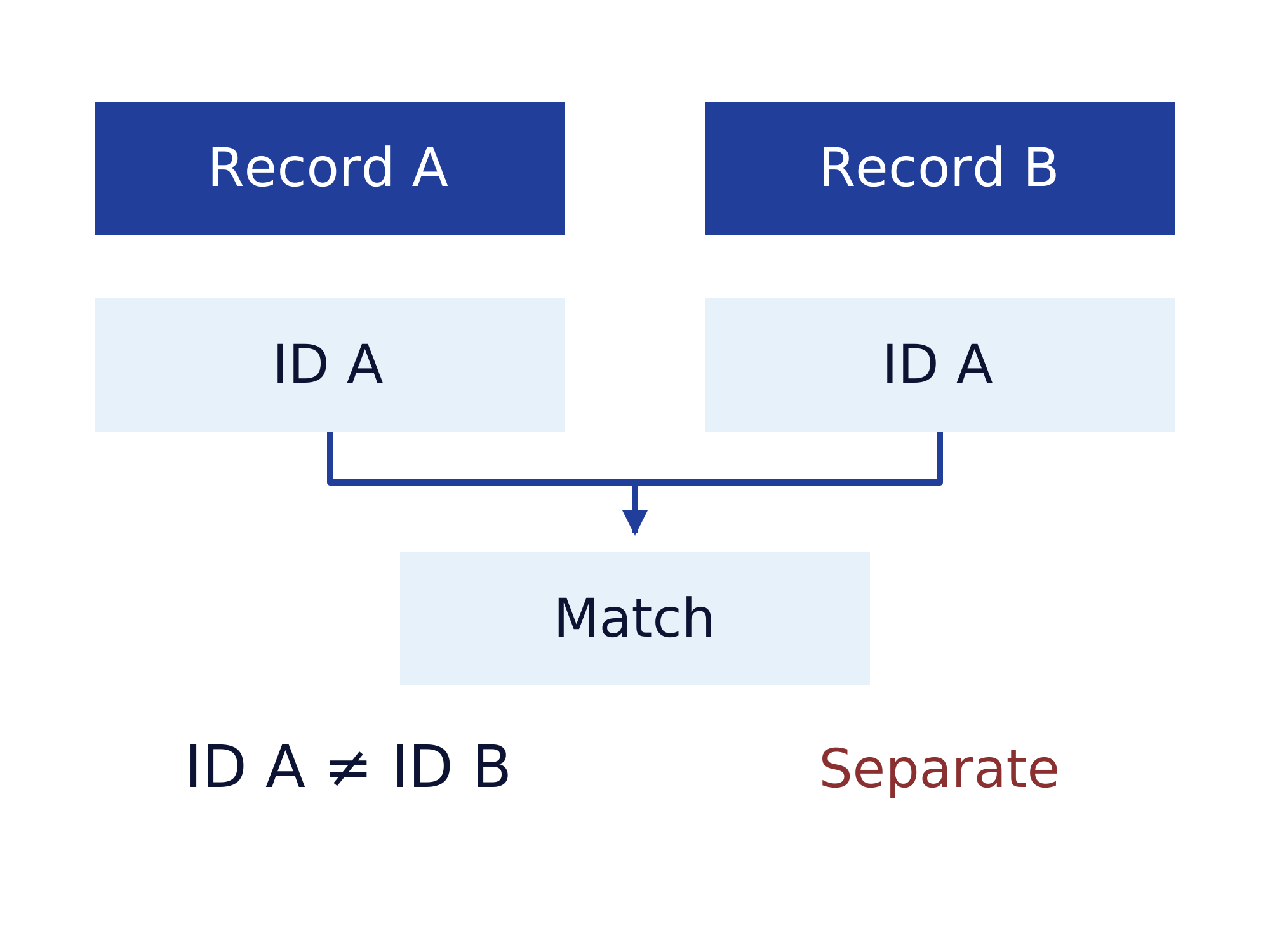
From source records to matching candidates
Start by defining the entity and the fields that can distinguish one record from another. A company record and a contact record need different matching rules, even when both contain an address. Preserve original values while preparing comparable versions of names, addresses, and identifiers.
Exact rules can compare reliable identifiers, while approximate comparisons can accommodate spelling differences or missing information. Candidate selection narrows the comparisons before more detailed scoring takes place. The Splink documentation describes probabilistic record linkage for datasets without unique identifiers, including ways to evaluate matching results.
Review matches before merging records
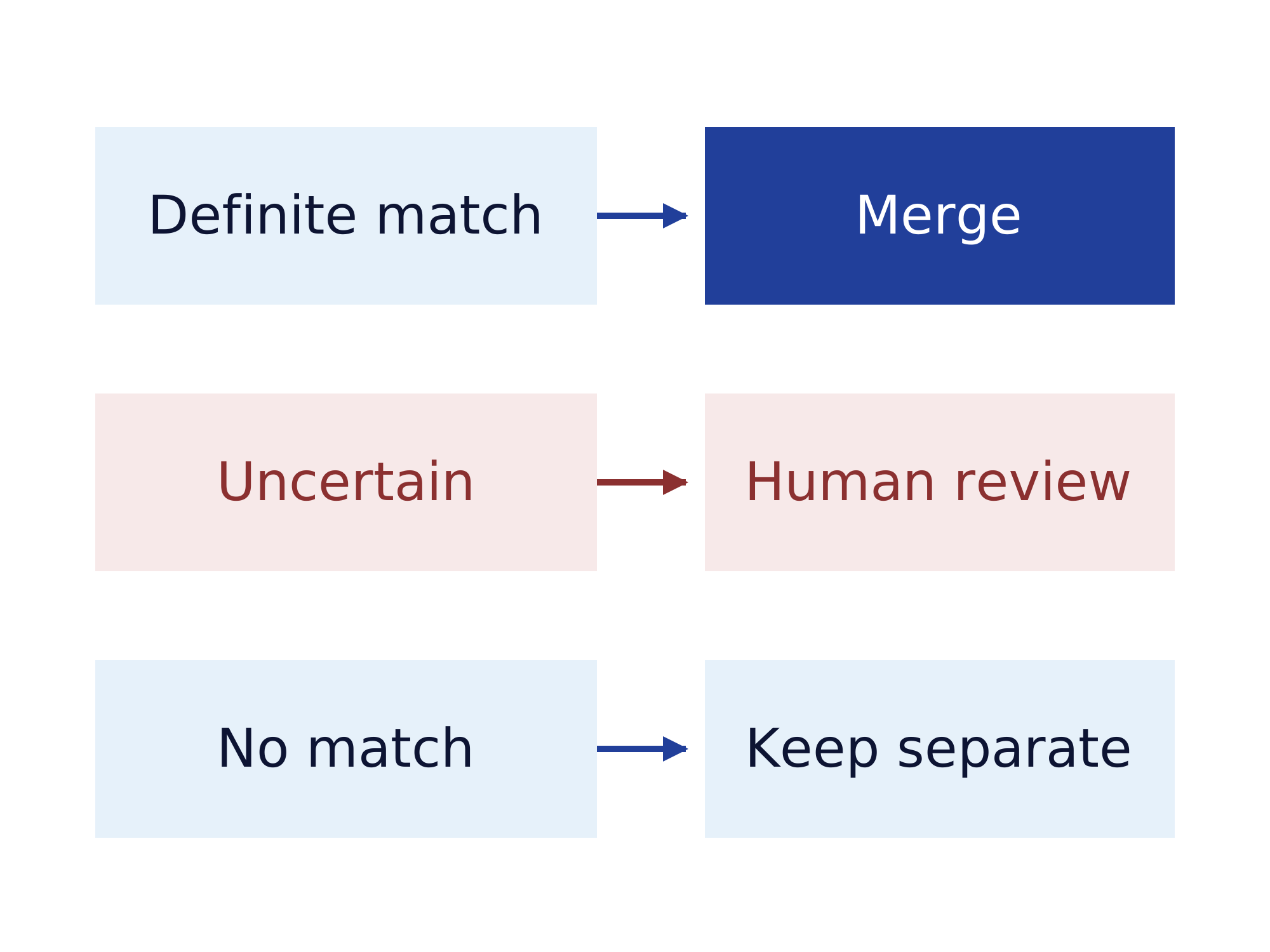
A matching score supports a decision but does not establish identity by itself. Define which evidence permits an automatic proposal and which combinations need a reviewer. Two businesses with similar names must remain separate when stronger evidence contradicts a match.
Agree which source supplies each retained field and how conflicting values remain visible. Keep the original record identifiers, the matching rule, and the review decision with the resulting assignment. A shared identity can connect records without immediately deleting or overwriting every source entry.
Acceptance checks for duplicate detection
Build a reference sample containing genuine duplicates, unrelated records with similar names, and incomplete entries. Check false matches separately from missed duplicates because the consequences can differ substantially. Reusing the training examples alone does not show how matching behaves on unfamiliar records.
Ask the provider to demonstrate disputed matches and explain the evidence behind each decision. Agree acceptance criteria for the relevant record types before applying the rules to the full dataset. The handover should identify who reviews new ambiguities and who can correct an earlier assignment.
Planning a project in Frankfurt and Rhine-Main
A regional project begins with the systems, data owners, and review responsibilities involved. Bring a permitted sample, examples of troublesome duplicates, and the intended downstream use to the initial discussion. Agree whether workshops require an on-site meeting or can take place remotely with the responsible teams.
The quotation should distinguish initial profiling, matching rules, human review, integration, and later maintenance. Review effort depends on the number and ambiguity of candidate matches, not just the total record count. Access arrangements and responsibility for corrections belong in the project scope alongside the technical deliverables.
Distinguish branches when matching records across Rhine-Main
If customer records describe branches in Frankfurt and Darmstadt under the same company name, define whether the result should identify the company or each branch. A shared name can justify a company relationship while separate delivery addresses remain necessary for daily work. Include both branches and a genuinely duplicated branch record in the reference sample. Review the proposed relationship before changing identifiers that another team uses for orders, service assignments or customer correspondence.
Gateflow as a provider
Gateflow is a Frankfurt IT company offering entity resolution and deduplication within knowledge extraction and data quality projects. Gateflow compares company or contact records using selected identifiers and attributes, with uncertain matches separated for review. Gateflow preserves source links and approval information when records are merged.
The Gateflow data quality service starts with sample records and agreed checks before broader processing. Discuss the matching rules, review queue, and operating responsibilities for your Frankfurt, Rhine-Main, or Germany-wide project.
Does entity resolution verify a legal identity?
Matching records proposes a relationship between entries without independently verifying a legal identity. The required evidence depends on the business purpose and the available sources. A duplicate-detection result therefore needs separate assessment before supporting an identity-verification or compliance decision.
Should every duplicate be deleted from the source?
Source records may need to remain available for operational history or later corrections. Agree whether the result links records, selects retained values, or changes the original systems. Test how an incorrect merge can be reviewed and corrected before approving changes to production records.
Data expertise and Finance Loop
Finance Loop connects professionals working with emerging technologies and their practical use in finance. Gateflow participates in this exchange through Michael Wutzke, who teaches in the Claude Hacker House series, with the lineup varying by session.
Finance Loop is a professional network that advances the institutional use of emerging technologies in finance. Finance Loop helps members develop skills and professional contacts in these fields: Investment & Digital Assets, Payments & Digital Money, Digital Infrastructure & Sovereignty, and Risk & Compliance.
Contact Finance Loop to discuss relevant expertise, practical exchange, and connections for your data project.