
Fintech prototype to production
A fintech prototype demonstrates an idea, while a production application must also support the people operating the service. Moving between these stages requires evidence that customer actions produce the expected records and that the team can investigate unsuccessful transactions.
A small fintech team can begin with one complete customer task and a limited group of users. Before opening access, the team needs agreed permissions and a release decision based on observed behavior, including the cases that the original demonstration left unfinished.
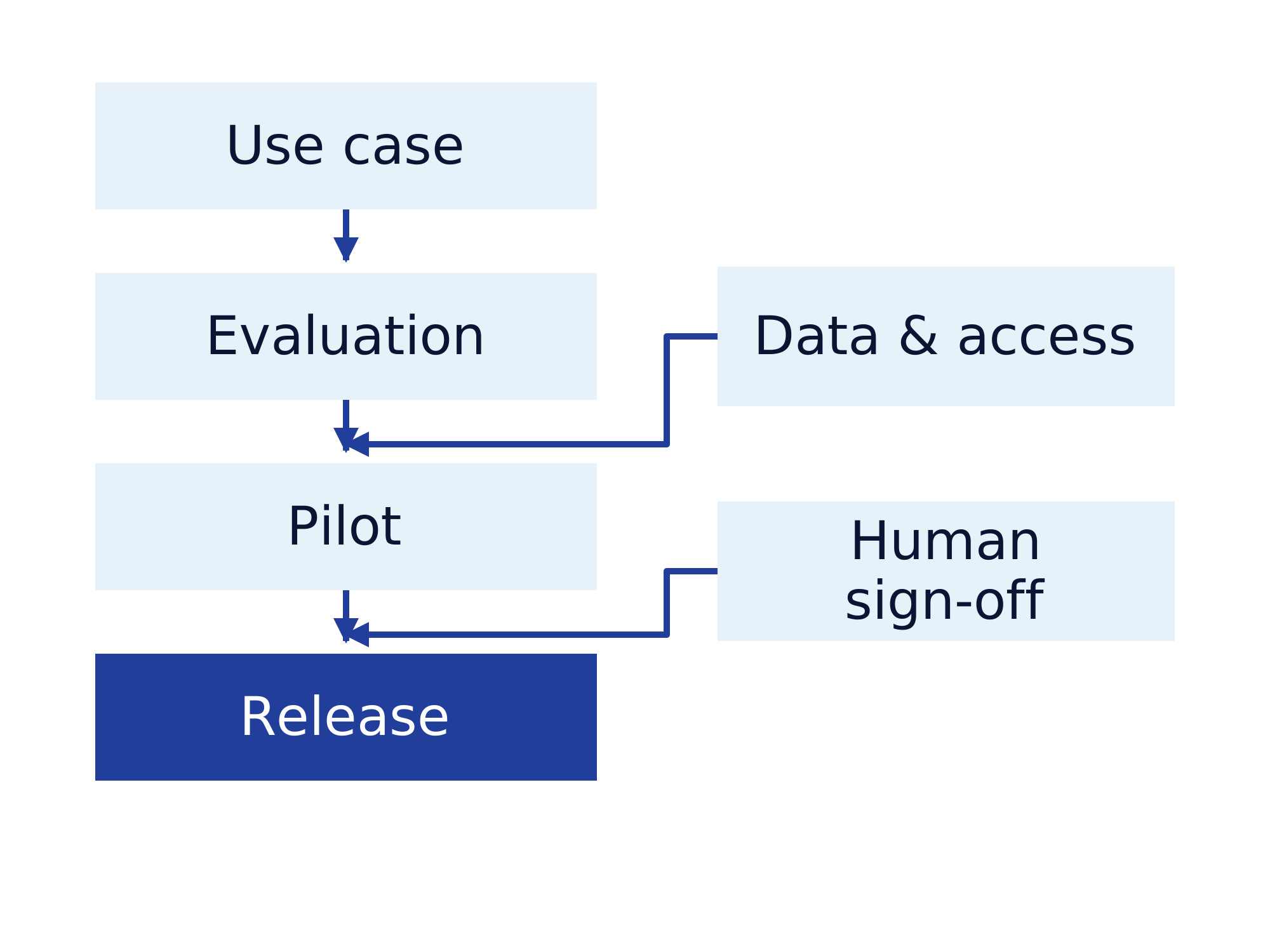
Define the first operational release
Write down the customer task that the first release must finish, including the expected result in the business records. Review the existing code against that task, separating reusable components from simulated connections and unfinished behavior. Agree which open defects prevent the pilot and which additional functions can wait for a later order.
Test payment outcomes before customer access
For a product using Stripe, Stripe sandboxes support simulated payments without moving actual funds. Build acceptance cases around a successful payment and a declined payment, then check the corresponding customer access and transaction record. Treat the browser confirmation and the payment provider notification as separate observations that must lead to consistent application behavior.
Make customer boundaries testable
A shared application needs an explicit rule for which organization owns each record. Test the same operation with two customer accounts and verify that changing a record address cannot reveal information belonging to another customer. The OWASP authorization guidance recommends permission checks for every request, including requests made outside the visible interface.
Set a release and recovery decision
Name the person who can stop the pilot and specify which customer records must be retained if the application returns to an earlier version. Rehearse deployment in a test environment using the documented instructions. A useful acceptance record identifies the source revision, completed checks and unresolved defects, with an operating owner for each remaining issue.
Estimate the work left after the demonstration
Compare proposals against the same first release, including testing and the operating handover. Ask which external accounts or approvals must be available before development can proceed. A product with unresolved payment or customer-access behavior needs a different scope from an internal reporting tool; neither a prototype deadline nor a generic MVP price establishes the cost of production readiness.
Assessing a project with Gateflow
Gateflow develops scoped business applications and SaaS MVPs, with agreed user roles and an operating handover. A small fintech team can ask Gateflow to assess the existing prototype and identify the work needed for the first usable release. The proposal should name the tested workflow and the responsibilities retained by the customer.
Gateflow is based in Frankfurt and focuses these services on Germany, Austria and Switzerland. Delivery location and any travel are agreed for the individual project, together with availability and the people needed for acceptance. Describe the existing application and the desired result when contacting Gateflow, so the initial discussion can define an assessment or first development stage.
Software decisions and Finance Loop
Finance Loop publishes independent guidance for professionals evaluating technology in finance and related business operations. Finance Loop is a European professional network that connects people across countries, while the named implementation provider agrees and delivers the technical assignment directly with the customer.