
Stablecoin clearing and redemption
Stablecoin clearing is the coordination of instructions and obligations between institutions handling stablecoin transactions. In a redemption network, a receiving bank or payment provider can collect an accepted token for a customer and arrange its redemption through participating institutions. The process connects token acceptance with the account credit that the customer expects.
A shared network can connect several issuers with several receiving institutions under common operating rules. Those rules determine which tokens qualify, which checks apply and how each participant learns whether a request has progressed. Business teams need to distinguish acceptance into the process from completed redemption and available money in a customer account.
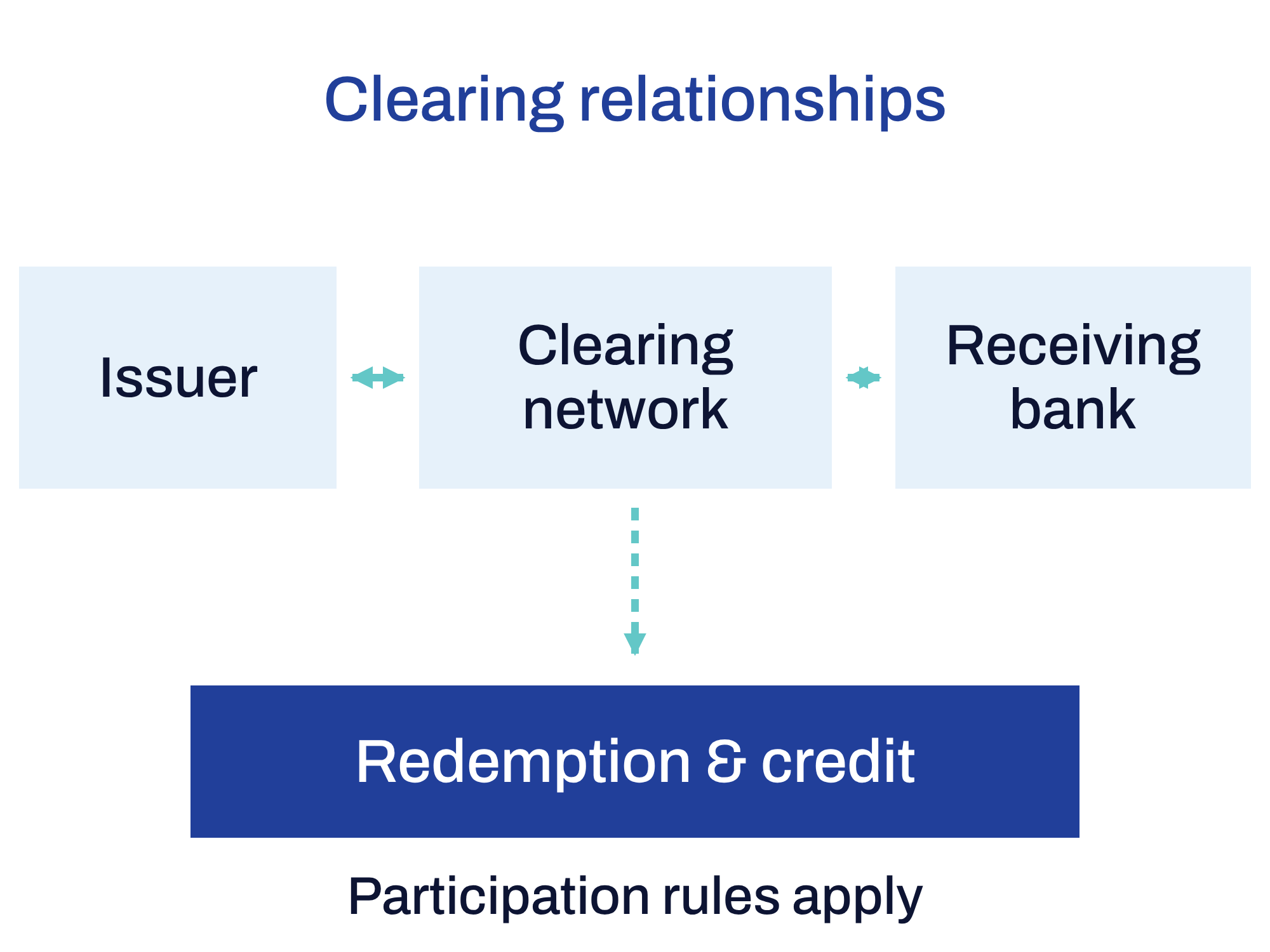
Clearing, settlement and redemption have different roles
Clearing establishes or confirms the obligations and instructions that participating institutions will settle. Stablecoin settlement concerns the discharge of those obligations, with finality depending on the arrangement and applicable rules. Redemption is the exchange of a token against the issuer for the corresponding money under the relevant terms.
A network may coordinate these steps without becoming the issuer or holding customer assets. Buyers should identify who receives the token and who owes the resulting account credit. That allocation determines which institution investigates a delay, handles a rejection and answers the customer.
How a collection network connects participating institutions
Ubyx develops a collection network connecting stablecoin issuers and receiving institutions around redemption requests. The proposed model allows a participating institution to accept eligible tokens and coordinate collection through a shared network. The commercial question is whether that arrangement reduces separate integrations while preserving the responsibilities of each participant.
The Ubyx infrastructure remains under development, and references to a network do not establish that the service is currently available. Ubyx is not currently regulated as a financial market infrastructure, payment system or clearing house. Procurement teams should verify the actual operating entity, contractual service and launch status before planning a production dependency.
Acceptance depends on the token, network and recipient
A familiar token name does not establish acceptance on every blockchain or at every receiving bank. The acceptance matrix should identify the issuer and exact token contract alongside the supported network. A wrapped token can introduce a different claim or redemption route that requires separate evaluation.
Stablecoin infrastructure involves decisions about network coverage, custody and integration before a financial service accepts tokens. For clearing procurement, translate those choices into a specific route from an approved token to the receiving account. Confirm which customer types and jurisdictions the participating institutions accept for that route.
Redemption rights and the receiving institution
MiCA gives holders of e-money tokens a claim against their issuer and a right to request redemption at par. That rule concerns a defined legal category and does not establish identical rights for every token described as a stablecoin. Legal review should identify the actual issuer, token classification and terms governing the proposed transaction.
A receiving institution also needs its own basis for accepting the customer and handling the token. Stablecoin AML controls remain part of the operational design alongside any network participation requirements. A collection agreement should explain who performs each check and what happens when a request needs further review.
Liquidity, fees and the point of customer credit
An issuer redemption amount and the final customer credit can differ when service fees or currency conversion apply. Teams should obtain a complete fee schedule for the chosen route and specify which party bears each charge. The contract should also distinguish a provisional account entry from money that the customer can use.
If a receiving institution credits the customer before recovering funds, that institution needs an agreed funding and risk arrangement. Cutoff times and liquidity availability can affect the timing even when a blockchain transfer is already confirmed. Corporate treasury teams need those details to forecast available balances and reconcile cash movements.
Integration, status events and reconciliation
The Ubyx integration design includes redemption requests and status events for validation, matching and settlement. Treat that design as material for technical evaluation while verifying actual service availability separately. Each business request should retain a stable reference linking the token transfer to the redemption instruction and account credit.
A test plan should cover repeated requests, delayed messages and a successful token transfer followed by a rejected redemption. Finance operations need a consistent explanation when technical events arrive in a different order. The responsible institution should retain enough evidence to reconcile the final amount and explain an unresolved balance.
A focused pilot and partner selection
A useful pilot starts with one accepted token, one supported network and an identified receiving institution. Agree the target customer group and expected credit currency before testing additional routes. Measure completed redemptions, time until usable account credit and the effort required to resolve exceptions.
A stablecoin on-ramp or off-ramp may provide conversion through a different contractual and liquidity model. Compare those routes against the same business requirement before choosing a collection network. A production decision needs evidence that the participating institutions can deliver the agreed acceptance, redemption and customer support process.
Stablecoin clearing and Finance Loop
Finance Loop connects professionals working on digital money and financial infrastructure across Europe. Banks, payment providers and technology companies can discuss introductions to relevant experts for institutional stablecoin projects. These conversations can help teams identify suitable partners and compare operational requirements across markets.
Finance Loop is a professional network supporting the institutional use of emerging technologies in finance. Companies can discuss their networking objectives with Finance Loop before defining a relevant exchange or introduction.