
Zero-knowledge proofs in finance
Zero-knowledge proofs in finance are cryptographic methods for proving a statement without revealing the private information used to establish it. A verifier checks a proof generated from that information instead of receiving the original confidential data. This allows participants to verify a claim while limiting the information they share.
The method can support checks such as confirming eligibility or validating a transaction while keeping selected details private. Financial applications can use this approach when participants need evidence but should not receive each other's confidential information. The privacy protection depends on the statement being proved and the system design, so using a proof does not automatically make an entire transaction anonymous.
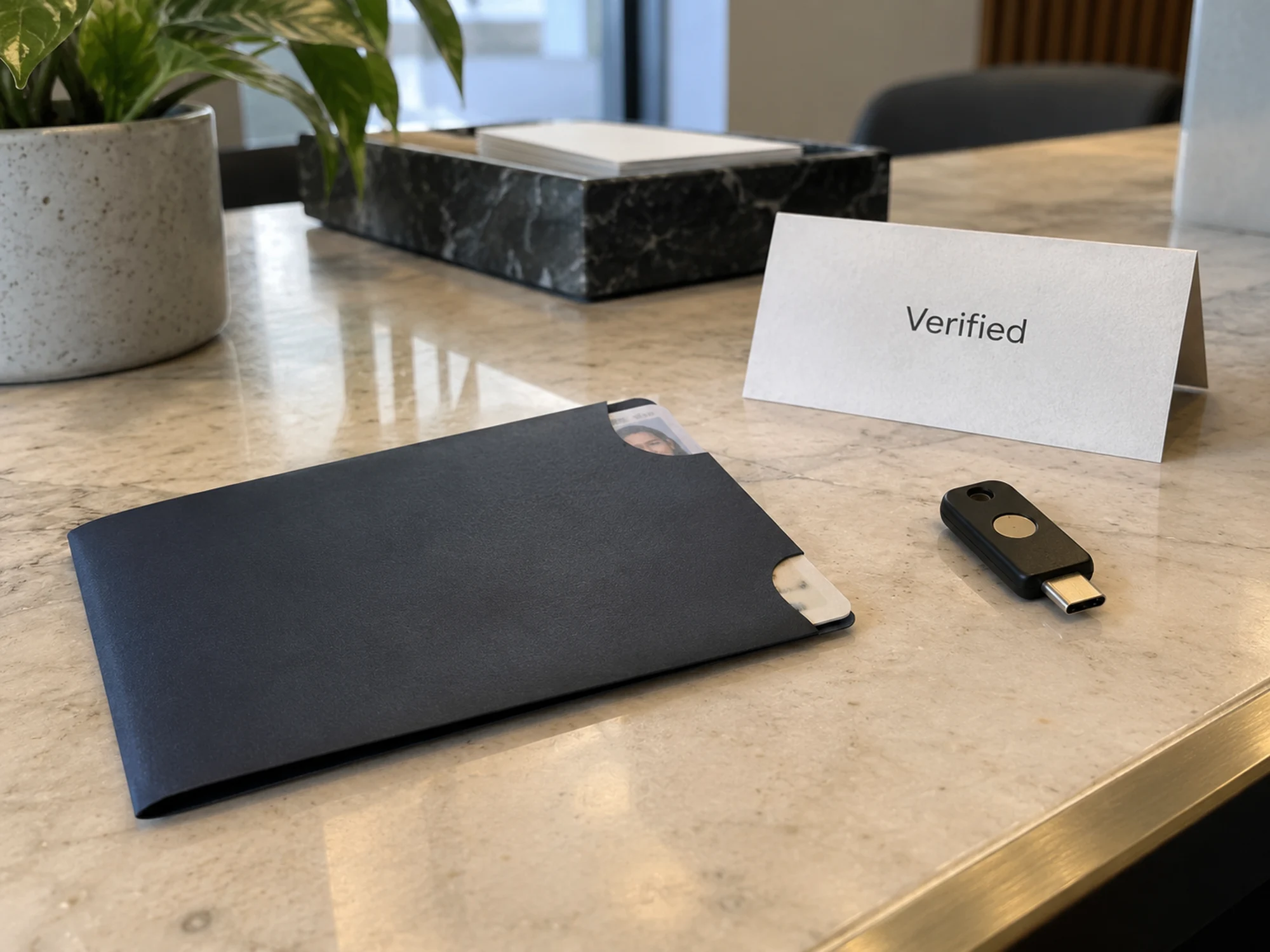
How a zero-knowledge proof works
In a zero-knowledge proof, a prover convinces a verifier that a statement holds while the verifier learns nothing beyond that fact. The method has three properties: an honest prover can convince the verifier of a true statement, a dishonest prover is very unlikely to convince anyone of a false one, and the verifier gains no further information. The standard example is proving that someone is over 18 without disclosing the date of birth.
Shafi Goldwasser, Silvio Micali and Charles Rackoff formalized the concept in 1985. Early proofs were interactive, with several rounds of messages; the Fiat-Shamir heuristic turns many of them into non-interactive proofs, a single message that anyone can check later. That form is what blockchains use, because every node can verify the same proof without talking to the prover.
Payments first: confidential transactions on a public ledger
On a public blockchain every user sees amounts, balances and counterparties, which IT Finanzmagazin calls a dealbreaker for regulated institutions in its report with the German Savings Banks Association and LBBW (in German). With a zero-knowledge proof, the network checks that a transaction is correct without seeing the parties or the amount. Viewing keys then give selected supervisors full insight, so the bank can still show anti-money laundering compliance. Christian Schäfer, head of payments at the savings banks association, says a single technical standard is never what decides for a bank; it has to fit regulation, data protection and bank secrecy together.
The same question shapes the design of central bank money. A report by the Mina Foundation and Etonec proposed a CBDC in which payment details stay between payer and payee, and an authority sees them only when preset thresholds are hit. The report cites an ECB survey from 2021 in which European citizens ranked privacy first among the features of a digital euro.
Other places where finance meets zero-knowledge proofs
Zero-knowledge rollups bundle many transactions off the main chain and post one proof that all of them are valid, which lowers the cost per payment; the answer on layer 2 blockchains compares them with optimistic rollups. In identity, a zero-knowledge proof can show that a wallet belongs to a verified customer without sending the customer's data to every application, the model behind on-chain KYC. For settlement, LBBW's head of digital assets, Friederike Burckhardt, says in the same report that delivery versus payment needs a cash leg that is technically reliable and legally final, with wholesale central bank money and deposit tokens as candidates.
Upcoming events on blockchain infrastructure in Germany
Finance Loop and zero-knowledge proofs
Privacy and programmable money are topics of the Digital Euro Conference in Frankfurt, organized by the Digital Euro Association, a partner of Finance Loop. Finance Loop covers the cryptography behind digital assets on its pages on post-quantum cryptography and MPC wallets, and links both to the settlement and payment questions banks face.
Digital Infrastructure & Sovereignty
Payments & Digital Money
Risk & Compliance
What is a zero-knowledge proof?
A cryptographic proof that a statement is true which reveals nothing beyond that fact. A bank can prove a payment is valid, or a customer that they are over 18, without disclosing the underlying data.
What is a zk-rollup?
A layer 2 network that runs transactions outside a main blockchain and posts a single zero-knowledge proof of their validity to it. The main chain checks the proof instead of every transaction, which cuts the cost per payment.
Can a supervisor still see a payment protected by a zero-knowledge proof?
Yes, if the design provides for it. With viewing keys, a bank gives selected authorities full access to its transactions while other users of the public chain see only that each transaction is valid.
Who invented zero-knowledge proofs?
Shafi Goldwasser, Silvio Micali and Charles Rackoff formalized the concept in 1985. Non-interactive proofs, which blockchains use, came later.
Zero-knowledge proofs and Finance Loop
Finance Loop covers zero-knowledge proofs in its Digital Infrastructure & Sovereignty track, with the focus on confidential payments and settlement on shared ledgers. Finance Loop brings people from banks, payment firms, supervisors and cryptography teams together at events in Frankfurt, Munich, Berlin and Hamburg.
Finance Loop is a professional network supporting the institutional use of emerging technologies in finance, such as AI, digital payments, cloud and blockchain solutions. Finance Loop helps its members build skills and personal networks in these fields: Investment & Digital Assets, Payments & Digital Money, Digital Infrastructure & Sovereignty, and Risk & Compliance.