
Credit risk management in banks
Credit risk in banking is the risk that a borrower fails to meet a repayment obligation in full or on time. A bank assesses this risk before granting a loan and monitors the exposure throughout its term. The borrower's financial position, repayment history and the quality of any collateral help determine the likelihood and possible size of a loss.
Banks need credit risk management to make lending decisions and remain able to absorb losses when borrowers cannot repay. Staff set limits, review existing exposures and recognize expected losses when the evidence requires it. These activities connect customer assessment with portfolio management, financial reporting and the bank's capital planning.
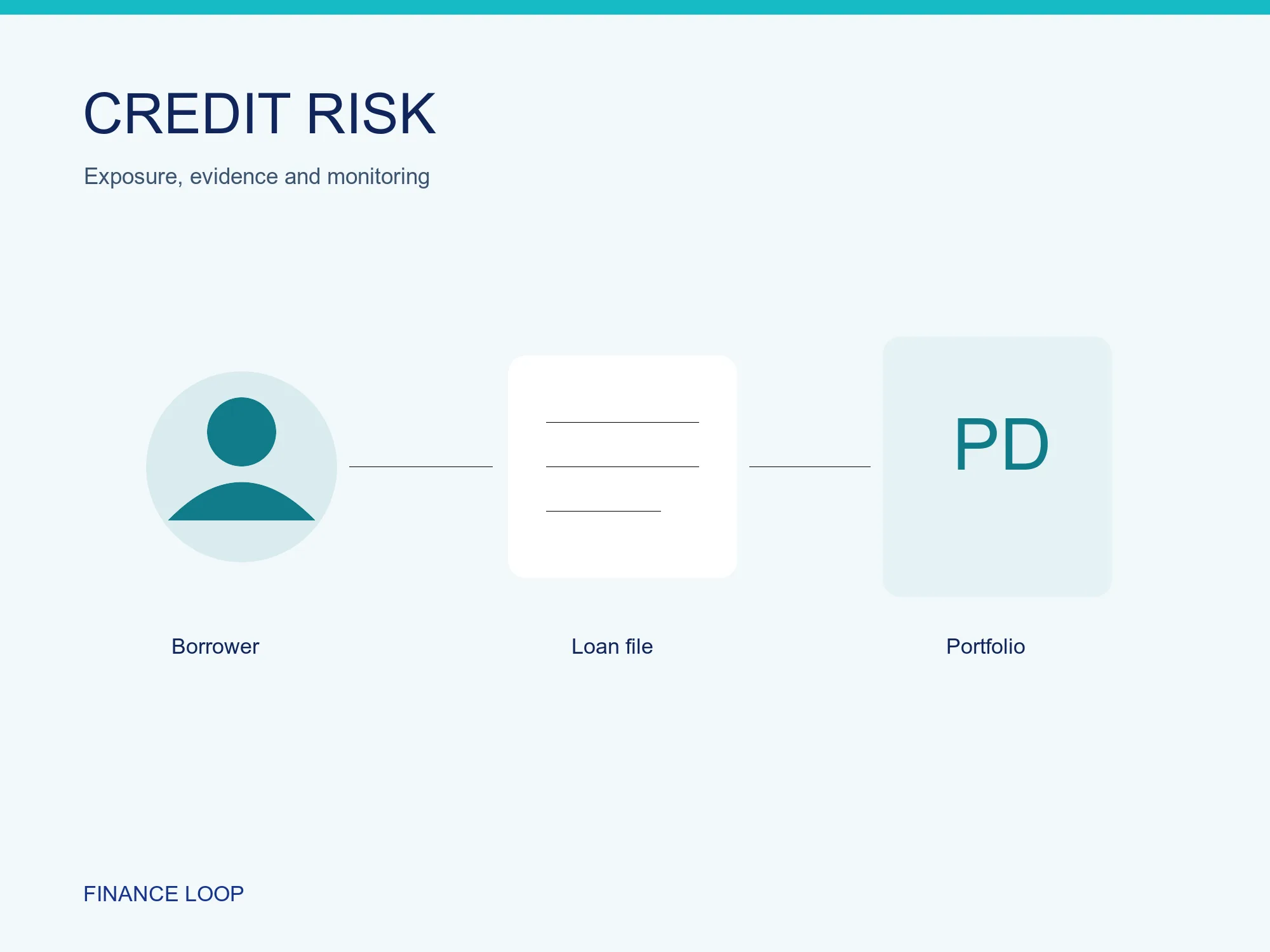
From borrower to portfolio
Credit risk starts with the borrower's capacity to pay and the value of any collateral. After origination, the bank tracks payment behavior, changes in the borrower's finances and concentrations across sectors or counterparties. Read the credit risk explainer for the basic terms, then compare credit risk versus market risk to distinguish defaults from price movements.
What supervisors examine
The ECB supervisory priorities call for sound credit risk management and timely treatment of weak portfolios. Loan classification, collateral data and expected credit losses therefore have to be traceable from source data to management reporting. German institutions also follow MaRisk when organizing their internal control functions. Risk management in Frankfurt includes working within this local supervisory setting.
Capital is a separate calculation
A loss estimate for accounting is not the same number as risk-weighted assets for regulatory capital. The Basel Committee overview distinguishes the standardized approach from internal ratings-based approaches that require supervisory approval. These Basel III calculations form part of the EU banking package.
What should a credit risk team review first?
Start with the underwriting decision, the source of repayment and the collateral file. Then compare the current exposure, arrears and provisions with the bank's own policies. A portfolio dashboard without reliable borrower data will not fix weak lending decisions.
Upcoming events in Germany
Credit risk and Finance Loop
Finance Loop discusses credit data, models and supervisory practice with risk professionals in Germany. Risk and compliance events from Finance Loop give banks, technology firms and advisors a place to compare concrete methods.
Finance Loop is a professional network for emerging technologies in finance. Events and partnerships from Finance Loop bring practitioners together across Investment & Digital Assets, Payments & Digital Money, Digital Infrastructure & Sovereignty, and Risk & Compliance.