
Embedded Lending
Embedded Lending integrates business financing into the software that companies already use for payments, sales or daily operations. A platform can present a funding offer within that existing relationship, while a financing partner assesses the business and provides the capital.
The model connects a commercial funding need with information already available through a platform. Transaction history can support an assessment, and an integrated application can reduce repeated data entry. The financing agreement still determines eligibility, costs and repayment obligations for each business.
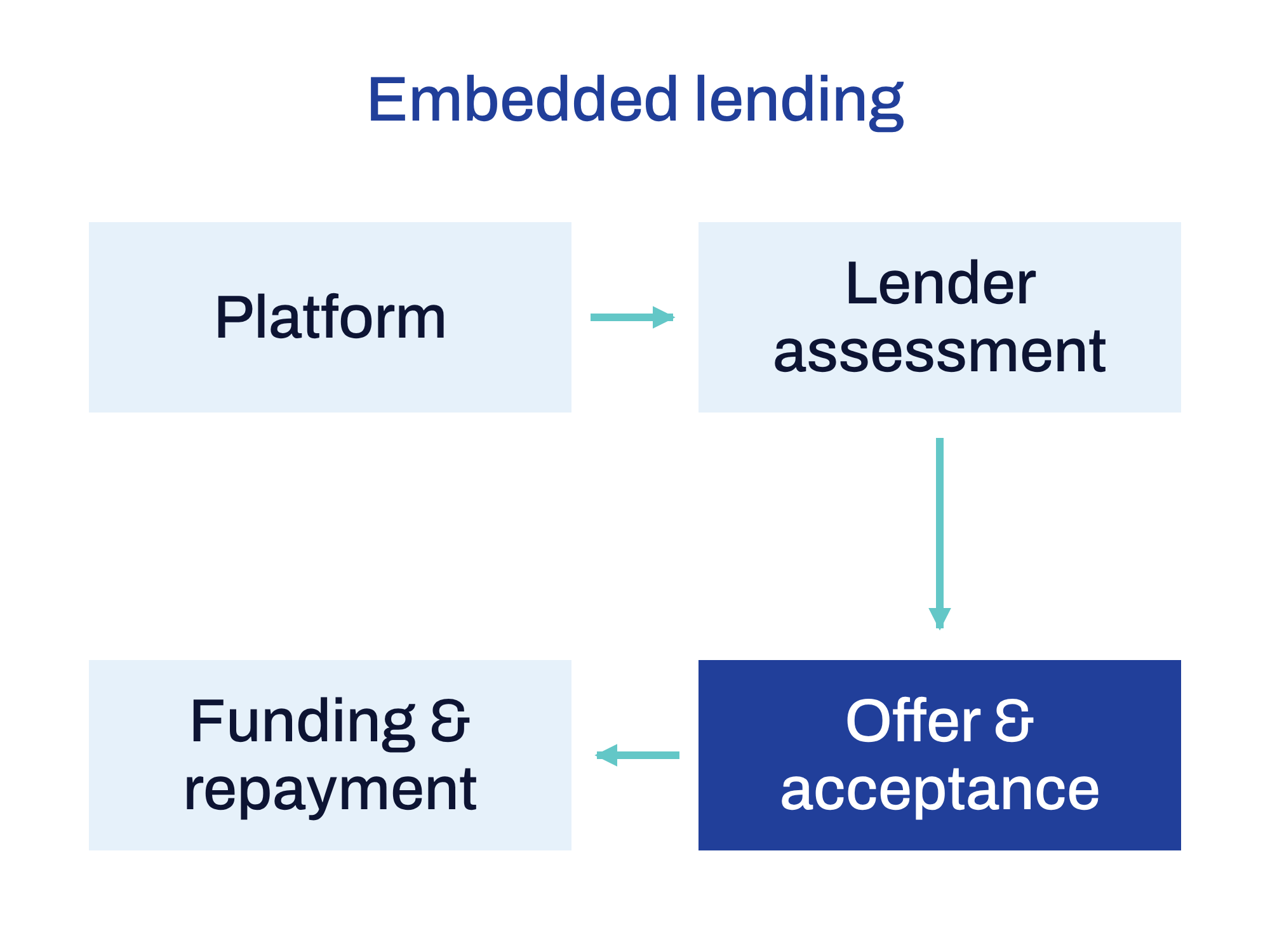
Where embedded lending fits
A marketplace can offer working capital to sellers preparing their next inventory order. A software platform can connect business users with financing alongside the tools that manage their sales. These applications belong to embedded finance, with a specific focus on funding an existing business relationship.
The useful starting point is the funding decision and the business customer involved. Product teams should identify when financing helps the customer, which information supports an offer and how repayment affects available cash.
Responsibilities across the financing partnership
The platform, financing provider and payment processor can have different responsibilities within one customer journey. A contract should identify who assesses applications, provides funds, services the financing and handles complaints. With Stripe Capital for platforms, Stripe and its financial partners manage underwriting, funding and servicing for connected accounts.
Platform teams still need clear responsibilities for their customer interface and commercial communications. Supported countries, legal entities and intermediary obligations should be checked for the actual program before launch.
Data and eligibility for business financing
Payment history can show trading activity, seasonal changes and the consistency of incoming revenue. Adyen Capital uses payment data in its financing assessment, alongside requirements concerning location, business type and processing history. Meeting minimum requirements does not guarantee that a business receives an offer.
Teams should establish which entity owns each account and who can accept financing on its behalf. YouLend onboarding separates applicant information and verification within the funding application, making these steps part of the integration design.
Offers, costs and contractual repayment terms
An embedded offer should make the amount received and the total repayment obligation easy to compare. The withheld sales percentage, fixed fee and any minimum payment answer different questions. A percentage deducted from sales describes cash collection, while the financing agreement defines the underlying obligation.
Product teams should compare an ordinary loan with financing based on purchased receivables before choosing a model. Contract structure and customer eligibility can vary across countries, even when the same platform displays the offer.
Repayment and reconciliation in daily operations
Revenue-linked collection can vary with sales while other contractual repayment requirements remain in place. Adyen Capital repayment combines deductions from processed payments with repayment monitoring, so an automatically collected amount needs to be understood within the full agreement.
Operations teams also need a consistent record of disbursements, collected amounts and outstanding balances. Financing reconciliation connects transaction records with the financing account, helping teams investigate differences between the payment flow and the remaining obligation.
Integration through components, APIs and notifications
YouLend integration options include hosted steps and a fully embedded customer journey. The choice determines how much of the application a platform operates itself and where customers review their offer or sign the agreement. With a custom interface, the platform manages the surrounding application steps.
A financing integration also continues after the initial application is submitted. Application and funding notifications support updates as the process changes, allowing a platform to keep customer information current across the financing lifecycle.
Selecting partners and preparing a controlled launch
Partner selection should start with the supported customer segment, operating countries and available financing structure. Teams can then compare integration effort, customer support responsibilities and the information available for ongoing reporting. A provider demonstration should cover an expired offer and an unsuccessful application alongside the successful path.
For a custom Stripe integration, the Capital lifecycle includes financing reporting during repayment and continued access after completion. A launch review should therefore test access to records after the commercial relationship changes, with responsibilities agreed between the platform and financing partner.
Is embedded lending the same as open banking lending?
Embedded Lending concerns how financing reaches a business through another digital service. Open banking lending concerns the use of permitted bank-account information in a credit assessment. The same financing journey can use both approaches when its data access and product structure support them.
Does the platform provide the financing itself?
A platform can distribute financing while another organization provides the funds and manages the financing agreement. The allocation depends on the commercial model and the duties attached to each activity. Teams should verify their own role before describing the platform as the lender.
Embedded Lending and Finance Loop
Finance Loop connects financial institutions, fintechs and software companies working on new technologies in finance across Europe. Platform teams can discuss relevant expert introductions and potential financing partnerships through the professional network. These conversations can address the audience, market and operational requirements of an embedded lending initiative.
Finance Loop supports professional relationships and knowledge exchange, with Central Europe as the current regional focus. Companies can request support connecting with financial technology professionals for their specific business objectives.