
Payment service provider (PSP)
Payment service provider has two meanings. At a merchant's checkout it is the company that connects the shop to cards, wallets and bank payments. In EU law it is any firm allowed to provide payment services, from a bank to a licensed payment institution. In Germany the two meet: the firm behind the checkout holds a license, from BaFin or passported from another EEA country, or works with a firm that does. Dated events on payments are in the calendar below.
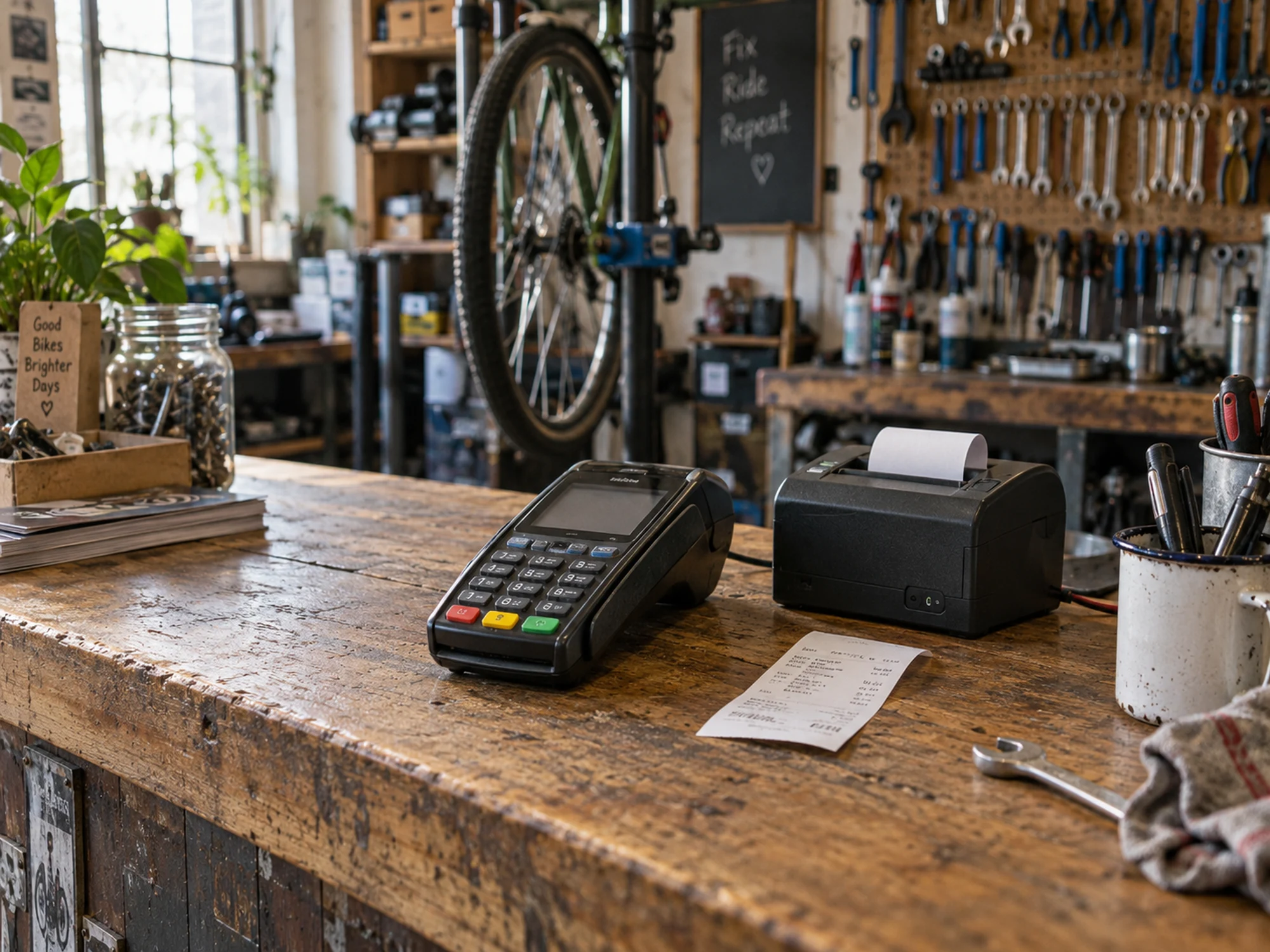
Processing payments for merchants
A PSP lets a business accept electronic payments without a contract with every card scheme and bank. It connects the merchant to acquiring banks and card networks, runs the payment gateway or the processing, and usually adds fraud checks, currency conversion, reporting and the payout to the merchant's account, as the Wikipedia article on payment service providers describes. PSP fees are charged as a percentage of each transaction, as a fixed amount per transaction, or both.
Behind one checkout several roles can sit: the acquirer that contracts the merchant for card acceptance, a payment facilitator that signs up small merchants under its own account, and payment orchestration that routes payments across several providers.
The legal meaning: Zahlungsdienstleister
The second Payment Services Directive, PSD2, lists who may provide payment services in the EU: credit institutions, e-money institutions, payment institutions, post office giro institutions, central banks and public authorities. German law follows it in the Payment Services Supervision Act (ZAG). A firm that executes payments, issues cards, acquires card payments or initiates payments for others needs a BaFin license as a payment institution or a passported license from another EEA country, unless it is a bank or e-money institution already.
PSD2 also names a group that stays outside: technical service providers that support payment services without ever holding the funds. A PSP that collects money for merchants and pays it out holds funds, and it needs a license of its own or a licensed partner.
How people in Germany pay
A PSP for the German market has to cover habits that differ from other countries. In 2025, for the first time, 55 percent of everyday payments in Germany were cashless and 45 percent were made in cash, according to the Bundesbank study on payment behavior (in German). Mobile payments reached 10 percent of all transactions. 90 percent of respondents own a girocard, and online, half of all payments go through internet payment methods, PayPal above all.
A PSP's coverage of card payments, ecommerce payment methods and Wero determines which customers a merchant can accept payments from.
Upcoming payments events in Germany
Finance Loop and payment service providers
Finance Loop is the meeting place for people who build and run payments in Germany, Austria and Switzerland: PSPs, acquirers, banks, merchants and the compliance teams behind them. It connects the finance, IT and AI communities, with events in Frankfurt, Munich, Berlin and Hamburg.
Finance Loop held a side event during Sibos 2025, across the street from the conference venue Messe Frankfurt. It supports When Banks Say 'No', a payments seminar at the NEXTOWER in Frankfurt for compliance, treasury and legal teams.
What is a payment service provider?
A company that lets merchants accept electronic payments such as cards, wallets and bank transfers through one integration. In EU law the term covers every firm allowed to provide payment services, including banks, payment institutions and e-money institutions.
Does a payment service provider need a license in Germany?
A PSP that holds or moves its customers' money needs BaFin authorization under the ZAG, or a license from another EEA country that it passports into Germany. A purely technical provider that never holds funds can stay outside, which is why many PSPs work with a licensed partner.
What is the difference between a PSP and an acquirer?
The acquirer is the licensed firm that signs the merchant up for card acceptance and settles card payments to the merchant. A PSP can be an acquirer itself or connect the merchant to one, and it usually adds other payment methods to the card side.
Payment service providers and Finance Loop
Finance Loop covers PSPs in its Payments & Digital Money track, next to acquiring, instant payments and Wero. Payment providers meet their merchants, banks and supervisors at Finance Loop events in Frankfurt and other German cities.
Finance Loop is a professional network and has the goal of driving the adoption of emerging technologies in finance, such as AI, digital payments, cloud and blockchain solutions. Finance Loop helps its members build skills and personal networks in these fields: Investment & Digital Assets, Payments & Digital Money, Digital Infrastructure & Sovereignty, and Risk & Compliance.