
Trading in Frankfurt
Frankfurt runs two share markets under one exchange: Xetra, the electronic order book whose prices feed the DAX, and Börse Frankfurt, where specialists quote around 1.5 million securities from 8:00 to 22:00. Eurex adds futures and options. Trading events in Frankfurt, with dates, are in the calendar below.
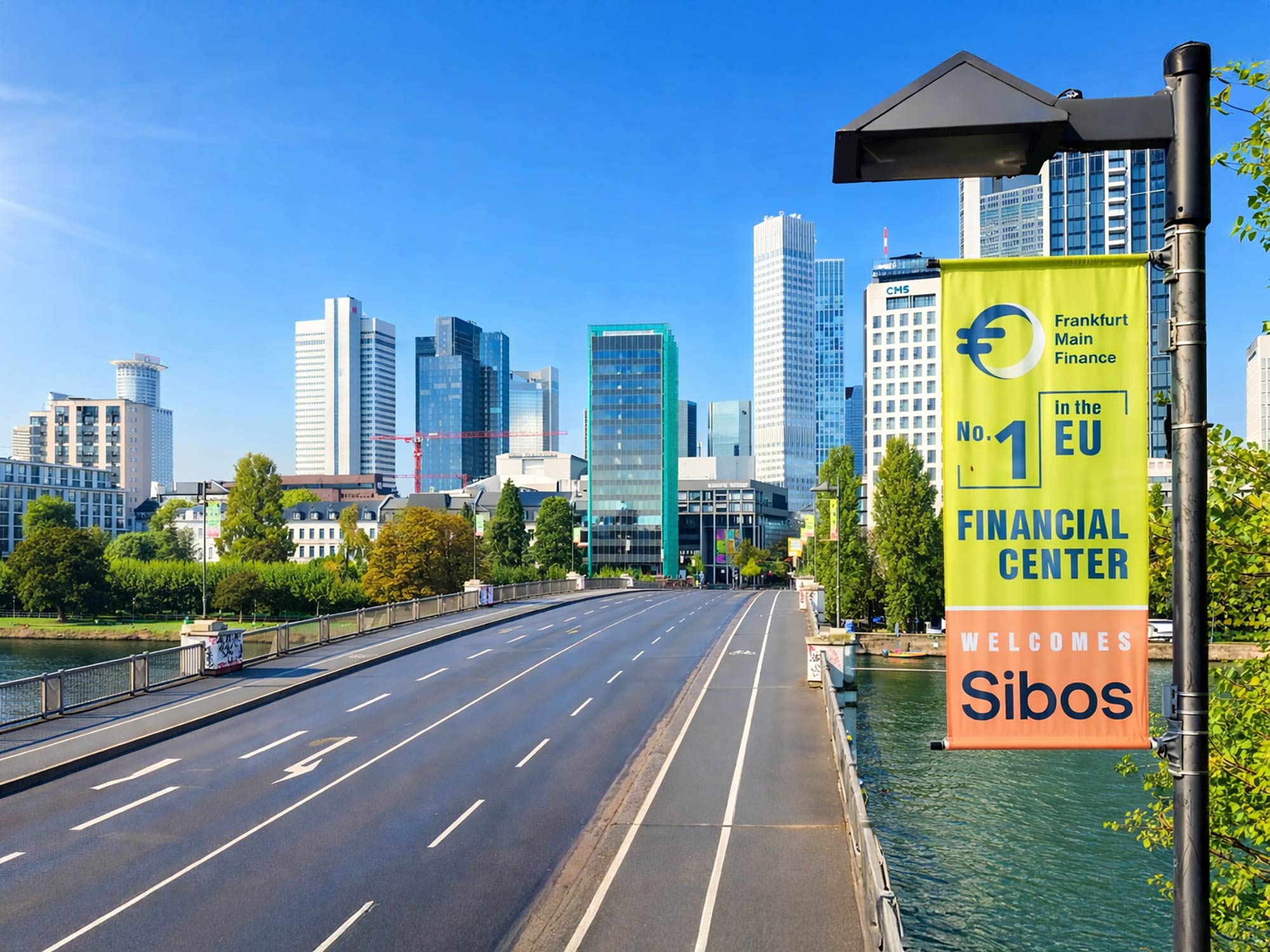
Xetra, Börse Frankfurt and Eurex
Most share trading in Germany happens in Frankfurt, on venues of Deutsche Börse Group. Xetra is a fully electronic order book: a bank or broker sends a buy or sell order, and the system matches it against the best opposite order without a person in between. Xetra trading runs Monday to Friday from 9:00 to 17:30 CET, according to Deutsche Börse's trading calendar, and Xetra prices are the ones used to calculate the DAX.
Börse Frankfurt works on a different model. Specialists oversee the order book and guarantee to execute orders at the best possible price. Deutsche Börse lists about 1.5 million securities there, from shares and bonds to ETFs, ETNs, funds, warrants and certificates, and trading runs from 8:00 to 22:00 CET, with bonds until 17:30. After 17:30, when Xetra has closed, Börse Frankfurt is still open.
Eurex is the derivatives exchange of the same group, with futures and options on indices, bonds and single stocks, and Eurex Clearing stands between buyer and seller as central counterparty. Clearstream then settles the securities. The page on capital markets in Frankfurt explains how issuers and investors use these venues.
Who watches a trade in Frankfurt
The Frankfurt Stock Exchange (Frankfurter Wertpapierbörse, FWB) is an entity under public law, and Deutsche Börse AG operates it. Its bodies follow the German Stock Exchange Act: a management board admits traders, suspends trading and fixes prices, and an Exchange Council of 16 elected members appoints and supervises that board.
The Trading Surveillance Office (Handelsüberwachungsstelle) is an independent body of the exchange. It monitors Xetra, specialist trading on Börse Frankfurt and the derivatives exchange Eurex Deutschland, investigates irregularities and reports its findings to the Exchange Supervisory Authority, which sits in the Hessian Ministry for Economic Affairs. BaFin handles suspected insider trading and market manipulation at the federal level. A trader in Frankfurt therefore answers to three layers of oversight: the exchange, the state of Hesse and BaFin.
Machines, co-location and the FR2 data center
Many orders on Xetra and Eurex never pass a human hand. Deutsche Börse runs the primary back-ends of both venues in the Equinix FR2 data center in Frankfurt, and trading firms can place their own servers in the same building through its co-location service. Co-location is the low-latency access that Article 4(1)(40) of MiFID II names in its definition of high-frequency trading.
A firm that lets an algorithm decide the price, size or timing of an order trades algorithmically in the sense of MiFID II. In Germany, section 80(2) of the Securities Trading Act (WpHG) requires such a firm to build systems that cannot disrupt the market, with trading thresholds and limits. The rules, the BaFin license for high-frequency trading and the role of AI models are on the page on algorithmic trading in Germany and in the answer What is AI in trading?.
Crypto and tokenized securities on Frankfurt venues
The same trading infrastructure now carries digital assets. On Xetra, investors trade crypto exchange-traded notes from 16 providers on 24 cryptocurrencies and 23 baskets, and Eurex Clearing clears the trades. Eurex lists futures and options on the FTSE Bitcoin and FTSE Ethereum indices, including nano futures at a hundredth of a bitcoin. For banks, the group's foreign exchange platform 360T runs 3DX, a crypto spot venue for institutions with Crypto Finance (Deutschland) as custodian. The page on Deutsche Börse in crypto and digital assets describes each unit.
Tokenized securities have their own venues in Frankfurt. 21X holds a BaFin license under the EU DLT Pilot Regime for trading and settlement of tokenized securities, and 360X, backed by Deutsche Börse and Commerzbank, carried out the first secondary trade of the Siemens digital bond with DekaBank and Union Investment. More on this is on tokenization in Frankfurt.
Upcoming trading and capital markets events in Frankfurt
Finance Loop and trading in Frankfurt
Finance Loop is the meeting place in Frankfurt for traders, quants, market structure specialists and the technology teams behind them. It connects the finance, IT and AI communities in Germany, Austria and Switzerland, with events in Frankfurt, Munich, Berlin and Hamburg, and is built in collaboration with TechQuartier and Frankfurt Main Finance.
Finance Loop has been a partner of the Crypto Assets Conference, which Frankfurt School and Deutsche Börse Group host together, and of Frankfurt Digital Finance. It supported the AI & Financial Market Data meetup in Paris, where two senior quantitative developers from Deutsche Bank and the head of financial engineering at Amundi spoke, and it works with Finteda, a practitioner network that began as a Frankfurt meetup for fintech builders, quants and data engineers.
What are the trading hours in Frankfurt?
Xetra trades Monday to Friday from 9:00 to 17:30 CET. Börse Frankfurt, the specialist venue, trades shares, funds and exchange-traded products from 8:00 to 22:00 CET and bonds from 8:00 to 17:30 CET. Eurex has its own hours per product. Holidays on which the exchange stays closed are listed in the Deutsche Börse trading calendar.
What is the difference between Xetra and Börse Frankfurt?
Xetra is an electronic order book where orders match automatically during the day, and it sets the prices behind the DAX. Börse Frankfurt uses specialists who manage the order book, guarantee execution at the best available price and quote until 22:00. Both belong to the Frankfurt Stock Exchange, and the Trading Surveillance Office monitors both.
Does the Frankfurt Stock Exchange still have a trading floor?
Yes. Specialists of Börse Frankfurt oversee trading on the floor of the exchange building. Most volume in German shares, though, runs through Xetra, which has no floor, and through servers in the FR2 data center.
Are there trading events and meetups in Frankfurt?
Yes. Trading and market structure come up at the Crypto Assets Conference, at Frankfurt Digital Finance and at Finance Loop meetups at TechQuartier. Upcoming trading events in Frankfurt are in the calendar above and on the events calendar.
Trading in Frankfurt and Finance Loop
Trading and market infrastructure belong to Finance Loop's Investment & Digital Assets track. Finance Loop partners with the Crypto Assets Conference of Frankfurt School and Deutsche Börse Group and meets traders and quants at TechQuartier in Frankfurt.
Finance Loop is a professional network and has the goal of driving the adoption of emerging technologies in finance, such as AI, tokenization, stablecoins, and DeFi. Finance Loop helps its members build skills and personal networks in these fields: Investment & Digital Assets, Payments & Digital Money, and Risk & Compliance.