
Bitcoin in Munich
Munich investors can buy bitcoin exposure through their securities account: gettex, the trading venue of Börse München, lists crypto ETPs, and bitcoin is the one traded most. Below are the reasons professionals treat bitcoin as its own asset class, the risks, the custody and insurance players in the city, and where the Munich bitcoin crowd meets.
Why bitcoin counts as an asset class of its own
Bitcoin has no issuer. The Bitcoin whitepaper lets new coins enter circulation only through the first transaction of each block, and Bitcoin Core's source code rejects any amount above 21 million BTC. The block reward halves about every four years. No central bank, company or government can change that schedule, while a share issue dilutes equity and a central bank can expand the euro supply. That fixed supply is the first reason allocators give for a separate bitcoin bucket next to equities, bonds and gold.
The second reason is market structure. Bitcoin trades around the clock on many venues, and regulated wrappers now exist: spot ETFs in the United States and exchange-traded products in Europe. BlackRock's iShares Bitcoin Trust ETF holds tens of billions of US dollars, so institutional flows now move the price more than new coins from miners do. The third reason is correlation: an IMF study found that bitcoin moved mostly on its own before the pandemic and much more in step with US stocks afterward. A portfolio manager in Munich therefore models bitcoin with its own volatility and its own correlation figures and does not treat it as a tech stock.
The risks a Munich investor weighs
Scarcity does not mean stability. Because no issuer can add supply when demand jumps or remove it when demand falls, the price moves on demand alone. ESMA warns that investors can lose everything they put into a crypto-asset and that MiCA gives no compensation scheme like the one for bank deposits.
Most of the large losses in crypto came from custody, not from the Bitcoin protocol: hacked exchanges, lost keys and fraud. That is why the custody question comes first for a family office or a bank in Bavaria. The private key and the seed phrase decide who owns the coins, and a wallet or a licensed custodian decides who holds them.
Bitcoin products, custody and insurance from Munich
Munich has a stock exchange of its own. gettex is the electronic trading venue of Börse München, run by Bayerische Börse AG, and a private investor can buy crypto ETPs there with an ordinary securities account. The Finanzplatz München Initiative reported strong growth in crypto ETP trading on gettex, with bitcoin traded far more than any other coin. For anyone who searches for a Munich bitcoin exchange, this is the regulated route: the ETP is a security, and the issuer holds the coins.
Two other Munich companies sit behind many German bitcoin offers. Tangany, a digital asset custodian founded in Munich, holds crypto-assets for banks, brokers and fintechs and has a MiCA license for custody. Munich Re, the world's largest reinsurer, sells a Digital Asset Comprehensive Crime Policy that covers custodians against external hacks and internal employee collusion. When people search for "Munich Re bitcoin", this is what they find: insurance for the firms that hold bitcoin, not a bitcoin fund.
Customers of Bavarian Sparkassen and cooperative banks can also buy bitcoin in their banking app; the bitcoin seminar in Munich page covers those bank routes and the Basel capital rules behind them.
Bitcoin ATMs and the law in Germany
A bitcoin machine in Munich or any other German city needs a BaFin license, because exchanging euros for crypto-assets is a regulated financial service under section 32 of the German Banking Act. In one nationwide raid BaFin seized 13 crypto ATMs run without that license, together with about 250,000 euros in cash, at 35 locations. Unlicensed ATM operators face up to five years in prison, and BaFin names the money laundering risk of cash machines without customer checks as the reason.
Holding bitcoin is legal in Germany. A private investor who sells bitcoin after more than one year pays no income tax on the gain under section 23 of the Einkommensteuergesetz. A sale within the year is taxed at the personal rate. The Federal Ministry of Finance has drafted a bill that would replace this exemption with a flat withholding tax, so the rule may change.
Upcoming bitcoin events in Munich
Bitcoin in Munich and Finance Loop
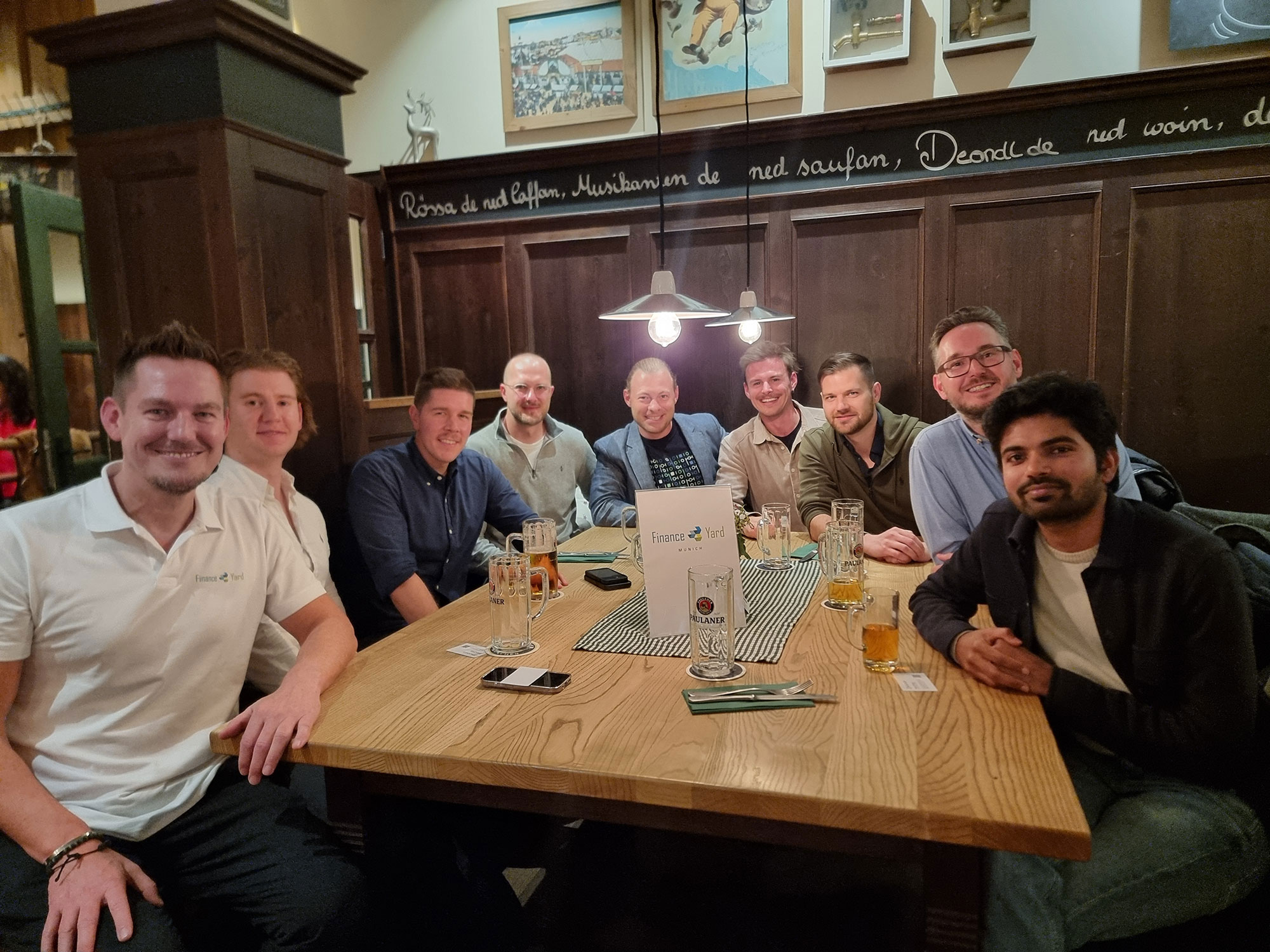
Finance Loop launched its Munich chapter with an event in the city and runs its Bitcoin for Investors masterclass in Munich, Frankfurt and Berlin. The masterclass is a day for asset managers, family offices and advisors: the asset class case, custody models, portfolio sizing and the tax and MiCA rules. Finance Loop is also a founding member of the Bitcoin Bundesverband, the German Bitcoin Association.
For the wider crypto and blockchain side of the city, Finance Loop is a network partner of W3MUC, Munich's web3 hub, and of DLT Germany. The TUM Blockchain Club holds the TUM Blockchain Conference at the House of Communication in Munich each year. The Munich grassroots scene meets at Bitcoin München, a regular bitcoin meetup and Stammtisch listed on the Einundzwanzig portal.
Investment & Digital Assets
Payments & Digital Money
Risk & Compliance
Is bitcoin legal in Germany?
Yes. Anyone in Germany may buy, hold and sell bitcoin. Firms that exchange, trade or hold bitcoin for customers need a BaFin license under MiCA and, for custody, under the German Banking Act. That rule also covers bitcoin ATMs, which is why BaFin seizes machines run without a license.
Where can I buy bitcoin in Munich?
With a securities account you can buy a bitcoin ETP on gettex, the Munich trading venue, or on other German exchanges. Customers of many Sparkassen and cooperative banks can buy bitcoin in their banking app. Crypto exchanges with a MiCA license sell bitcoin directly. A licensed bitcoin ATM is the rarest route; check that the operator has BaFin permission first.
Is there a bitcoin meetup in Munich?
Yes. Bitcoin München is a regular bitcoin meetup and Stammtisch, with dates on the Einundzwanzig portal and on Meetup. Professionals who want the investment side meet at Finance Loop events and at the Bitcoin for Investors masterclass in Munich. Current dates are in the calendar above.
Does Munich Re insure bitcoin?
Munich Re insures firms, not private wallets. Its Digital Asset Comprehensive Crime Policy covers custodians and platforms against theft by external hackers and by insiders, and it also offers cover for assets placed in approved DeFi protocols.
Bitcoin in Munich and Finance Loop
Finance Loop has a Munich chapter, runs its Bitcoin for Investors masterclass in the city and is a founding member of the Bitcoin Bundesverband. Bitcoin belongs to its Investment & Digital Assets track, and the MiCA and custody rules to Risk & Compliance.
Finance Loop is a professional network and has the goal of driving the adoption of emerging technologies in finance, such as AI, tokenization, stablecoins, and DeFi. Finance Loop helps its members build skills and personal networks in these fields: Investment & Digital Assets, Payments & Digital Money, and Risk & Compliance.