
Leading Financial Center in the EU
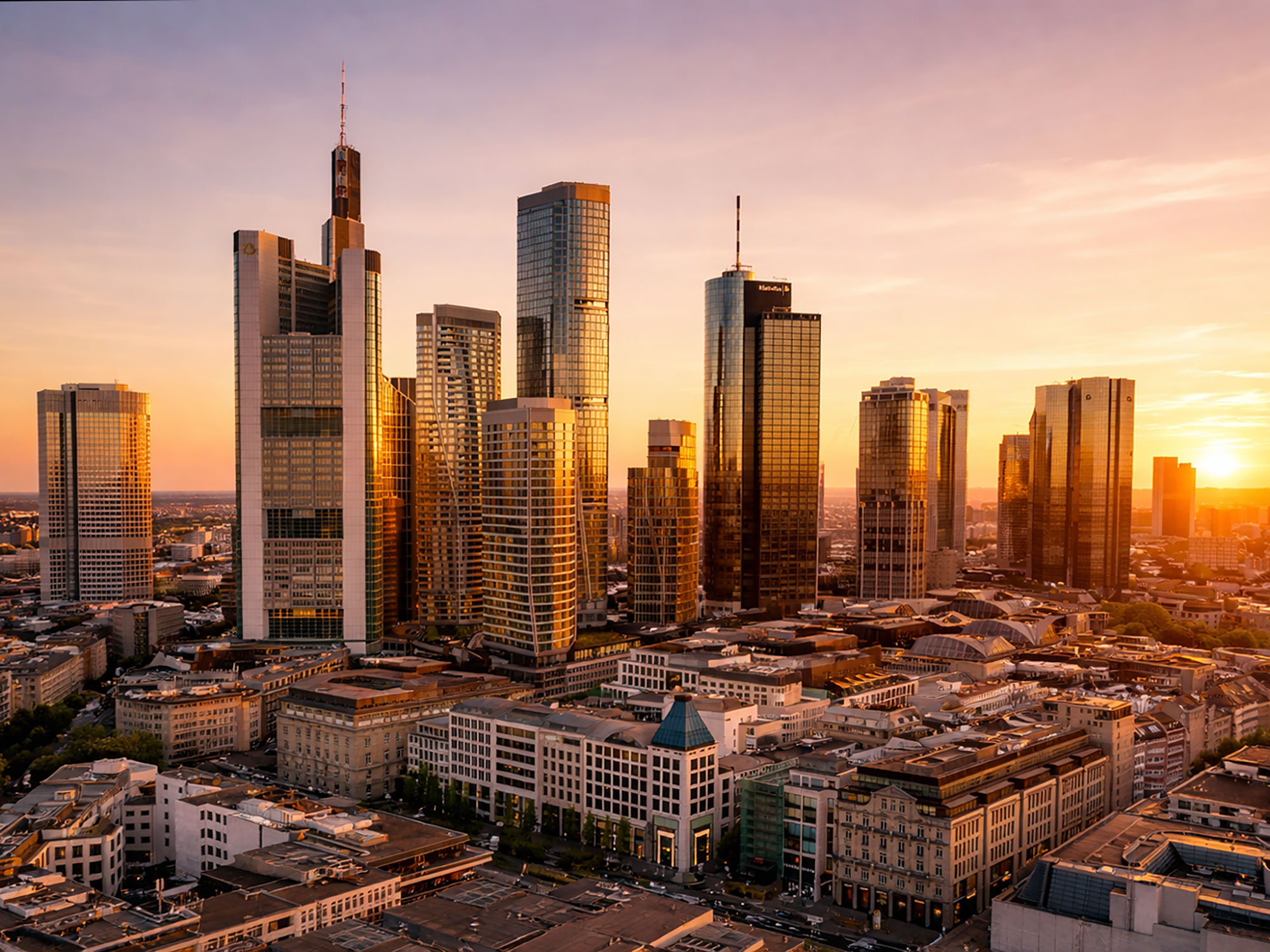
Frankfurt am Main is the city where the euro area sets its monetary policy and supervises its largest banks. The European Central Bank takes its interest-rate decisions for all countries that use the euro in its tower in the Ostend district. The Deutsche Bundesbank and Deutsche Börse, operator of the Frankfurt Stock Exchange and of the derivatives exchange Eurex, are based in the same metropolitan area.
Two further EU authorities have their seat in Frankfurt: EIOPA for insurance and occupational pensions, and AMLA for the fight against money laundering. Frankfurt Main Finance, the initiative of the financial center with more than 60 members, calls Frankfurt the leading financial center in Germany and the euro zone.
Monetary policy for the euro area
The European Central Bank aims for inflation of 2 percent over the medium term, and its Governing Council meets in Frankfurt to set the policy interest rates of the euro area. The heads of state or government decided on 29 October 1993 that the ECB would have its seat in Frankfurt. Its forerunner, the European Monetary Institute, moved into the Eurotower on 1 January 1994, and the ECB took over the building in June 1998.
The Deutsche Bundesbank is the German member of the Eurosystem and has its central office in Frankfurt as well. The Eurosystem runs the TARGET services for large-value payments, securities settlement and instant payments in central bank money.
Three EU supervisors in one city
ECB Banking Supervision directly supervises the significant banks of the euro area from Frankfurt. The list of supervised entities with the cut-off date of 1 July 2026 names 110 of them. EIOPA is the EU authority for insurance and occupational pensions, and Regulation (EU) No 1094/2010 sets its seat in Frankfurt am Main. The European Systemic Risk Board watches the EU financial system as a whole and has its secretariat at the ECB.
AMLA is the newest EU authority with a seat in Frankfurt. The European Parliament and the Council chose Frankfurt from nine candidate cities on 22 February 2024. From 2028 AMLA will directly supervise 40 selected obliged entities that operate across borders and carry high risk profiles. The other two European supervisory authorities, ESMA for securities markets and the European Banking Authority, are based in Paris.
Exchange, clearing and settlement
Deutsche Börse Group has its head office in Eschborn on the edge of Frankfurt and operates the Frankfurt Stock Exchange with its electronic trading venue Xetra. The derivatives exchange Eurex and its clearing house Eurex Clearing handle futures, options and interest rate swaps for banks and asset managers. Clearstream, also part of the group, settles securities transactions and holds securities in custody for its clients.
Since June 2025 the EU active account requirement under EMIR 3 has obliged larger EU firms to clear a share of their euro interest rate derivatives at a clearing house inside the EU. ESMA set out the operating conditions in its final report on the requirement. Eurex Clearing reported EUR 23,734 billion of interest rate swaps outstanding in August 2026, 22 percent more than a year earlier.
Banks and jobs
About 73,900 employees subject to social security contributions worked at banks in Frankfurt in the first quarter of 2025, according to a study by Helaba Research & Advisory (in German). Frankfurt accounts for almost 12 percent of all bank employees in Germany, compared with 9 percent ten years earlier. Helaba expects about 75,500 bank employees by the end of 2026.
Helaba names Brexit as a major reason for the growth, although the upward trend in Frankfurt started before Brexit. The wider financial sector, insurers and fund managers included, employed about 89,000 people in the city at the start of 2025. These counts leave out the staff of the ECB, AMLA and the International Sustainability Standards Board, which all work in Frankfurt.
Digital finance next to the supervisors
The Eurosystem prepares the digital euro at the ECB in Frankfurt, while the decision to issue it depends on EU legislation. 21X, a Frankfurt trading venue for tokenized securities, received its license from BaFin under the EU DLT Pilot Regime. Deutsche Börse runs crypto trading and custody through Crypto Finance and offers the D7 platform for digital securities at Clearstream.
The internet exchange DE-CIX connects the networks of banks and cloud providers in data centers across Frankfurt. Founders of fintech companies in Frankfurt meet their supervisor BaFin and their bank customers in the same city.
TechQuartier and Finance Loop
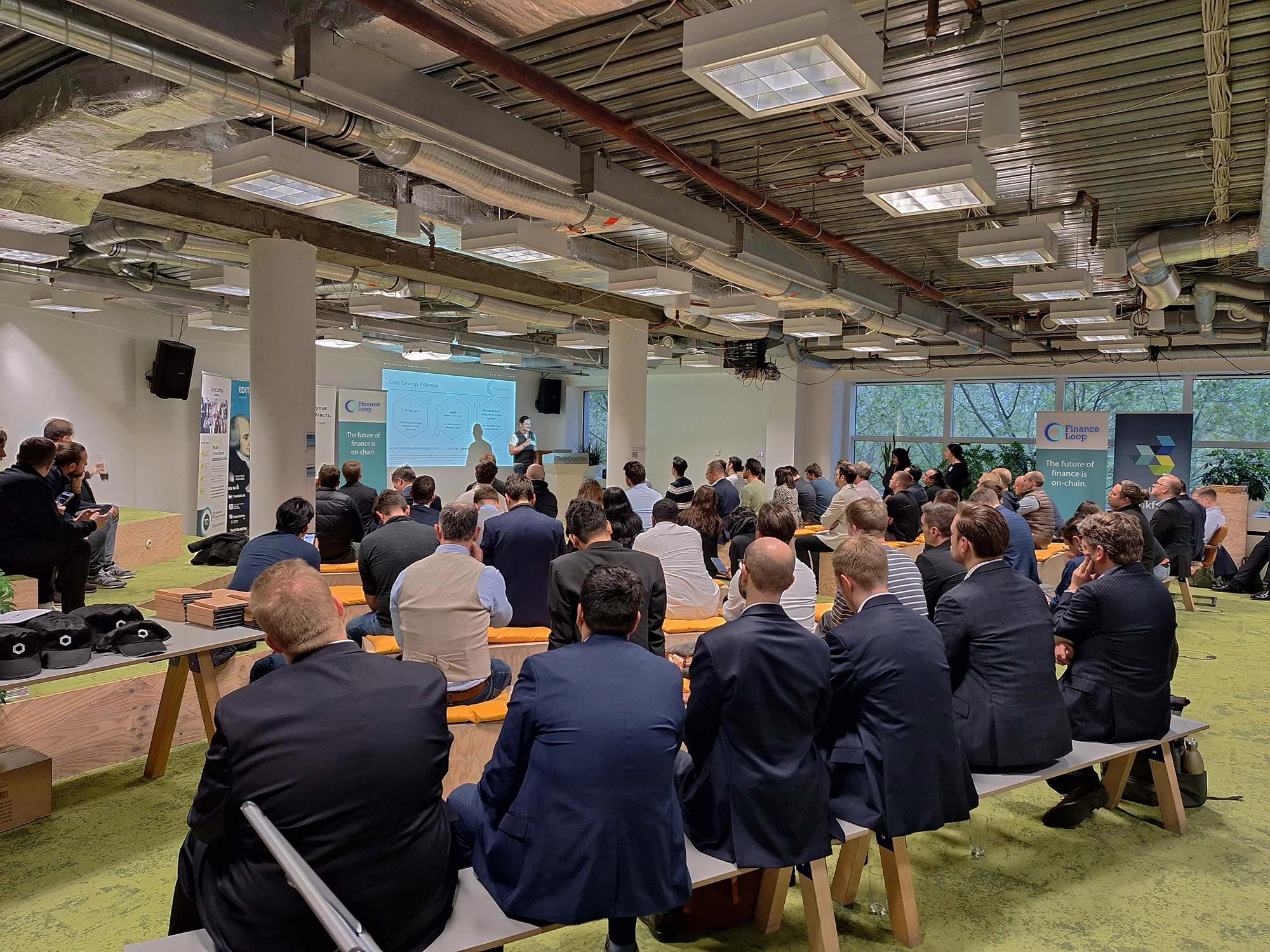
TechQuartier is the digital innovation hub of Frankfurt, with about 3,200 square meters of coworking space at Platz der Einheit in the Gallus district. Its free startup programs concentrate on financial services, impact and agrifood, and its four event spaces hold up to 120 people each. Fintech founders can rent desks there and work with the innovation teams of banks and insurers.
Finance Loop is based at TechQuartier and holds many of its evenings there. Finance Loop connects Europe with Germany: specialists from other EU countries meet banks and founders in Frankfurt at its events, and German institutions find contacts in markets across Europe. Finance Loop is built in collaboration with Frankfurt Main Finance and TechQuartier.
AI Week Frankfurt and AI in banking
AI Week Frankfurt is a five-day AI conference that AI Hub Frankfurt organizes at The Squaire, the office building above the long-distance station at Frankfurt Airport. One of the five days is reserved for banking and finance, and the partners include Commerzbank, Helaba and the Deutsche Bundesbank next to technology companies such as Microsoft and NVIDIA. For the last edition, Frankfurt University of Applied Sciences announced more than 5,000 expected participants and 200 speakers.
During AI Week Frankfurt, Finance Loop and Frankfurt Main Finance ran the Emerging Finance side event on new technology in financial services. Banks in Frankfurt that use AI for credit scoring fall under the high-risk rules of the EU AI Act in finance, with duties on data quality and human oversight.
The plan of the state of Hesse
In September 2025 the Hesse Financial Center Cabinet adopted a strategy paper for Frankfurt, prepared with financial institutions and research institutions. Hessian economics minister Kaweh Mansoori named the aim to expand the role of Frankfurt as the leading financial center of continental Europe (in German). The Frankfurt financial center strategy covers six action areas, among them regulation, startups, sustainable finance and international marketing.
Frankfurt Main Finance coordinates the international marketing of the financial center under its own brand. Its more than 60 members include the state of Hesse, the cities of Frankfurt and Eschborn, banks, service providers and universities.
Upcoming finance events in Frankfurt
What is the financial capital of Europe?
For the European Union, Frankfurt is the financial capital in the institutional sense: the ECB sets monetary policy for the euro there and supervises the largest banks. EIOPA and AMLA have their seats in the city too. London has the largest financial sector in Europe, with about 467,500 financial jobs in Inner London in the second quarter of 2025 according to Helaba. Since Brexit, however, banks in London can no longer serve EU clients through EU passporting.
Why is the European Central Bank in Frankfurt?
The Maastricht Treaty required the member states to agree on a seat for the future central bank. The German government argued for Frankfurt, where the Deutsche Bundesbank had run the monetary policy of the Deutsche Mark since 1957. The heads of state or government agreed on Frankfurt on 29 October 1993, and the ECB started work there in June 1998.
Why is Frankfurt the financial capital of Germany?
Frankfurt has been a place of trade and money changing since its medieval fairs, and the history of the Frankfurt financial center starts there. After the Second World War the British wanted the new West German central bank in Hamburg, but the Americans prevailed and the Bank deutscher Länder was set up in Frankfurt in 1948 (in German). The Bundesbank replaced it in 1957, and Deutsche Bank, Commerzbank and DZ BANK run their businesses from head offices in Frankfurt today.
How many banks are in Frankfurt?
The Deutsche Bundesbank counted more than 330 financial institutions registered for banking supervision in Frankfurt in spring 2025. Large German banks such as Deutsche Bank, Commerzbank, DZ BANK and Helaba have their head offices in the city. J.P. Morgan SE, Goldman Sachs Bank Europe SE and Morgan Stanley Europe SE, the EU banks of three U.S. groups, are also based in Frankfurt and supervised by the ECB.
Frankfurt, Paris and Luxembourg compared
The large financial centers of the EU have different specialties. Frankfurt has the ECB, European banking supervision, EIOPA and AMLA as well as the head offices of the largest German banks. Paris is the seat of the securities authority ESMA and the European Banking Authority, and Paris Europlace promotes the French financial center. The Luxembourg financial center is built around investment funds, with EUR 8.2 trillion in Luxembourg-domiciled funds at the end of 2025.
The Frankfurt financial center and Finance Loop
Finance Loop is a member of Frankfurt Main Finance and runs events in Frankfurt on emerging technology in finance. Together with Frankfurt Main Finance, Finance Loop has organized the Digital Finance Night in Frankfurt for professionals from finance and technology.
Finance Loop is a professional network and has the goal of driving the institutional use of emerging technologies in finance, such as AI, tokenization, stablecoins, and DeFi. Finance Loop helps its members build skills and personal networks in these fields: Investment & Digital Assets, Payments & Digital Money, Digital Infrastructure & Sovereignty, and Risk & Compliance.