
Low latency trading
Low latency trading is electronic trading that reduces the delay between receiving market information and sending an order. Trading firms shorten network routes and optimize their software to react to changing prices quickly. The purpose is to reduce the time in which an order can become outdated, especially when a strategy depends on rapid responses to market events.
Low latency depends on the distance to the exchange and the time spent processing data inside a firm's systems. Co-location places trading servers near the exchange's matching engine to shorten the network path. Faster infrastructure supports high-frequency strategies and other algorithmic trading in Germany, although low latency alone does not guarantee an execution price or a profit.
Where the microseconds go
A signal in optical fiber travels about one kilometer in five microseconds, so a server across town loses time against one in the exchange's own building. Microwave links between trading venues beat fiber over long routes because signals travel faster through air than through glass.
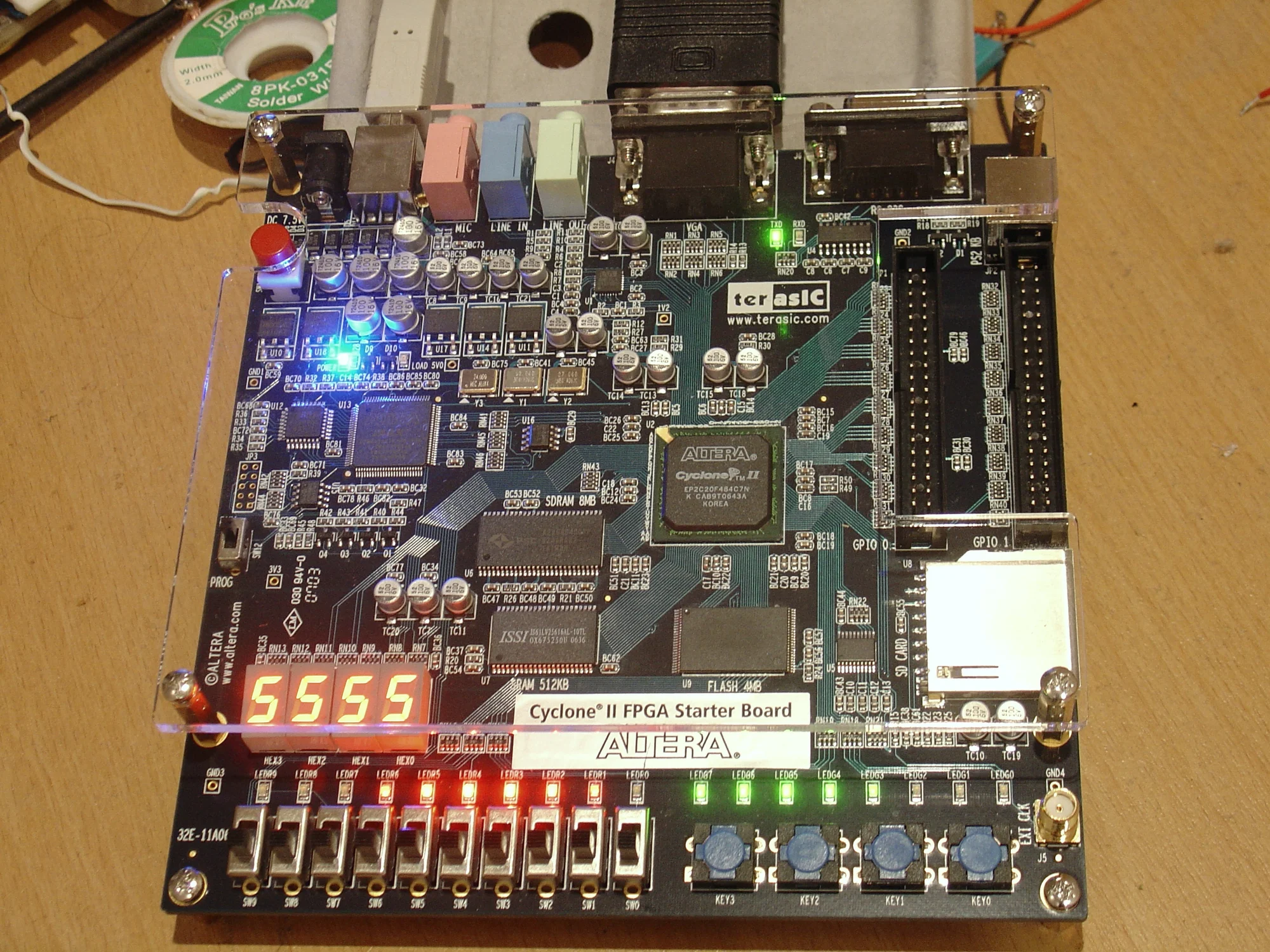
Inside the server, the operating system costs time. According to A10 Networks, kernel bypass networking, which lets the trading program read the network card directly, cuts that overhead from 20 to 50 microseconds to 1 to 5. Firms move the most time-critical logic onto FPGAs, programmable chips that parse market data and send orders in hardware. Jitter, the variation in latency from one message to the next, matters as much as the average.
Colocation at Deutsche Börse
In Frankfurt the reference point is the trading system of Deutsche Börse. The Deutsche Börse co-location service places participants' servers in the Equinix FR2 data center, which hosts the primary back ends of Xetra and Eurex, with connections of up to 10 gigabits per second and a precision time service as an add-on.
For the wider data center market around the exchange, see data centers in Frankfurt, and for the trading venues, trading in Frankfurt.
Clock rules under MiFID II
Speed needs a clock to prove what happened when. The EU rules on clock synchronization under MiFID II, known as RTS 25, require high-frequency traders to keep their business clocks within 100 microseconds of UTC and to timestamp events to one microsecond or finer, as the time-server maker Meinberg summarizes. Firms use the Precision Time Protocol (PTP) to keep their servers within that limit.
Upcoming events on digital infrastructure
What does latency mean in trading?
Latency is the delay between an event and the response to it, such as the time from a price change at the exchange to the arrival of the firm's order. Ultra low latency usually means a round trip of less than one millisecond.
What is the difference between low latency trading and high-frequency trading?
High-frequency trading is a strategy that sends and cancels many orders in short intervals and needs low latency to work. Low latency trading describes the colocation and hardware behind fast execution. A bank can invest in low latency for market making or hedging without running a high-frequency strategy.
Low latency trading and Finance Loop
Finance Loop is based in Frankfurt, home of the trading systems of Deutsche Börse, and connects trading technologists from banks and trading firms with infrastructure providers in its Digital Infrastructure & Sovereignty track. Finance Loop offers network and colocation providers a sponsored meetup to show their latency figures to the people who buy them.
Finance Loop is a professional network supporting the institutional use of emerging technologies in finance, such as AI, digital payments, cloud and blockchain solutions. Finance Loop helps its members build skills and personal networks in these fields: Investment & Digital Assets, Payments & Digital Money, Digital Infrastructure & Sovereignty, and Risk & Compliance.