
Trade Finance Germany
Trade finance provides financing and payment protection for companies that import or export goods. Banks offer letters of credit, guarantees, documentary collections and export loans to help buyers and sellers complete a transaction. These instruments address the time between ordering goods, delivering them and receiving payment.
Exporters need working capital to produce and ship goods, while importers need confidence that delivery and payment will follow the agreed terms. A letter of credit links the bank's payment commitment to the presentation of specified documents, and a guarantee covers an agreed payment or performance obligation. In Germany, federal export credit guarantees also help exporters and financing banks manage commercial and political payment risks.
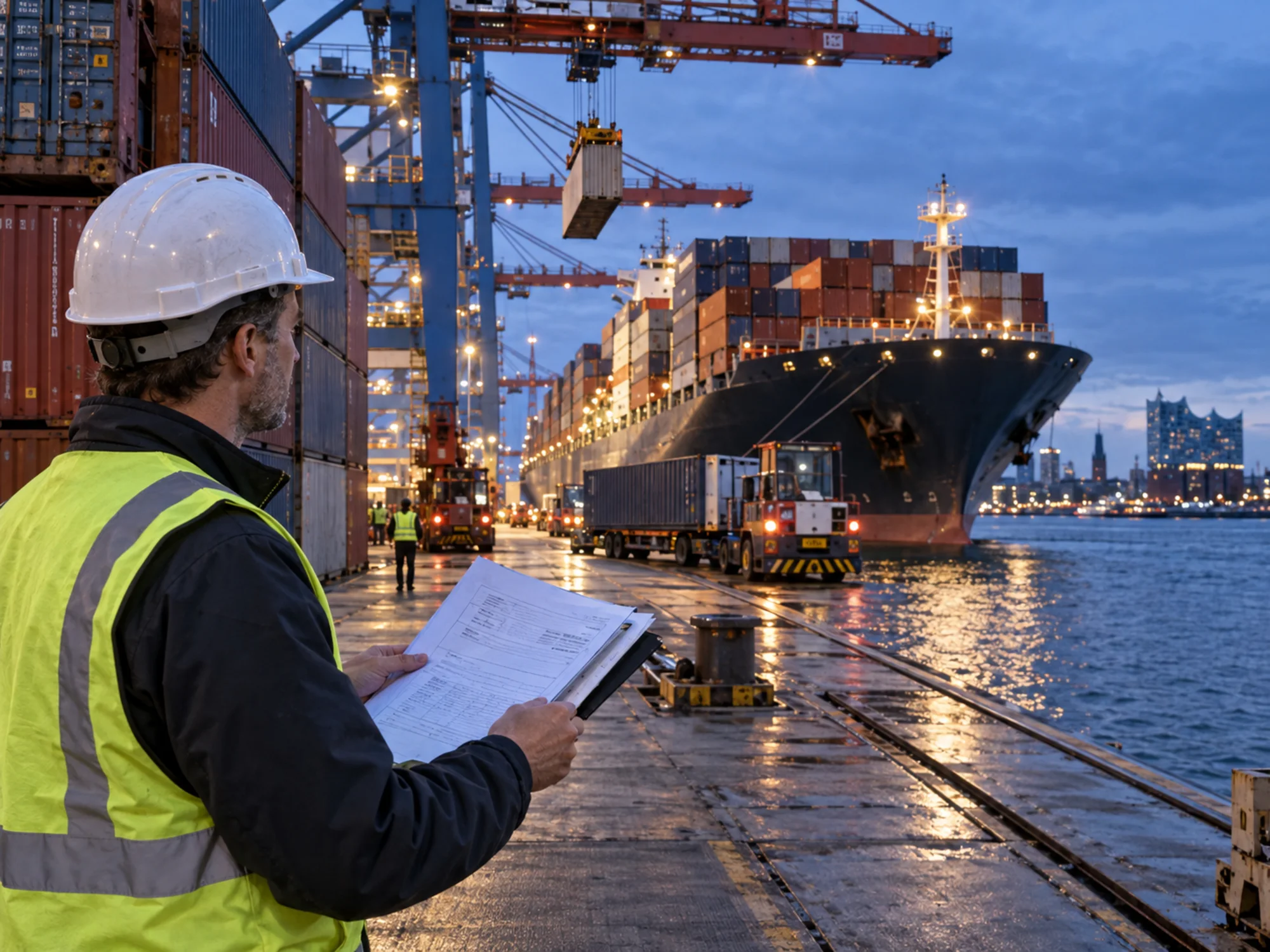
How trade finance works
An exporter wants to be paid before the goods leave its hands, and an importer wants the goods before it pays. Trade finance closes that gap with bank instruments. Under a letter of credit, the importer's bank promises to pay the exporter once the exporter presents the agreed documents, above all the bill of lading, which proves shipment and gives its holder the right to the goods. Most letters of credit follow the ICC rules UCP 600, and the ICC's eUCP, now in version 2.1, is the supplement for presenting those documents in electronic form. Banks also offer guarantees, documentary collections, forfaiting and supply chain finance.
For German exporters the federal government adds its own layer. The Export Credit Guarantees of the Federal Republic of Germany, known as Hermes cover, have protected exporters and banks against commercial and political payment defaults since 1949, in return for a premium based on the risk.
The electronic bill of lading in German law
Germany has had a legal basis for the electronic bill of lading since the reform of its maritime trade law in 2013. Section 516 (2) of the German Commercial Code (HGB) treats an electronic record as equal to a bill of lading if it fulfills the same functions and its authenticity and integrity are ensured. Section 516 (3) lets the Federal Ministry of Justice set the details of issuing, presenting, returning and transferring such a record by ordinance. In an article for ICC Germany (in German), Tim Schommer wrote that the ministry had not used this power, because lawmakers wanted suitable forms and procedures to emerge in practice first.
That left banks and traders with a principle and no checklist. In an analysis by Eleanor Wragg for Global Trade Review, David Saive of the University of Oldenburg said that functional equivalence does not give enough guidance on what an electronic document has to fulfill. A working group of 22 experts under the patronage of ICC Germany, led by Hans Huber of Commerzbank and Saive, set out to define those requirements. Bills of exchange are a separate gap: in a Trade Finance Global podcast episode, Silja Calac of Banco Santander and Melih Esmer of EBS University discussed whether Germany should amend its bill of exchange law or write a new one for digital negotiable instruments.
MLETR, the UK and the eWpG
The UNCITRAL Model Law on Electronic Transferable Records (MLETR), adopted on 13 July 2017, gives countries a template for electronic bills of lading, bills of exchange, promissory notes and warehouse receipts. The model law's central idea is control: a reliable method has to show who has exclusive control of the electronic record, which takes the place of holding the paper. The model law works with a central registry or a distributed ledger and prescribes neither. UNCITRAL's status list names the United Kingdom, France, Singapore and China among the states with laws based on it; Germany is not on the list.
The UK's Electronic Trade Documents Act 2023, in force since 20 September 2023, covers bills of lading, bills of exchange, promissory notes, warehouse receipts and marine insurance policies, among other documents. The German Electronic Securities Act (eWpG) does not fill the gap at home: it covers bearer bonds and shares, not trade documents.
Tokenization and digital money in trade
Tokenization enters trade finance in two places. The document itself can become a token on a ledger that records who controls it, which is the MLETR model. The payment can move on new rails: a tokenized deposit or a stablecoin payment can be set to settle when the electronic bill of lading changes hands, so goods and money move at the same moment. The payment side still runs into the same questions as any cross-border payment, above all sanctions screening and correspondent banking.
Upcoming trade and payments events in Germany
Finance Loop and trade finance in Germany
Finance Loop is the meeting place for trade finance bankers in Germany and for the export and treasury teams they work with. Finance Loop connects the finance, IT and AI communities in Germany, Austria and Switzerland, with events in Frankfurt, Munich, Berlin and Hamburg.
Finance Loop supports When Banks Say 'No', a half-day payments seminar in Frankfurt for compliance, treasury, finance, export and legal teams. Julia Pfeil of Dentons covers sanctions and foreign trade law there, and Harald Knosp of International Business Service Corp shows how international payment routes are shifting. Hamburg, Germany's port city, has fintechs that sell to exporters, as the fintech in Hamburg page describes, and the sanctions compliance page covers the screening rules for every trade payment.
What does trade finance mean?
Trade finance is the set of bank instruments that pay for and secure international trade, among them letters of credit, guarantees, documentary collections, export credit and supply chain finance. The bank takes on part of the payment or delivery risk between exporter and importer.
Is the electronic bill of lading legal in Germany?
Yes. Since 2013, section 516 (2) HGB has treated an electronic record as equal to a paper bill of lading if it fulfills the same functions and its authenticity and integrity are ensured. Section 516 (3) allows an ordinance with the technical details, which ICC Germany reported as not yet issued.
Has Germany adopted the MLETR?
No. Germany is not on UNCITRAL's list of states with laws based on the Model Law on Electronic Transferable Records. The United Kingdom, France and Singapore are, among others.
What is the difference between a letter of credit and a bank guarantee?
A letter of credit is a payment instrument: the bank pays when the exporter presents the agreed documents. A bank guarantee is a safety net: the bank pays only if its client fails to pay or perform. Letters of credit mostly follow the ICC rules UCP 600, demand guarantees the ICC rules URDG 758.
Trade finance and Finance Loop
Trade finance sits in Finance Loop's Payments & Digital Money track, with its sanctions and AML side in Risk & Compliance. Finance Loop supports the payments seminar When Banks Say 'No' in Frankfurt for export and compliance teams. Dates are on the events page.
Finance Loop is a professional network supporting the institutional use of emerging technologies in finance, such as AI, digital payments, cloud and blockchain solutions. Finance Loop helps its members build skills and personal networks in these fields: Investment & Digital Assets, Payments & Digital Money, Digital Infrastructure & Sovereignty, and Risk & Compliance.