
Perpetual futures
Perpetual futures are derivative contracts that give traders exposure to an underlying asset without a fixed expiry date. A recurring funding payment between buyers and sellers helps keep the contract price close to the asset's spot price. Positions use margin, so adverse price movements can lead to liquidation before a trader chooses to close the position.
Funding payments change the cost of holding a position and can flow in either direction as market conditions change. The absence of an expiry date does not remove the risks from leverage or the need to maintain sufficient margin. In the EU, the regulatory treatment of these derivatives involves MiFID II and the applicable rules for the product offered.
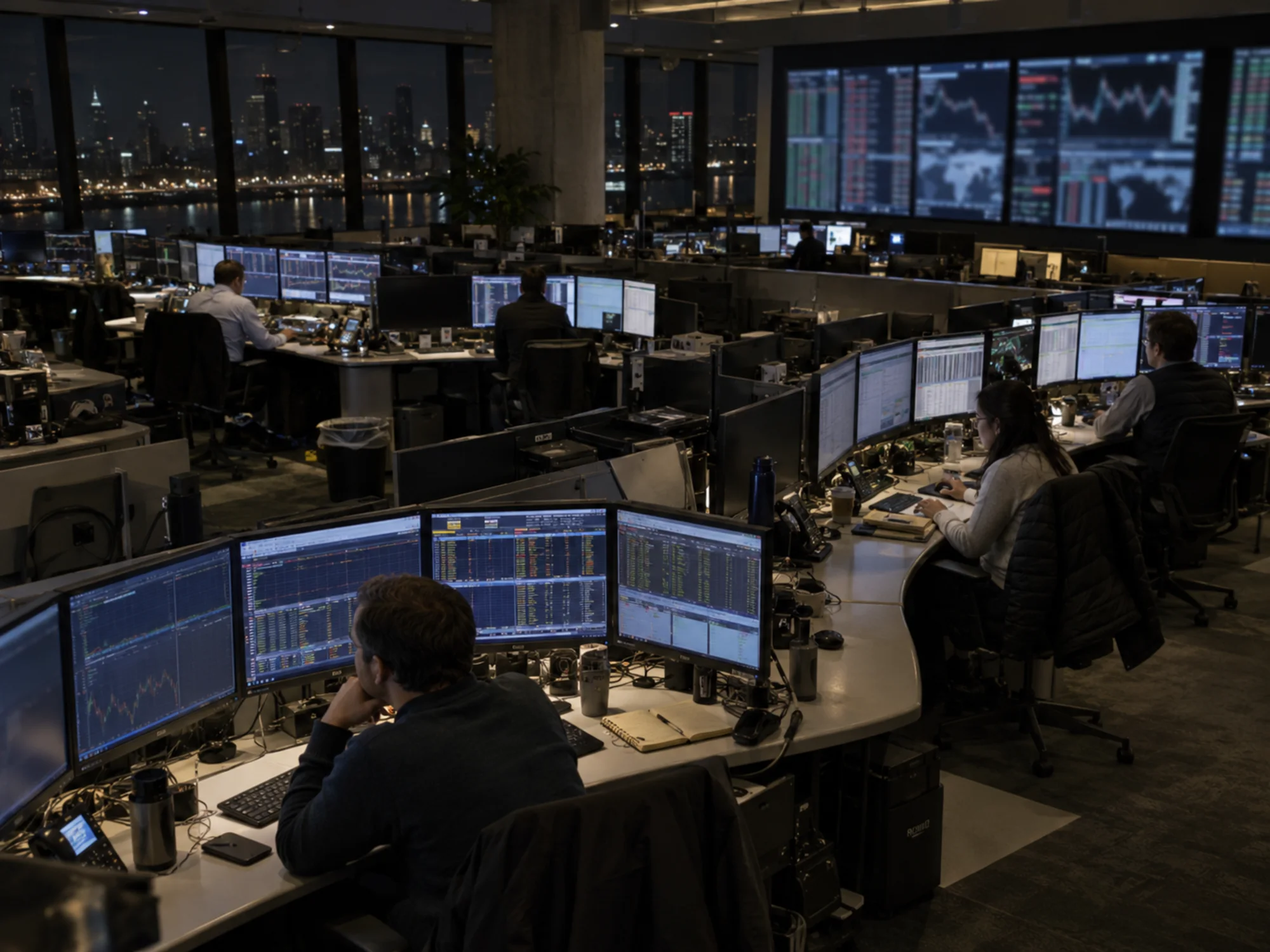
How the funding rate works
When the perpetual trades above the spot price, holders of long positions pay holders of short positions; when it trades below, shorts pay longs. The payment pulls the contract back toward spot without an expiry date. A trader who buys bitcoin spot and sells the perpetual earns the funding rate while it is positive and carries no price risk, the crypto version of the cash-and-carry trade described on the bitcoin basis trade page.
The same trade is the engine of a product outside the exchanges: Ethena describes its USDe as "a synthetic dollar, backed with crypto assets and corresponding short futures positions", and part of its revenue comes from these delta-neutral basis trades. The Ethena page covers that model and the BaFin case around it. Positions are margined, so a sharp price move can liquidate many of them at once; the crypto derivatives page explains liquidation cascades and margin.
Who offers perpetual futures in the EU
A perpetual future is a derivative, so in the EU it falls under MiFID II; MiCA does not apply to it. A provider needs an investment firm license or a trading venue license. Kraken launched MiFID II regulated perpetual and fixed-maturity crypto futures for clients in the European Economic Area in May 2025, through a firm licensed in Cyprus. Coinbase began offering futures, among them perpetual contracts, to clients in 26 European countries including Germany under its MiFID II license.
The European crypto exchanges page lists which exchanges hold which licenses, and the Kraken page covers Kraken's licenses in Europe.
ESMA: perpetual futures fall under the CFD rules
On 24 February 2026, ESMA reminded firms that perpetual futures and perpetual contracts giving leveraged exposure to crypto-assets are likely to fall within the national product intervention measures on contracts for difference (CFDs). Where they do, retail clients get leverage limits, a risk warning, margin close-out and negative balance protection, and firms may not offer bonuses. ESMA added that the product name, trading on a venue and a funding rate do not change the assessment, asked for a narrow target market and an appropriateness test for non-advised sales, and warned about conflicts of interest where a group company runs the venue.
Upcoming digital asset events in Germany
Finance Loop and crypto derivatives
Crypto derivatives and the firms that offer them under EU licenses are a subject at the Crypto Assets Conference in Frankfurt, which Finance Loop has partnered with. Finance Loop supported the Bybit EU Crypto Evening at TechQuartier on compliance under MiCAR, and brings trading and compliance teams together at events in Frankfurt, Munich, Berlin and Hamburg.
Investment & Digital Assets
Risk & Compliance
What are perpetual futures?
Perpetual futures are futures contracts without an expiry date. A funding payment between longs and shorts, usually every few hours, keeps their price close to the spot price of the underlying.
What is the funding rate?
The funding rate is the periodic payment between the two sides of a perpetual future. The funding rate is positive when the contract trades above spot, so longs pay shorts, and negative when it trades below.
Are perpetual futures legal in Germany?
Yes, when a firm offers them under a MiFID II license. ESMA expects such products to follow the CFD rules for retail clients, with leverage limits and negative balance protection.
What is the difference between perpetual futures and futures?
A dated future expires on a set day and settles against the underlying. A perpetual future runs until the holder closes it, and the funding rate replaces the convergence that expiry brings.
Perpetual futures and Finance Loop
Finance Loop covers perpetual futures in its Investment & Digital Assets track, where listed derivatives meet crypto, and in Risk & Compliance, where ESMA's CFD rules apply. Finance Loop has partnered with the Crypto Assets Conference in Frankfurt and supported the Bybit EU Crypto Evening.
Finance Loop is a professional network supporting the institutional use of emerging technologies in finance, such as AI, digital payments, cloud and blockchain solutions. Finance Loop helps its members build skills and personal networks in these fields: Investment & Digital Assets, Payments & Digital Money, Digital Infrastructure & Sovereignty, and Risk & Compliance.