
Fintech hub
A fintech hub is a place or organization connecting financial technology startups with financial institutions, investors and specialist support. European hubs include workspaces, industry associations, accelerators and supervisory contact points. Each model offers a different way for companies to find expertise, develop products or discuss market-entry requirements.
Hubs can help founders find a bank to test an application, investors to discuss funding or experts to assess regulatory questions. London, Paris and other European financial centers combine several such networks and support organizations. A hub's services and specialist focus matter when a business chooses where to seek support.
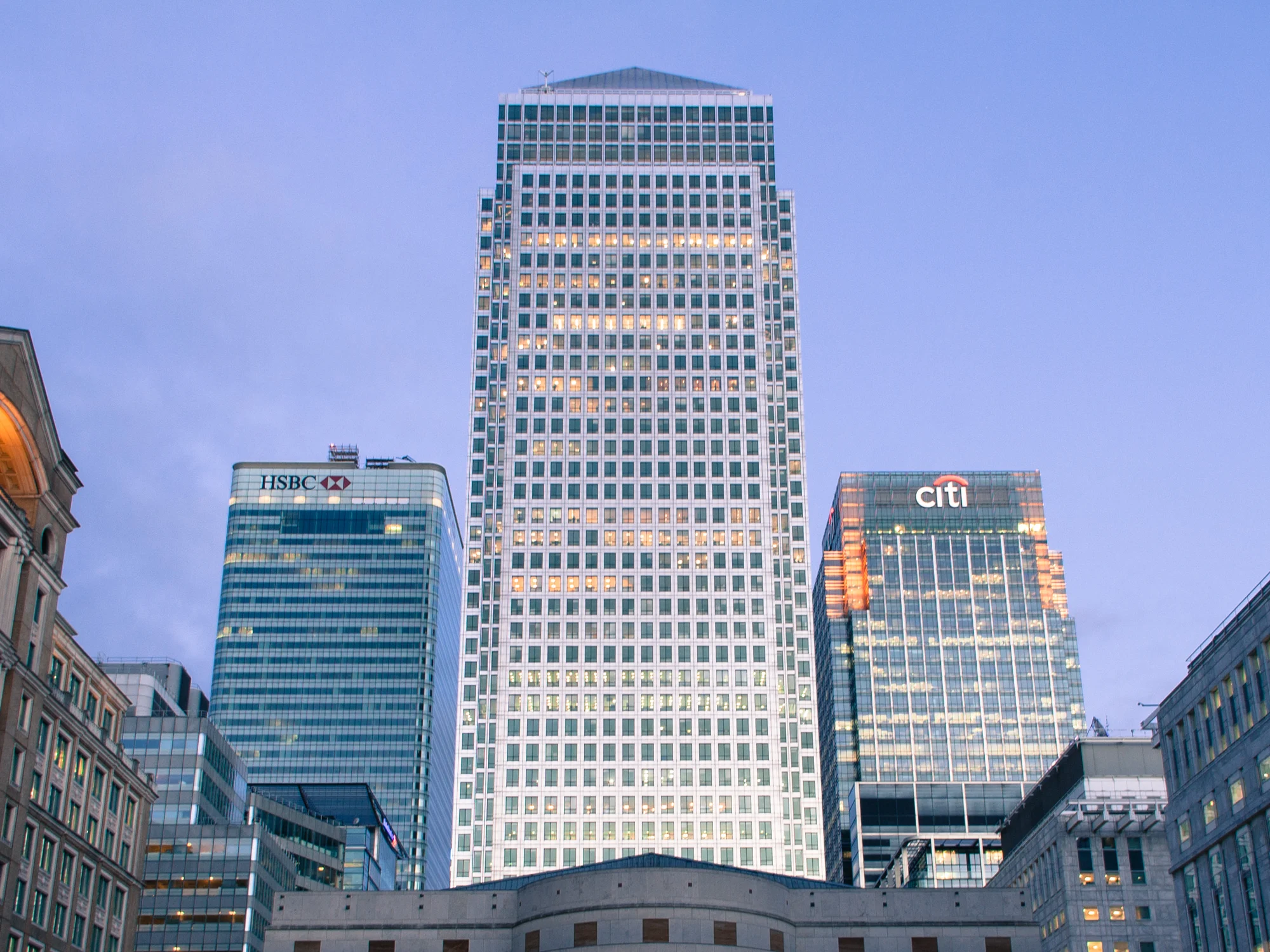
United Kingdom and Ireland
Level39 is the technology hub of Canary Wharf Group on the 39th floor of One Canada Square in London. Level39 opened in March 2013 with financial technology as its first subject and now also covers cyber security, data and AI, sustainability and life sciences. In 2014 Startupbootcamp FinTech started its London accelerator with Lloyds Bank, Rabobank and MasterCard as partners.
Dublin works differently: it is where American payment and crypto firms place the company that serves the EU, licensed by the Central Bank of Ireland, as described at fintech in Dublin.
France, the Netherlands and Luxembourg
Station F in Paris calls itself the world's biggest startup campus. Station F opened in 2017 in the Halle Freyssinet and lists more than 30 programs run by companies, schools and Station F itself, among them the fintech and insurtech program of BNP Paribas with Plug and Play. The Paris scene around it is described at fintech in Paris.
Holland FinTech is the association of the Dutch fintech sector, based in Amsterdam and financed by membership fees; see also fintech in Amsterdam. The LHoFT, the Luxembourg House of Financial Technology, is a public-private initiative founded in 2016 near Luxembourg's central station, and its work follows the fund industry, as described at fintech in Luxembourg.
The Nordics and the Baltics
Copenhagen Fintech is the Danish hub, set up in 2016 by the Danish financial sector and the City of Copenhagen. Copenhagen Fintech runs the Copenhagen Fintech Lab at Applebys Plads and the Nordic Fintech Week. Stockholm Fintech Hub has closed, and the Swedish meeting point is now a conference, Stockholm Fintech Week, held in March. Both countries are compared at fintech in Stockholm and Copenhagen.
In Lithuania the hub is an association: Fintech Hub LT, now the Lithuanian Fintech Association, groups the licensed payment and electronic money institutions and works with the Bank of Lithuania on compliance and financial crime. The licensing market behind it is covered at fintech in Vilnius.
Fintech hubs in Germany
In Frankfurt, TechQuartier connects more than 650 startups with corporates, investors and universities, within walking distance of the financial district, and it hosted the Fintech Europe accelerator of Plug and Play from 2018. AI Hub Frankfurt Rhein-Main runs AI Week Frankfurt and trainings for companies, and the Frankfurt School Blockchain Center was a blockchain research center and think tank at Frankfurt School until its renaming in spring 2026.
In Berlin, the House of Finance and Tech Berlin is the fintech hub in the Digital Hub Initiative, the federal network of 25 regional hubs, and w3.hub is a workspace in Kreuzberg for builders in AI, robotics, quantum and blockchain. Insurance has two hubs in the same federal network: InsurLab Germany in Cologne and InsurTech Hub Munich.
Fintech hubs in Switzerland
Zurich has four hubs with a page here. Tenity started in 2015 as an open innovation initiative at SIX, ran as F10 until 2023 and invests in early-stage fintech founders. Kickstart Innovation matches startups with corporates to test a product together. Swiss Fintech Innovations is an association of Swiss banks that writes the Common API standards, and Trust Square is a workspace and event house near Paradeplatz. In June, Swiss Fintech Week puts the Swiss fintech events into one week in Zurich.
For crypto, the center is Crypto Valley, the Swiss crypto and blockchain ecosystem that grew from the canton of Zug. The crypto hubs of the EU, where exchanges and stablecoin issuers hold their MiCA licenses, are compared at crypto hubs in Europe.
Accelerators that work across borders
Plug and Play runs its fintech program from offices in Paris, Munich, Stuttgart, Amsterdam, Vilnius, London, Milan and Vienna. Banks join as corporate partners, startups take part at no cost, and both sides test pilot projects. Startupbootcamp ran fintech cohorts in London from 2014 and in Amsterdam from 2016, and its most recent fintech cohort ended in June 2024.
Supervisors' innovation hubs
A supervisor's innovation hub is a contact point where a firm asks how the rules apply to its product before it applies for a license. The European Banking Authority counted 41 innovation hubs in the 30 EEA countries and 14 regulatory sandboxes in 12 countries in October 2023. Germany's is the FinTech Innovation Hub of BaFin, set up in 2017; the Dutch AFM, DNB and ACM have run a joint hub since 2016, and Lithuania has had a newcomer program and a sandbox since 2018.
The supervisors share what they learn in the European Forum for Innovation Facilitators, set up after a 2019 joint report of the European supervisory authorities. How one license covers the whole single market is explained at fintech in Europe.
Best fintech cities in Europe compared
A license from one EU member state passports into the other member states, so a founder chooses a fintech city mainly for its supervisor and its customers. London and Zurich are outside the EU, and a firm based there needs a second authorization or has to meet EU rules for clients in the single market. Ten European fintech cities compare as follows, with the main advantage and the main drawback of each one.
| City | Supervisor | Main advantage | Main drawback |
|---|---|---|---|
| London | FCA | Fourth in the Global FinTech Hub Report 2025; FCA sandbox and AI Lab | A UK license no longer passports into the EU |
| Dublin | Central Bank of Ireland | English-speaking common law inside the EU | Close checks on the substance of the Irish entity |
| Paris | ACPR and AMF | Station F and the wholesale CBDC experiments of the Banque de France | Two supervisors, split by activity |
| Amsterdam | DNB and AFM | iDEAL and the trading operations of Euronext | Two supervisors and fewer large banks than Frankfurt |
| Luxembourg | CSSF | The largest fund domicile in Europe | Fewer than 700,000 residents as a home market |
| Stockholm and Copenhagen | Finansinspektionen and Finanstilsynet | Swish, MobilePay and open banking before PSD2 | Krona and krone instead of the euro |
| Vilnius | Bank of Lithuania | Licensing often under six months; SEPA through CENTROlink | Stricter inspections and fines |
| Frankfurt | BaFin and ECB | ECB, Bundesbank and Deutsche Börse in the city | Fewer fintechs than Berlin |
| Berlin | BaFin | 189 fintechs and 31 percent of German venture capital in 2024 | Few large banks and finance staff nearby |
| Zurich | FINMA | SIX, the Swiss National Bank and the FINMA fintech license | No EU passport for clients in the EU |
London: FCA, no EU passport
Advantages
London is fourth in the Global FinTech Hub Report 2025, the highest place of any European city in that ranking. The Financial Conduct Authority runs a Regulatory Sandbox for tests with real consumers, Innovation Pathways for questions on new business models, a Digital Sandbox with synthetic data and an AI Lab. According to its ScaleUp Institute profile, Level39 at Canary Wharf houses 180 growing businesses whose members have raised more than £1bn.
Drawbacks
A UK license no longer passports into the EU, so a London fintech with clients in Germany or France needs a second authorization from an EU supervisor. When the Brexit transition ended, EU rules also stopped EU investors from trading euro-denominated shares on London venues, and most of that trading moved to Amsterdam.
Dublin: Central Bank of Ireland
Advantages
Ireland is an English-speaking common law country inside the EU, and an authorization from the Central Bank of Ireland passports into every member state. Stripe, Coinbase and Google hold Irish payment or e-money authorizations, so the city already has staff who run EU compliance for a group based elsewhere. On 9 April 2024 the Central Bank published its expectations of applicants for payment and e-money licenses, which shows a firm the questions before it files. Ireland counts around 270 domestic and 120 international fintech firms, most of them in Dublin.
Drawbacks
The Central Bank checks whether the Irish entity makes its own decisions or only holds the license for a parent company abroad. An applicant should expect questions on who decides, where the risk function reports and what the Irish board can refuse. A firm whose banks and counterparties are on the continent may find euro settlement easier from a continental city.
Paris: ACPR and AMF
Advantages
Paris is tenth in the Global FinTech Hub Report 2025, and Station F gives founders more than 30 programs on one campus. The Banque de France ran twelve wholesale CBDC experiments from March 2020 and tested three models for settlement on a distributed ledger. The AMF has supervised crypto firms since its national PSAN regime, whose requirements it matched to MiCA so that registered firms had a simpler route to authorization in France. After Brexit, Paris also gained trading and investment banking staff from London.
Drawbacks
France splits supervision by activity: the ACPR inside the Banque de France covers banks, payment firms and insurers, and the AMF covers investment and crypto services. A firm that offers payments and investment services answers to both, and the two authorities run a joint fintech forum because firms get stuck at that boundary.
Amsterdam: DNB and AFM
Advantages
The Netherlands has a small home market, so Dutch payment firms such as Adyen build for cross-border use from the start. iDEAL, the account-to-account scheme of the Dutch banks, carries roughly 70 percent of online payments in the country. Euronext runs its operations from Amsterdam, which became the largest share trading center in Europe after Brexit and has engineers for market infrastructure.
Drawbacks
Under the Twin Peaks model a payment firm answers to De Nederlandsche Bank on capital and governance and to the AFM on the treatment of customers. The AFM asks hard questions on governance and money laundering controls, which costs time for a firm in a hurry. Amsterdam also has fewer large banks and asset managers than Frankfurt as institutional customers, and iDEAL is moving into the European wallet Wero.
Luxembourg: CSSF
Advantages
Luxembourg is the largest fund domicile in Europe, so a firm selling to fund administrators, depositary banks and transfer agents finds its customers in one city. The CSSF runs an Innovation Hub for business models outside the usual license categories, and four blockchain laws since 2019 let securities be issued and held on a distributed ledger. Luxembourg for Finance counts more than 250 fintech firms in the country.
Drawbacks
With fewer than 700,000 residents, Luxembourg is too small a home market to build a consumer app on. Most fintech activity in the country needs a license, and the Innovation Hub gives guidance without approving a business model in advance.
Stockholm and Copenhagen: Finansinspektionen and Finanstilsynet
Advantages
Swish passed eight million private users in a Sweden of about ten million people, and the Danish MobilePay merged with the Norwegian Vipps in 2022. Nordic banks opened account access before PSD2 required it, and Nordea counted more than 3,300 registered users on its developer portal. Finansinspektionen runs an Innovation Center, and Finanstilsynet lets a firm test a model under supervision in its FT Lab.
Drawbacks
Both countries keep their own currencies, so a firm built on the krona or the krone treats euro settlement as a separate project. The large payment apps belong to the incumbent banks, and the joint Nordic clearing platform P27 withdrew its license application in May 2023. Stockholm Fintech Hub has closed, and Stockholm Fintech Week in March is now the main Swedish meeting point.
Vilnius: Bank of Lithuania
Advantages
Go Vilnius says licensing in Lithuania often takes under six months, and the Bank of Lithuania runs a newcomer program and a regulatory sandbox for live tests. Through CENTROlink, launched in 2015, the central bank gives licensed payment and e-money institutions access to SEPA and SEPA Instant without a correspondent bank. Revolut moved its European business to Vilnius after Brexit, and the Bank of Lithuania counted 263 fintech companies at the end of 2022.
Drawbacks
The supervisor has tightened its inspections, and the Bank of Lithuania fined Revolut Bank 3.5 million euros for breaches of money laundering rules. Under MiCA the register of around 850 crypto firms gave way to licensing, and only three crypto firms held a Lithuanian license at the end of 2025. A German bank working with a firm licensed in Vilnius checks its inspection record next to the license.
Frankfurt: BaFin and ECB
Advantages
The European Central Bank, ECB banking supervision, the Deutsche Bundesbank and Deutsche Börse are all in Frankfurt, and BaFin has one of its two seats in the city. Banks that needed an EU entity under direct ECB supervision after Brexit placed it here, and Eurex runs the derivatives market. Startup Genome names fintech and cybersecurity as the strongest fields of the Frankfurt startup ecosystem, which has 32 incubators and 10 accelerators.
Drawbacks
Frankfurt has fewer fintechs than Berlin, where the Investitionsbank Berlin counts 189, more than Munich and Frankfurt together. Two parts of the business that left London went elsewhere: cash equity trading moved to Amsterdam, and trading and investment banking staff moved to Paris.
Berlin: BaFin from Bonn and Frankfurt
Advantages
The Investitionsbank Berlin counts 189 active fintechs in Berlin, and three quarters of the 32 German fintech scale-ups valued above 100 million euros are based in the city. Berlin attracted 31 percent of German venture capital in 2024, about 2.2 billion euros, according to Berlin Partner. Office costs are lower than in London or Paris, and more than 190 venture capital firms work in the city.
Drawbacks
Finance expertise sits in Frankfurt and Munich, so a Berlin fintech has few large banks nearby and a hard search for staff with finance experience, as The Fintech Times reports. The Investitionsbank Berlin study points to missing money in the pre-seed phase and to too little scale-up financing. Berlin has no supervisor of its own, because BaFin works from Bonn and Frankfurt.
Zurich: FINMA, outside the EU
Advantages
SIX runs the Swiss stock exchange and operates the SIC payment system for the Swiss National Bank, which added instant payments on SIC5 in August 2024. The FINMA fintech license lets a firm accept public deposits of up to CHF 100 million without a full banking license. The Greater Zurich Area counted 186 fintech companies in the canton of Zurich in 2025, and 135 more in the canton of Zug.
Drawbacks
A Swiss license does not passport into the EU, so a Zurich firm with EU clients must also meet EU rules such as MiCA for crypto services and DORA for IT services to banks. A firm with the fintech license may neither invest the deposits nor pay interest on them, and its clients have no deposit protection if the firm fails.
Upcoming fintech events in Europe
What is a fintech hub?
A fintech hub is a place or an organization that brings fintech startups together with banks, investors and supervisors. The fintech hub can be a campus with desks and events, an industry association, an accelerator or a supervisor's innovation hub, and the term also names a city with many fintech companies.
Which are the biggest fintech hubs in Europe?
London and Paris are the two European cities in the top 10 of the Global FinTech Hub Report 2025, in fourth and tenth place. Station F in Paris calls itself the world's biggest startup campus. Other European cities with a fintech page here are Frankfurt, Berlin, Zurich, Amsterdam, Dublin, Luxembourg and Vilnius.
Which is the best city in Europe to start a fintech?
No city wins on every point, because an EU license passports across the single market and the choice depends on customers and supervisors. Payment and e-money firms often license in Vilnius or Dublin, fund technology goes to Luxembourg, and a firm that sells to large banks finds them in Frankfurt and Paris. Berlin has the most German fintechs and venture capital, and London leads the European cities in the Global FinTech Hub Report 2025 but needs a second license for EU clients.
What is the fintech hub in Germany?
Germany has two: Frankfurt, where TechQuartier is the startup hub next to the banks, and Berlin, where the House of Finance and Tech Berlin is the fintech hub of the federal Digital Hub Initiative. For questions on supervision, BaFin runs its FinTech Innovation Hub.
Fintech hubs in Europe and Finance Loop
Finance Loop is built in collaboration with Frankfurt Main Finance and TechQuartier, one of the hubs on this page, and holds its events in Frankfurt, Munich, Berlin and Hamburg. Finance Loop partners with conferences in Frankfurt, Paris and Barcelona and organizes delegations to finance hubs across Europe. A hub, accelerator or association that wants to reach German banks can become a partner or host an event with Finance Loop, and the free Network Membership brings the invitations.
Finance Loop is a professional network supporting the institutional use of emerging technologies in finance, such as AI, digital payments, cloud and blockchain solutions. Finance Loop helps its members build skills and personal networks in these fields: Investment & Digital Assets, Payments & Digital Money, Digital Infrastructure & Sovereignty, and Risk & Compliance.