
Crypto-friendly countries in Europe
Crypto-friendly countries in Europe are the places where a crypto business can obtain a license and open bank accounts under clear rules. Inside the European Union and the European Economic Area one rulebook applies, so the countries differ in how their supervisors work and which firms have already settled there.
Eleven countries stand out: nine inside the EEA, where a license from one MiCA supervisor covers all member states, plus Switzerland and the United Kingdom with their own crypto law. Their supervisors range from 6 to 109 crypto-asset service providers in the ESMA interim register of 16 October 2026, which counts 376 active entries from 27 states.
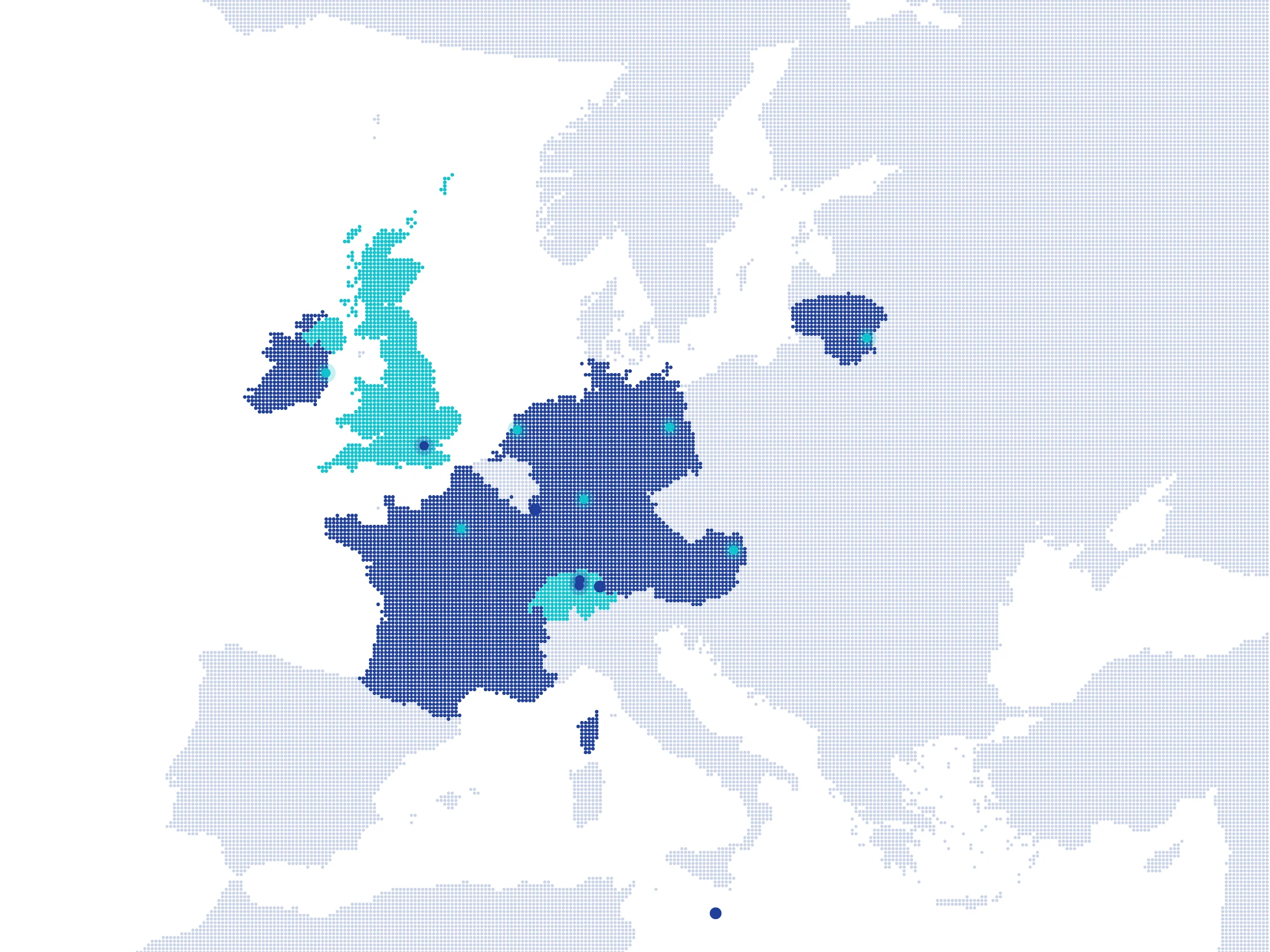
How the eleven countries compare
Under MiCA a crypto-asset service provider authorized in one member state may serve clients in all others after a cross-border notification, so the duties are the same in Vienna and in Dublin. The differences lie with the supervisor: how many firms it has authorized, which banks have notified it of crypto services, and what presence it expects from an applicant. The register counts come from the ESMA file of 16 October 2026; an entry is either a full authorization under Article 63 or a notification under Article 60 by a firm that already holds another financial license.
| Country | Supervisor | Register entries | Main advantage | Main drawback |
|---|---|---|---|---|
| Austria | FMA | 12 | All 12 entries are full authorizations; exchange headquarters in Vienna | Management and staff must work in Austria |
| France | AMF | 36 | Crypto register since 2019; bank-issued stablecoins in Paris | The AMF has threatened to challenge passports from other states |
| Germany | BaFin | 109 | Banks add crypto by notification; market infrastructure in Frankfurt | Only 8 full authorizations for new applicants |
| Ireland | Central Bank of Ireland | 12 | English-speaking EU member; Kraken and StoneX licensed there | Coinbase and Gemini chose other countries |
| Liechtenstein | FMA Liechtenstein | 12 | EEA passport next to the Swiss market; token law since 2020 | MiCA arrived late through EEA law; small home market |
| Lithuania | Bank of Lithuania | 6 | E-money licenses and direct SEPA access | Few authorizations after the transition ended |
| Luxembourg | CSSF | 13 | Fund center; custody banks and Coinbase | Nine of 13 entries date from 2026 |
| Malta | MFSA | 23 | Crypto law before MiCA; many large exchanges | ESMA peer review found unresolved issues |
| Netherlands | AFM | 28 | First licenses on day one; 21 full authorizations | Only six months of transition |
| Switzerland | FINMA | outside MiCA | Crypto banks with full banking licenses; DLT Act | No EU passport; firms need an EEA entity |
| United Kingdom | FCA | outside MiCA | London capital market; new crypto regime from 2027 | No EU passport; registration only until October 2027 |
Austria: FMA, 12 entries
Advantages
Every one of the 12 Austrian entries is a full authorization under Article 63, granted after a complete application. Bitpanda, founded in Vienna, received its authorization on 9 April 2025, and several exchanges from outside the EU followed with their EU entities. Bybit EU, KuCoin EU, WhiteBIT EU, BingX EU and OSL EU all run their European business from Vienna on an FMA license. Veljko Paunović and Josef Redl explain in profil why the published licensing guidance of the FMA draws these firms: Warum Wien zu Europas Krypto-Mekka wird (in German).
Drawbacks
In its guidance for crypto-asset service providers, the FMA expects people and decision-making in Austria, not a registered address only. An applicant therefore has to place its management and staff in the country before the license is granted. Austria put MiCA into practice through the MiCA-VVG, which entered into force on 20 July 2024 and names the FMA as supervisor.
France: AMF, 36 entries
Advantages
France registered crypto firms long before MiCA: the PACTE law of 22 May 2019 created the regime for digital asset service providers, known as PSAN, and the AMF aligned its requirements with the CASP rules early. When the French transition ended on 1 July 2026, the AMF counted 31 authorized providers out of 283 across the EU. In Paris, Societe Generale-FORGE holds authorizations for custody and transfers, and Circle received an e-money license from the ACPR for its stablecoins.
Drawbacks
In September 2025 AMF chair Marie-Anne Barbat-Layani told Reuters that France would not rule out refusing the EU passport of firms licensed elsewhere, as Cointelegraph reports, and she spoke of regulatory shopping across Europe. A firm that combines crypto with payment services in France deals with two supervisors, the AMF for crypto and the ACPR inside the Banque de France for payments.
Germany: BaFin, 109 entries
Advantages
Germany has the most register entries, 109, and 101 of them are notifications from firms that already held a German banking or securities license. Banks bring crypto to their own customers this way: 56 cooperative banks notified order execution, DZ BANK runs the meinKrypto platform for them, and Deutsche Bank notified custody and transfer services on 12 October 2026. Frankfurt adds market infrastructure with the ECB, the Bundesbank and Deutsche Börse Group, and BaFin licensed 21X under the DLT Pilot Regime to run a venue for tokenized securities.
Drawbacks
Only eight German entries are full CASP authorizations under Article 63, among them Boerse Stuttgart Digital Custody, Crypto Finance and BitGo. A crypto firm without a German banking or securities license goes through the complete procedure of BaFin under MiCA and the Kryptomärkteaufsichtsgesetz (KMAG), a route that few newcomers have completed so far.
Ireland: Central Bank of Ireland, 12 entries
Advantages
Ireland is an English-speaking EU member, and the Central Bank of Ireland in Dublin supervises banks, funds, payment firms and crypto-asset service providers. The Central Bank gave Kraken its MiCA license, which made Kraken the first major global crypto exchange with a full MiCA license. StoneX, Interactive Brokers and Virtu Financial also run crypto services from Irish entities.
Drawbacks
Ireland cut its transitional period to 12 months, which ended in December 2025, as A&L Goodbody reports. Two large exchanges looked at Dublin and went elsewhere: Coinbase first chose Ireland and then took its MiCA license from Luxembourg, and Gemini picked Malta for its European hub.
Liechtenstein: FMA, 12 entries
Advantages
Liechtenstein is the only country that combines membership of the European Economic Area with the Swiss franc, so a firm licensed in Vaduz may passport its services across the EU while staying next to the Swiss market. The Token and TT Service Provider Act (TVTG) has been in force since 1 January 2020 and governs the civil law of tokens alongside MiCA. Sygnum Europe and Bitcoin Suisse (Europe) received authorizations in June 2026, and LGT Bank and Bank Frick notified crypto services under Article 60.
Drawbacks
MiCA only applied in Liechtenstein from 1 February 2025, five weeks after the EU, because an EEA state first needs national implementing law, here the EWR-MiCA-DG. The home market has about 40,000 inhabitants, and the FMA warns that it expects complete, high-quality applications from the start.
Lithuania: Bank of Lithuania, 6 entries
Advantages
Lithuania licenses e-money and payment institutions through the Bank of Lithuania, and CENTROlink, the payment system of the central bank, gives licensed firms direct SEPA access. In January 2026 Checkout.com bought Blue EMI, an e-money institution authorized in Lithuania to issue euro-backed stablecoins for institutional use, and opened a technology center in Vilnius. Robinhood Europe and CoinGate also hold Lithuanian entries in the MiCA register.
Drawbacks
The Lithuanian transitional period ended on 31 December 2025, and the Bank of Lithuania warned that providers without a MiCA license would then lose the right to operate. Only six Lithuanian entries stood in the ESMA register of 16 October 2026, against 109 in Germany and 28 in the Netherlands.
Luxembourg: CSSF, 13 entries
Advantages
With nearly 7,500 billion euro in net assets, Luxembourg is the largest investment fund center in Europe, according to ALFI, and the CSSF licenses funds, banks and crypto-asset service providers alike. Clearstream notified crypto custody in February 2025, Coinbase received its authorization for seven services in June 2025, and Zodia Custody, Standard Chartered and Ripple followed. Four Luxembourg laws allow tokenized securities and their registration on a blockchain.
Drawbacks
Most Luxembourg authorizations are recent: nine of the 13 entries date from 2026, because Luxembourg kept the full transitional period of 18 months until 1 July 2026. A firm that looks for a long supervisory record in crypto finds a shorter one at the CSSF than at the AFM, which issued its first licenses on 30 December 2024.
Malta: MFSA, 23 entries
Advantages
Malta had its own crypto law, the Virtual Financial Assets framework, years before MiCA, and firms that held a VFA license could move to MiCA on a fast track. The MFSA granted OKX Europe a license for nine of the ten MiCA services, from custody to the operation of a trading platform. Crypto.com, Gemini, Gate and Blockchain.com also run their EU business from a Maltese entity.
Drawbacks
That speed drew a review: ESMA ran a peer review of one MFSA authorization and found that some material issues were not fully resolved when the license was granted. Ian Allison and Camomile Shumba describe the debate about the Maltese fast track in CoinDesk, with critics and defenders of the MFSA.
Netherlands: AFM, 28 entries
Advantages
The AFM issued the first MiCA licenses on 30 December 2024, the day the rules for crypto-asset service providers applied, to MoonPay Europe, Zebedee Europe and BitStaete. Twenty-one of the 28 Dutch entries are full authorizations under Article 63, more than the register records for any other country. Bitvavo, licensed by the AFM, handles 44 percent of global EUR spot volume by the count of the market data firm Kaiko.
Drawbacks
The Netherlands gave existing firms only six months of transition, as the ESMA list of grandfathering periods shows, so firms registered with De Nederlandsche Bank needed a MiCA license by the end of June 2025. The AFM also offered no simplified procedure for firms it already supervised, which Germany grants under Article 143(6).
Switzerland: FINMA, outside MiCA
Advantages
Switzerland licenses crypto banking through the ordinary banking license: Sygnum Bank and AMINA Bank have held full FINMA banking licenses for digital assets since August 2019. The DLT Act created DLT securities and a license for DLT trading facilities, and Zürcher Kantonalbank offers bitcoin and ether trading in its banking app. Zug, seat of the Ethereum Foundation since 2014, gave the Crypto Valley its name.
Drawbacks
Switzerland is outside the EU and the EEA, so a FINMA license gives no access to EU clients under MiCA. Swiss groups therefore open an entity inside the EEA: Sygnum and Bitcoin Suisse chose Liechtenstein, AMINA chose Austria, and Swissquote serves EU clients from Swissquote Bank Europe in Luxembourg. The Swiss licensing law is also changing, because on 22 October 2025 the Federal Council opened a consultation on two new license types for payment instrument institutions and crypto-institutions.
United Kingdom: FCA, outside MiCA
Advantages
London has the London Stock Exchange and the Bank of England, and the FCA lifted its ban on crypto exchange-traded notes for retail investors where the notes trade on an FCA-approved investment exchange. The FCA opened the application window for its new cryptoasset regime on 30 September 2026 and takes applications until 28 February 2027, as Linklaters explains.
Drawbacks
A MiCA license does not cover UK clients, and a UK authorization does not cover the EU, so a firm serving both markets needs two licenses and two entities. Until the new regime starts on 25 October 2027, crypto firms in the UK only register with the FCA under the money laundering regulations. A firm that applies after the window closes may not take on new customers until the FCA has decided.
Cyprus, Spain and the rest of the EU
Cyprus has 24 register entries, among them the online brokers eToro, Trading 212 and XTB, which added crypto services under the supervision of CySEC. Spain has 16 entries: BBVA and CaixaBank notified crypto services, and Bit2Me received the first Spanish authorization under Article 63 on 31 October 2025. The Czech Republic and Latvia have 12 entries each, and Italy has 10.
Poland has none, because three presidential vetoes left the country without a law that names a MiCA authority. Polish clients are therefore served by providers licensed in Malta, Austria, Luxembourg and other member states, as the story of MiCA in Poland shows.
What an ESMA takeover would change
On 4 December 2025 the European Commission proposed in its market integration and supervision package that ESMA authorize and supervise all crypto-asset service providers directly, and ESMA welcomed the proposal. France, Italy and Austria had asked for ESMA supervision of the large crypto firms in September 2025. The proposal still has to pass the European Parliament and the Council.
If it passes, the choice between EU countries would matter less for the license itself, because one European authority would decide on applications. Staff costs, local banks and custodians, tax and the home client base would then weigh more in the choice of country.
Upcoming crypto events in Europe
Finance Loop in the crypto countries
Finance Loop works with licensed exchanges and crypto conferences in several of these countries. OKX, a partner of Finance Loop, holds its MiCA license from the MFSA in Malta, and Bybit EU, authorized by the FMA in Vienna, held a Crypto Evening in Frankfurt with Finance Loop. Finance Loop was Official Partner of Vienna Blockchain Week and also partnered with the Point Zero Forum in Zurich. In Frankfurt, Finance Loop was partner of the Crypto Assets Conference of Frankfurt School and Deutsche Börse Group.
Which is the most crypto-friendly country in Europe?
No single European country is the most crypto-friendly for every firm, because the answer depends on the service and the target market. By register entries Germany leads with 109, mostly banks that notified crypto services, while the Netherlands has the most full authorizations with 21. Malta and Austria host the EU entities of many large exchanges, and Switzerland has crypto banks with full banking licenses but no EU passport.
Which EU country is best for a crypto company?
For a crypto exchange or broker without another license, the supervisors in the Netherlands, Austria, Malta, Ireland and Luxembourg have each authorized large international firms. A bank or investment firm that already holds a license stays with its own supervisor and files a notification, which is why most German entries are notifications. The minimum capital is the same everywhere, at 50,000, 125,000 or 150,000 euros depending on the services, as the CASP license rules set out.
Crypto-friendly cities in Europe
Within these countries the firms concentrate in a few cities: Vienna for exchange headquarters, Frankfurt for banks and market infrastructure, Amsterdam for euro trading and Zug and Zurich for crypto banks. Paris has bank-issued stablecoins, and Malta, Dublin, Luxembourg, Berlin and London complete the group of crypto hubs in Europe, each with its own supervisor, firms and conferences.
Is crypto legal in every European country?
Yes, holding and trading crypto-assets is legal in every EU and EEA state, and MiCA sets the rules for the firms that offer crypto services there. A provider needs an authorization from its home supervisor, or a notification if it is already a licensed financial firm, before it may passport its services. Since 1 July 2026, when the last MiCA transitional periods ended, firms without either have had to wind down their EU business.
Does crypto-friendly also mean low crypto tax?
No, MiCA does not touch tax, and every EU country taxes crypto under its own national law. A company that compares locations needs tax advice in each candidate country, both for its corporate tax and for the treatment of crypto holdings on its balance sheet. That question comes on top of the license and is separate from it.
Crypto-friendly countries in Europe and Finance Loop
Finance Loop covers the licensing and supervision of crypto firms in its Risk & Compliance track, and custody and exchanges in Investment & Digital Assets. Finance Loop partners with OKX and Bybit EU, two exchanges licensed in Malta and Austria, and with crypto conferences in Vienna, Zurich and Frankfurt.
Finance Loop is a professional network and has the goal of driving the institutional use of emerging technologies in finance, such as AI, digital payments, cloud and blockchain solutions. Finance Loop helps its members build skills and personal networks in these fields: Investment & Digital Assets, Payments & Digital Money, Digital Infrastructure & Sovereignty, and Risk & Compliance.